Just as you explore the art and science of photography, it’s important to recognize the women who paved the way in this visually rich medium. While often overlooked, these trailblazers and unsung heroes have played significant roles in shaping photographic techniques, styles, and narratives throughout history. From early pioneers to contemporary artists, their contributions not only reflect their unique perspectives but also challenge societal norms. Join us as we investigate into the remarkable influence women have had in the world of photography, illuminating their legacy in ways you may not have considered before.
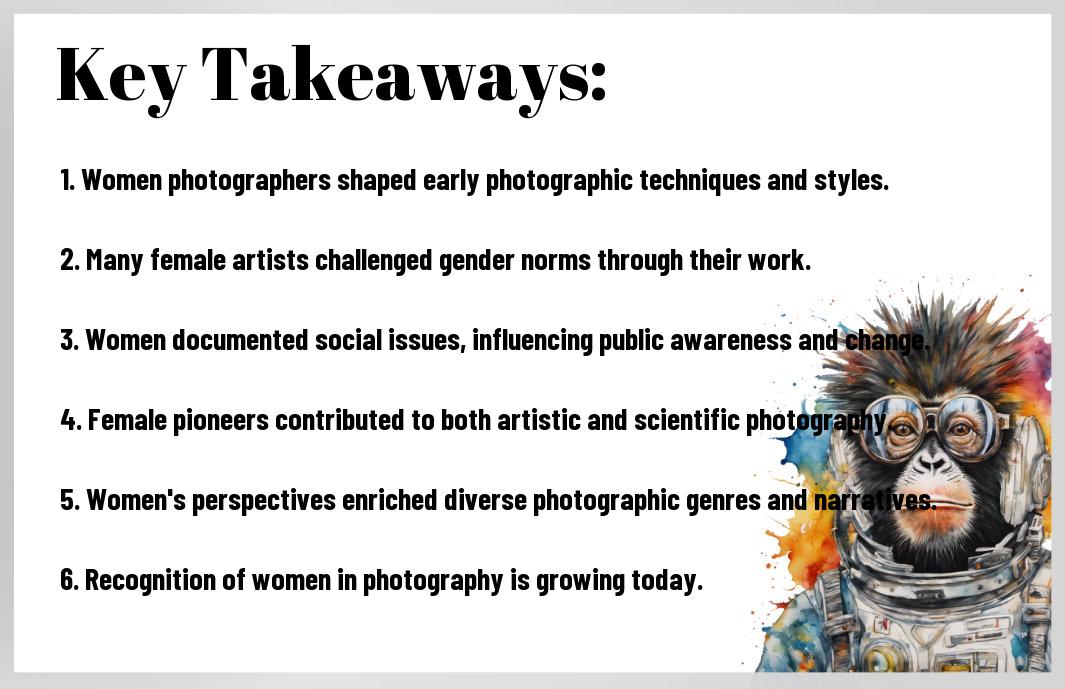
Pioneering Female Photographers Who Shaped the Medium
Women have consistently played a fundamental role in photography, often in the shadows but with profound impact. Through their innovative techniques and unique perspectives, these pioneering female photographers laid the groundwork for future generations, pushing boundaries and challenging conventions within the medium. Their contributions range from the early days of the craft to modern photography, enriching the visual narrative and broadening the conversation around representation and storytelling.
Early Innovators: Women Behind the Lens in the 19th Century
In the 19th century, women such as Julia Margaret Cameron and Anna Atkins began to carve their niche in photography, using the medium as a means of artistic expression. Cameron is renowned for her dreamy, soft-focus portraits that broke away from conventional styles, while Atkins is recognized for her pioneering work in photograms, creating the first book illustrated with photographs, “Photographs of British Algae.” These innovators not only advanced photographic techniques but also showcased women’s creativity and potential within a male-dominated field.
Pioneers in Documentary Photography and Photojournalism
The contributions of women to documentary photography and photojournalism have been substantial, often addressing social issues and human experiences that were overlooked. Photographers like Dorothea Lange, whose iconic image “Migrant Mother” captured the struggles during the Great Depression, used their lenses to highlight the plight of the marginalized. Similarly, Gordon Parks, a lesser-known but pivotal figure, collaborated with female photographers, amplifying diverse voices and perspectives. Their work fundamentally reshaped the way society views critical issues, combining artistry with activism.
Documentary photography by women often focuses on social justice, cultural identity, and the challenges faced by underrepresented communities. In the 20th century, photojournalists like Susan Meiselas and Mary Ellen Mark painstakingly documented conflicts and social movements, bringing forth narratives that drove empathy and awareness. Their images served not just as art but as powerful testimonials that inspired change. You can observe how their commitment to capturing truth and resilience paved the way for future female photographers to explore similar thematic concerns, ultimately reshaping public consciousness through their compelling storytelling. The legacy of these trailblazers continues to inspire and influence contemporary photography, igniting a passion for social justice within the lens of newer generations.
The Intersection of Feminism and Visual Arts
Feminism has significantly shaped the landscape of visual arts, fostering new perspectives and challenging traditional norms. As women began to assert their identities and rights in society, this movement positively impacted how female photographers and artists approached their work. The exploration of gender, identity, and representation in photography has paved the way for a deeper understanding of women’s roles not just as subjects, but as influential creators in their own right, thereby rewriting the narrative of art history.
Feminist Movements and Their Influence on Photography
The feminist movements of the 1960s and 1970s ignited a wave of change in photography, as artists like Cindy Sherman and Barbara Kruger took charge of their visual narratives. These pioneers questioned the male gaze and utilized photography as a medium to confront societal norms regarding femininity and sexuality. This new wave of artists inspired countless others to explore personal and political themes, forging a path that continues to encourage women to use photography to express their truths and challenge prevailing stereotypes.
Women’s Representation in Photographic History
Historically, women have often been underrepresented or misrepresented in photography, typically cast in passive roles as muses or subjects rather than as creators. However, the contributions of female photographers have begun to receive recognition, reshaping the narrative around their influence. Acknowledging the work of figures like Dorothea Lange, whose poignant images during the Great Depression captured the struggles of disenfranchised communities, highlights the necessity of understanding women’s roles in the evolution of photographic history. This reclamation of women’s agency continues to empower future generations in their artistic endeavors.
The Impact of Women on Commercial Photography
Women have significantly influenced commercial photography, transforming the landscapes of advertising and fashion. Their unique perspectives and innovative techniques have elevated visual storytelling, allowing brands to connect authentically with their audiences. From fashion shoots to product advertisements, female photographers have consistently challenged norms and redefined aesthetics, leading to more inclusive and diverse representations in visual media.
Breaking Barriers in Advertising and Fashion Photography
Women like Annie Leibovitz and Ellen von Unwerth have shattered the glass ceiling in advertising and fashion photography, bringing their distinctive artistry and empowering narratives to the forefront of the industry. Their work not only highlights the beauty of fashion but also reflects cultural changes, promoting messages of empowerment and diversity that resonate with modern audiences.
Leading Women in Documentary and Fine Art Photography
Within the realms of documentary and fine art photography, trailblazers such as Dorothea Lange and Cindy Sherman have left indelible marks on the art form. Their photographic narratives often explore profound themes, challenging societal norms and prompting viewers to confront the complexities of human experience and identity.
Women like Lange, with her poignant images from the Great Depression, and Sherman, who pioneered conceptual self-portraiture, have opened doors for future generations. Their ability to capture raw, emotive storytelling not only elevates photography as an art form but also influences social discourse. Lange’s work served as a catalyst for social reform, while Sherman’s innovative approach encourages conversations about femininity and representation. These female photographers embody the power of art to evoke empathy and prompt change in society, reminding you that their contributions extend far beyond mere imagery.
Celebrating the Unsung Heroes of Photography
Many women in the history of photography deserve recognition for their pioneering contributions, often overshadowed by their male counterparts. By celebrating these unsung heroes, you contribute to a more inclusive narrative of photography’s evolution. Figures like Julia Margaret Cameron and Germaine Krull, though once sidelined, played vital roles in advancing photographic techniques and concepts. Their works not only enriched the medium but also inspired subsequent generations of photographers. Embracing these narratives allows you to appreciate the depth and diversity that women have brought to photography.
Acknowledging Forgotten Women in Photography’s Legacy
Exposing the achievements of forgotten women in photography’s legacy uncovers a wealth of talent that has been largely overlooked. Artists such as Imogen Cunningham and Francesca Woodman pushed boundaries and challenged societal norms through their powerful imagery. You can draw inspiration from their stories, as they not only crafted stunning visuals but also challenged the status quo in a male-dominated industry. This acknowledgment fosters a deeper understanding of the multifaceted history of photography and the diverse voices that have shaped it.
The Importance of Archiving Women’s Contributions
Archiving women’s contributions in photography ensures that these vital narratives are preserved for future generations. By systematically documenting their works, techniques, and influences, you help establish a richer historical context that often goes unrecognized. This archiving process serves to illuminate their impact and inspire contemporary and emerging artists. Various organizations, such as the Women’s Museum of California, actively work to collect and showcase these stories, making it possible for you to engage with a more inclusive history that reflects the true breadth of photographic artistry.
Understanding the importance of archiving women’s contributions goes beyond preserving art; it challenges the prevailing historical narratives that typically favor male artists. You can support initiatives aiming to catalog these female photographers’ works, ensuring that their offerings become part of the mainstream art dialogue. For instance, projects like the “Women Photographers of the World” aim to not only rescue forgotten images but also contextualize their significance within broader cultural movements. By engaging with these archives, you can advocate for a more equitable recognition of talent in photography and reshape how history is written.
The Future of Women in Photography: Opportunities and Challenges
The landscape of photography continues to evolve, presenting both opportunities and challenges for women photographers. With advances in technology and the rise of social media platforms, women now have greater access to showcase their work and connect with new audiences. However, barriers still exist, including disparities in representation, access to funding, and the pervasive gender bias that can undermine women’s contributions. Addressing these issues will be imperative in shaping a more inclusive future for photography.
Emerging Female Photographers to Watch
Highlighting the new wave of talent, emerging female photographers are pushing boundaries and redefining traditional narratives. Their unique perspectives and innovative techniques are gaining recognition, making them vital voices in the contemporary photography scene. Artists like Bieke Depoorter and Mary McCartney stand out as promising figures whose work challenges norms and invites deeper conversation.
Current Trends and Initiatives Promoting Gender Equity
Various trends and initiatives are actively working to promote gender equity in photography. Organizations like the Women’s Photo Alliance and initiatives such as the 50/50 Project aim to increase visibility and opportunities for women photographers by providing mentorship, resources, and platforms for their work. Additionally, many galleries and festivals are committing to showcasing more female artists, addressing the longstanding gender imbalance in representation.
The push for gender equity in photography is gaining momentum through strategic initiatives and collective efforts. Organizations and educational institutions are hosting workshops and exhibitions specifically highlighting female talent. Grants and funding opportunities that prioritize women-led projects further support emerging photographers. Social media campaigns amplify female voices, empowering women to share their stories and execute projects that reflect their perspectives. As these trends continue to develop, they contribute to a cultural shift towards inclusivity and recognition of women’s vital roles within the photographic community.
Summing up
Upon reflecting, you can appreciate that the role of women in the history of photography has been both significant and transformative, often overshadowed by their male counterparts. From pioneering innovators to influential artists, these unsung heroes and trailblazers have shaped visual culture in profound ways. By acknowledging their contributions, you not only enrich your understanding of the medium but also honor the diverse perspectives that have fueled its evolution, reminding you that art is indeed a collective journey. Your exploration of photography’s past should include the vital stories of these remarkable women.
Fine Art Photography Prints
Own a museum-quality archival print by Edin Chavez
Hahnemühle archival paper · From $95
BROWSE PRINTS LIMITED EDITIONS