Most aspiring photographers struggle to capture the essence of their vision, often feeling frustrated by the technicalities involved. In this comprehensive guide, you will discover crucial techniques and tips to elevate your photography skills and unlock your creative potential. Whether you are a beginner seeking to learn the basics or an experienced photographer aiming to refine your craft, this guide will provide you with valuable insights to help you create captivating images that resonate. Get ready to begin on a transformative journey through the lens of your camera!
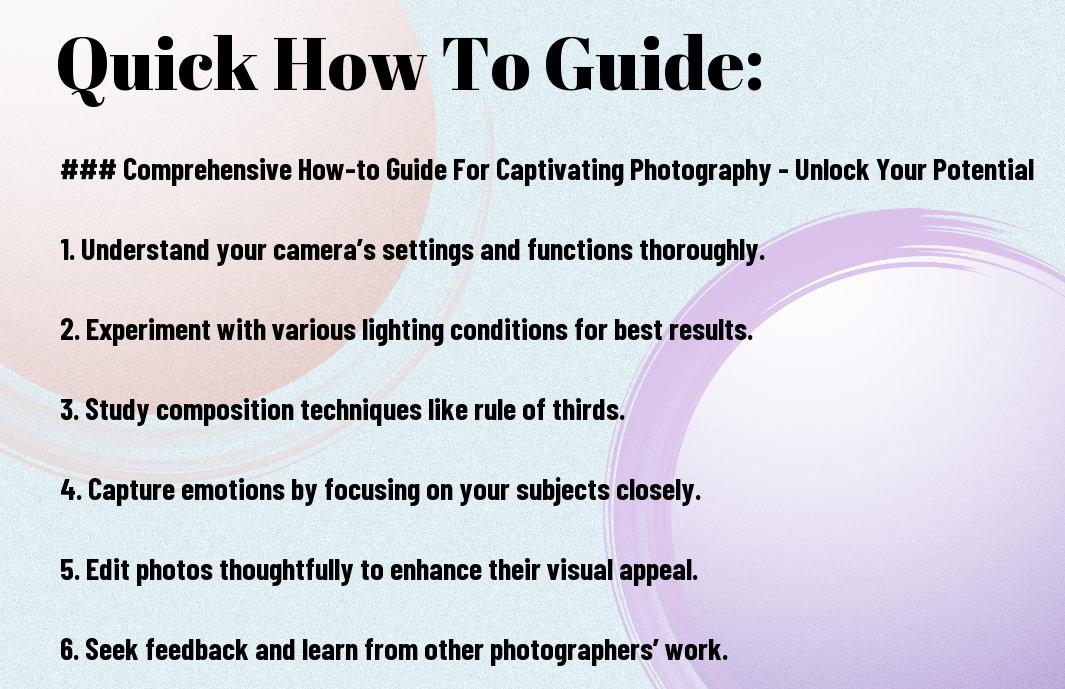
Understanding Photography Basics
The journey into photography begins with a solid grasp of its fundamental principles. By familiarizing yourself with key concepts such as exposure, light, and composition, you lay the groundwork for creating captivating images. Mastering these basics empowers you to experiment confidently and express your unique vision through your photography, ensuring every shot tells a compelling story.
Key Principles of Composition
Understanding the principles of composition is imperative for creating visually appealing photographs. By incorporating techniques like the rule of thirds, leading lines, and framing, you can effectively direct the viewer’s gaze and enhance the overall quality of your images. These compositional elements serve as the backbone of your visuals, helping you convey emotion and narrative in your work.
Essential Camera Settings
On your photographic journey, it’s important to familiarize yourself with imperative camera settings, including aperture, shutter speed, and ISO. Each of these settings plays a critical role in determining the exposure, depth of field, and motion in your images. Balancing these parameters allows you to achieve your desired creative outcome in various shooting conditions.
Another key aspect of mastering imperative camera settings is understanding their interplay. For example, adjusting your aperture alters the amount of light entering the lens, affecting both exposure and the depth of field. Meanwhile, the shutter speed dictates how motion is captured, either freezing action or producing beautiful motion blur. By experimenting with these settings together, you will develop a deeper intuition for how each one influences your photography, ultimately helping you to better express your creative vision.

The Art of Capturing Emotion
Even the most technically perfect photograph can fall flat if it doesn’t convey emotion. To truly connect with your audience, aim to capture moments that reflect genuine feelings. Whether it’s joy, sorrow, or nostalgia, the ability to document emotion will elevate your photography, allowing viewers to resonate with your images on a deeper level.
Evoking Feelings Through Imagery
Feelings can be translated into powerful visuals by choosing your subjects, colors, and compositions thoughtfully. Use light, shadows, and framing to create a narrative that pulls viewers in and encourages them to share in the moment. Every detail matters; the choice of settings and expressions can significantly affect the emotional tone of your photographs.
Tips for Candid Photography
Clearly, candid photography focuses on capturing spontaneous moments that reflect genuine emotions. To excel in this art, consider these tips:
- Be unobtrusive and blend into the environment.
- Utilize long lenses to maintain distance.
- Focus on moments that unfold naturally rather than orchestrating them.
- Anticipate emotions by observing interactions and expressions.
Recognizing the right moment often makes for the most striking candid photographs.
Evoking emotion in candid photography involves being alert and responsive to your surroundings. Always have your camera ready and be patient as you wait for moments to unfold. Engage with your environment and people, allowing genuine interactions to inspire your shots. The following tips can enhance your skills:
- Practice shooting at different settings to enhance your spontaneity.
- Develop an understanding of your subjects’ behaviors.
- Experiment with various angles to find unique perspectives.
- Build rapport with your subjects to encourage authenticity.
Recognizing these elements will help you capture the essence of human emotion in its purest form.
Lighting Techniques for Stunning Images
Many photographers overlook the transformative power of lighting in their work. Whether you’re shooting outdoors or inside a studio, understanding how to manipulate light can elevate your images from ordinary to extraordinary. Effective lighting techniques not only enhance your subject but also create mood and depth, ultimately captivating your audience and allowing your photography to stand out.
Natural vs. Artificial Light
If you’re seeking dynamic visuals, you need to grasp the distinction between natural and artificial light. Natural light, available during golden hour, offers a warm, soft quality that’s often favored for portrait and landscape photography, while artificial light provides control over intensity and direction. Both options have their advantages, so experimenting with both sources will help you discover what best suits your creative vision.
Tips for Mastering Exposure
Clearly, mastering exposure is vital for achieving balanced images. To ensure your shots are well-lit, consider these tips:
- Familiarize yourself with the exposure triangle: aperture, shutter speed, and ISO.
- Utilize your camera’s histogram to gauge if you’re losing details in highlights or shadows.
- Experiment with bracketing to get multiple exposures of a single scene.
This fundamental understanding will help you create images that are both technically sound and visually striking.
Images captured with proper exposure techniques often tell compelling stories. When you control the light and exposure settings effectively, you will notice a pronounced difference in the vibrancy and clarity of your photographs. Here are more strategies to refine your approach:
- Use tripods for long exposures to maintain sharpness.
- Explore metering modes to adapt to varying lighting conditions.
- Practice adjusting exposure compensation for specific situations.
This adaptability will advance your skills and transform your photography journey.

Exploring Different Photography Styles
After immersing yourself in the world of photography, you will discover a multitude of styles to express your creative vision. Each style offers unique challenges and opportunities that can enrich your skillset. From the intimacy of portrait photography to the grandeur of landscape shots, exploring various styles allows you to refine your technique and develop your personal artistic voice. Embrace the journey of experimentation and let your imagination guide you.
Portrait Photography Tips
Styles of portrait photography require keen attention to detail and the ability to connect with your subject. Enhance your portraits with these helpful tips:
- Use natural light when possible to create flattering skin tones.
- Communicate with your subject to ease any nervousness.
- Experiment with angles and framing to find the most compelling composition.
- Focus on capturing genuine emotions for powerful imagery.
This knowledge will greatly enhance your portrait photography skills and elevate your work.
Landscape Photography Essentials
With landscape photography, your goal is to showcase the beauty of nature and evoke emotions through your images. Understanding the important elements of this style will help you capture stunning outdoor scenes. The key aspects include scouting locations, being mindful of lighting conditions, and incorporating interesting foregrounds. By taking the time to study the environment around you, you will develop a deeper appreciation for the elements that make a landscape photograph truly breathtaking. Use a tripod for stability, and embrace wide-angle lenses to capture expansive vistas. The experience you gain will enhance your artistry and allow you to create impactful landscape images.
Equipment Considerations
Once again, the right equipment can significantly enhance your photography experience. It’s vital to assess your needs and skill level to ensure that you invest in tools that will support your growth as a photographer. From cameras to lenses and supporting gear, understanding what fits your style will help you unlock your full potential in captivating photography.
Choosing the Right Camera for Your Needs
On your journey to becoming a skilled photographer, selecting the right camera is crucial. Whether you lean towards DSLRs, mirrorless systems, or compact options, consider your photography style and how you plan to use your camera. Look for features that align with your creative goals, and don’t shy away from testing out different models to find your perfect match.
Essential Accessories for Photographers
Accessories play a significant role in elevating your photography skills. From tripods and filters to lenses and memory cards, having the right tools enhances your creative capabilities and flexibility.
Essential accessories complement your camera and facilitate better shooting experiences. A sturdy tripod ensures stability for long exposures, while a variety of lenses allows you to explore different perspectives. Filters can enhance your images or protect your lens, and spare batteries and memory cards guarantee that you’re prepared for every shoot. Investing in quality accessories will ensure you have the support you need to take your photography to new heights.

Post-Processing Techniques
To elevate your photography, mastering post-processing techniques is crucial. This stage allows you to refine your images, enhancing elements such as color, contrast, and sharpness. By effectively utilizing these techniques, you can transform a good photograph into a stunning visual masterpiece that captivates your audience.
Overview of Editing Software
Even if you are new to photography, selecting the right editing software can significantly impact your workflow. There are various options available, from user-friendly software like Adobe Lightroom to more advanced tools such as Photoshop. Familiarizing yourself with the capabilities of each program can empower you to choose one that best fits your editing style and needs.
Tips for Enhancing Your Photos
Editing your photos thoughtfully can make a notable difference in their overall impact. Here are some tips to guide you in the enhancement process:
- Adjust exposure and contrast for better clarity.
- Crop strategically to improve composition.
- Use color correction to bring your vision to life.
- Explore filters and presets for unique styles.
- Apply sharpening to define details in your images.
Recognizing the importance of subtle adjustments can elevate your work from amateur to professional quality.
Techniques for enhancing your photos can vary widely based on your artistic vision. Here are some effective strategies to achieve stunning results:
- Experiment with layer adjustments for color gradients.
- Utilize selective editing to focus on key areas.
- Consider the use of masking for creative effects.
- Play with shadows and highlights to create depth.
- Preserve original files to ensure you can revisit your edits.
Recognizing the potential of these techniques will help you develop your unique style and enhance the visual appeal of your photography.
Conclusion
As a reminder, this comprehensive how-to guide for captivating photography has equipped you with the imperative skills and insights needed to unlock your potential. By applying the techniques discussed, you can elevate your photography to new heights, capturing moments with creativity and precision. Embrace the journey, experiment with different styles, and always strive to improve your craft. With dedication and practice, your unique vision will shine through in every shot, making your photography not just a hobby, but a fulfilling form of expression.
Fine Art Photography Prints
Own a museum-quality archival print by Edin Chavez
Hahnemühle archival paper · From $95
BROWSE PRINTS LIMITED EDITIONS