Crafting a Vision: Defining Your Unique Travel Aesthetic
Finding Your Personal Style
Begin by reflecting on the images that resonate with you the most. Browse through your past travel photos or explore portfolios of renowned photographers and note the styles and moods that capture your attention. Do you favor vibrant colors or muted tones? Wide landscapes or intimate details? Use platforms like Instagram or Pinterest to create mood boards that visually represent your unique travel aesthetic, blending elements that evoke the emotions you’re aiming to convey.
Experiment with Composition
Your unique aesthetic also hinges on how you choose to frame your subjects. Challenge conventional compositions by trying off-center focal points or unique angles, such as shooting from below or above. Engage with the rule of thirds but don’t shy away from breaking it for striking results. Consider how different perspectives—like shooting through natural frames such as doorways or archways—can enhance your storytelling and convey a distinctive vibe.
Curate a Consistent Color Palette
Establishing a consistent color palette across your travel photography will unify your work and make your aesthetic instantly recognizable. Select a few key colors that represent your style and are prominent in the locations you visit. Whether it’s the turquoise waters of a tropical beach or the earthy tones of a desert landscape, these cohesive colors not only evoke a specific mood but also create a visual harmony throughout your travel portfolio.
The Art of Perspective: Utilizing Angles and Composition
Mastering perspective can elevate your travel photography significantly. By experimenting with various angles and compositions, you can create images that evoke emotions and tell compelling stories. Whether you’re capturing sweeping landscapes or intimate street scenes, the way you frame your shots can dramatically influence how viewers perceive the scene. Dive into these techniques to enhance your unique perspective and transform everyday sights into extraordinary visuals.
Exploring Unconventional Angles
Innovation thrives when you step outside the traditional view. Instead of always shooting from eye level, try crouching down low or climbing higher to capture an intriguing bird’s-eye view. This shift in perspective adds depth and dimension, making your images more engaging. You might uncover unexpected spatial relationships and enhance the overall mood of the scene.
The Rule of Thirds and Its Creative Twists
Applying the Rule of Thirds introduces a structured approach to composition, guiding you to position key elements along intersecting lines to create balance. Moving beyond the conventional interpretation, you can play with negative space and incorporate unconventional points of interest by shifting the focus. For instance, placing your subject off-center can lead to an intriguing narrative with the surrounding context enhancing the story.
By creatively bending the Rule of Thirds, you can emphasize movement or contrast within your images. Imagine a bustling market scene where the vibrant colors of fruits are positioned against a muted backdrop, drawing the eye and fostering a sense of dynamism. Experimenting with this classic compositional rule allows you to break free from rigidity, making room for your artistic vision to shine while still maintaining a harmonious balance within your shots.
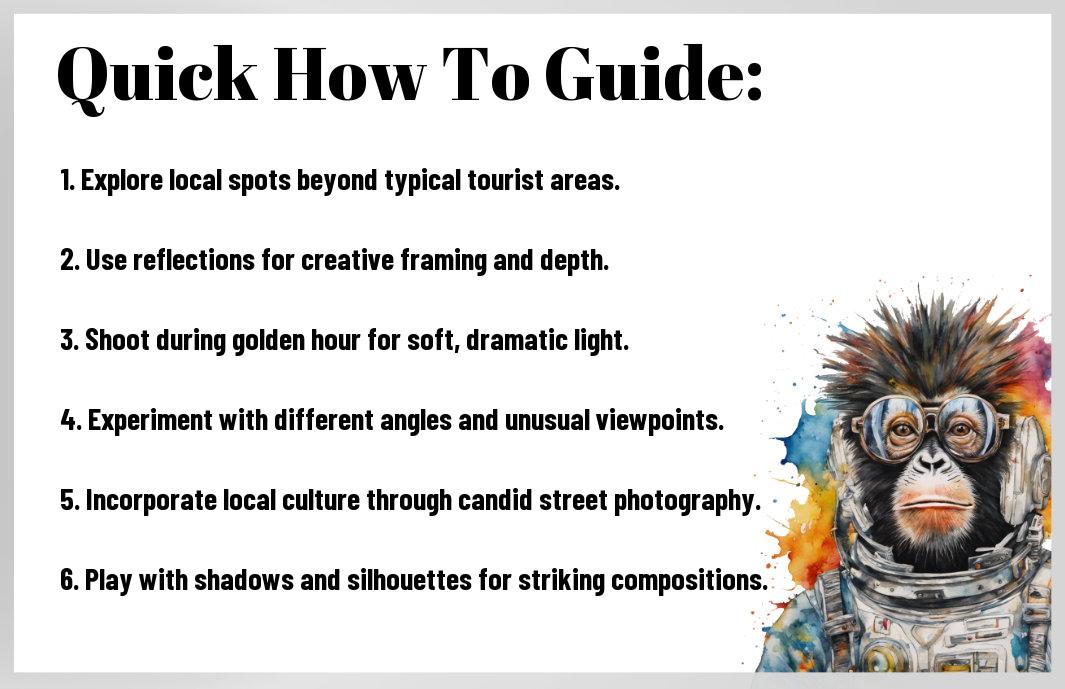
Harnessing Light: Mastering Natural and Artificial Illumination
Light is a photographer’s best friend, dictating the mood, tone, and clarity of your images. Learning to master both natural and artificial sources of illumination allows you to create captivating visuals that tell a story. Whether you’re chasing the sun at dawn or experimenting with artificial lighting in bustling city streets, understanding the interplay between light and shadow can enhance the depth and dimension of your photography. Utilizing light effectively will help you turn everyday scenes into extraordinary snapshots.
Golden Hour: Timing Your Shots for Maximum Impact
The golden hour, occurring shortly after sunrise and before sunset, casts a warm, soft glow ideal for travel photography. These fleeting moments offer breathtaking lighting conditions, highlighting textures and colors in a way that midday lighting cannot. By planning your outings around these times, you can infuse your shots with a magical quality that elevates the overall aesthetic, often transforming ordinary scenes into unforgettable compositions.
Playing with Shadows and Reflections
Shadows and reflections can provide intriguing focal points in your images, adding layers and complexity. Embrace the contrast of light and dark as shadows create shapes that draw the viewer’s eye, while reflections can double the beauty of a scene, capturing the essence of your surroundings in a unique way. Seeking out water bodies, glass surfaces, or even polished architecture allows you to explore this dynamic aspect of photography.
When you incorporate shadows and reflections in your compositions, think about the story you want to convey. Shadows can evoke emotions, suggesting mystery or drama, while reflections can portray symmetry and harmony. Experiment with different angles; for example, shooting from a low perspective can elongate shadows dramatically, while a high vantage point may reveal striking reflections in bodies of water. Capture the intricate dance between the two elements, and you’ll unearth creative possibilities that enhance the overall narrative of your travel photography. Look for opportunities in bustling markets, urban landscapes, or tranquil nature settings where light interacts playfully with your surroundings, bringing your shots to life.
Storytelling Through Frames: Capturing Emotion and Context
Your travel photography becomes more potent when it tells a story, and this often boils down to the emotions and contexts you capture. Look for moments where expressions, interactions, and environments converge to create impactful narratives. Rather than just documenting a scene, aim to convey the mood—be it joy, surprise, or nostalgia. Consider the elements of light, composition, and subject matter that can elevate an image from merely being picturesque to one that resonates with viewers on a deeper level.
The Power of Candid Shots
Candid shots have an inherent authenticity that staged photographs often lack. These spontaneous moments reveal genuine emotions and connections, allowing your audience to feel as though they are part of the scene. Whether it’s a child laughing, an elderly couple sharing a quiet moment, or workers engrossed in their craft, these snapshots invite viewers to form an emotional bond with the subjects. Oftentimes, your most compelling images will be those that capture the unguarded expressions of life as it unfolds.
Including People and Culture in Your Imagery
Integrating people and local culture into your travel photography enhances the depth and significance of your images. Showcasing the daily lives of locals not only illustrates your destination but also creates a broader context that surrounds the places you visit. Through portraits, candid interactions, or even cultural events, you invite viewers to engage with the human element behind the tourism facade, enriching their understanding and connection to the locale.
By focusing on the people and their stories, your images can relay intricate details that speak volumes about the culture you’re exploring. An image of a street vendor meticulously crafting their wares can tell tales of tradition, art, and resilience. Capturing community gatherings or festivals allows you to portray vibrant cultural expressions, while individual portraits can highlight the unique characteristics of local personalities. Each frame you take becomes a window into a world of culture, inviting your audience to see beyond the surface and discover the heart of the places you visit.
Post-Processing Magic: Enhancing Your Raw Images
Transforming your raw images into breathtaking scenes is where the real magic happens. Through various editing techniques, you can enhance colors, adjust lighting, and bring out intricate details that will captivate your audience. By leveraging tools like Adobe Lightroom or Photoshop, you can easily refine your images to evoke an emotional response or highlight the beauty of a particular moment. Understanding how to navigate and manipulate these digital tools will elevate your travel photography, allowing your unique vision to truly shine.
Essential Editing Techniques for Unique Flair
To infuse your travel photography with unique flair, start by mastering basic editing techniques, such as cropping for composition and adjusting exposure to ignite interest. Experimenting with vibrance and saturation can also make your images pop, while sharpening helps define the finer details. Using filters sparingly can introduce a distinctive style without overwhelming the scene. Explore various styles, from minimalistic to dramatic, until you find the perfect fit for your artistic voice.
Balancing Creativity and Authenticity in Edits
Editing is an art form in itself, but maintaining authenticity is vital. Striking a balance means enhancing your images while still representing the experience truthfully. The aim is to elevate the mood or color of your scenes without distorting reality. Use subtle adjustments that enrich the emotional impact without misleading your viewers about the actual moment. Craft a style that reflects your journey, allowing your audience to connect with your images on a personal level.
Achieving this balance often involves guided experimentation. Take a series of similar shots and apply different editing styles to them. As you compare the outcomes, think critically about which edits enhance the original spirit of each scene. For instance, if a sunset photo was vibrant in real life, amplify that warmth while ensuring it doesn’t stray too far from how it felt to experience it. This practice not only sharpens your skills but also cultivates a sense of integrity in your storytelling through visuals.
Final Words
With these considerations in mind, you can elevate your travel photography to new heights by experimenting with unique perspectives and artistic techniques. Embrace the interplay of light, composition, and storytelling to capture compelling images that reflect your personal journey. Trust your instincts, explore diverse angles, and let your creativity guide you. As you develop your skills, you’ll create a distinctive visual narrative that not only showcases the beauty of your travels but also resonates with your audience in profound ways.
Fine Art Photography Prints
Own a museum-quality archival print by Edin Chavez
Hahnemühle archival paper · From $95
BROWSE PRINTS LIMITED EDITIONS