Many aspiring photographers find themselves overwhelmed by the sheer volume of information available. In this guide, you will explore innovative techniques and practical tips that will help you develop a personal style while taking captivating photographs. By focusing on unique approaches, you can elevate your skills and attract attention to your work, ensuring that your images stand out in a crowded field. Let’s explore inspiring methods that will transform your passion for photography into a distinctive personal expression.
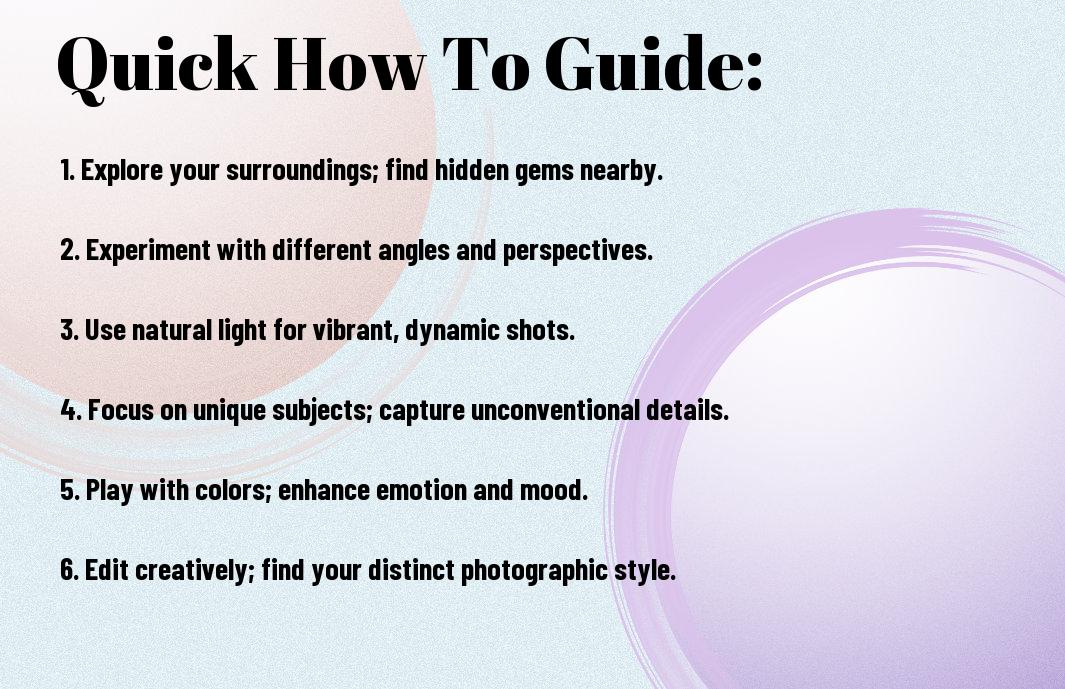
How-to Prepare for Unique Photography
Your journey into unique photography begins with thorough preparation. This involves understanding the subjects you’ll be capturing, scouting locations, and most importantly, getting familiar with your equipment. By putting in the groundwork, you can unlock your creativity and approach each photo opportunity with confidence and innovation.
Choosing the Right Equipment
You should consider both your photography goals and the environments you’ll be shooting in when selecting your equipment. Whether you’re using a DSLR, mirrorless camera, or even a smartphone, ensure it meets the demands of your unique style. Explore different lenses, accessories, and stabilization tools to enhance your creative vision and make your shots truly stand out.
Understanding Camera Settings
There’s a lot to grasp when it comes to camera settings, but doing so will significantly elevate your photography skills. Key settings include aperture, shutter speed, and ISO, which directly influence the exposure and overall aesthetic of your images.
This foundational knowledge allows you to manipulate light and motion, creating stunning visuals with intention. Experimenting with these settings helps you find the best combinations for various conditions, enhancing depth of field, freezing motion, or allowing for long exposure shots. By mastering your camera settings, you empower yourself to capture unique moments and artistic expressions effortlessly.

How to Develop Your Own Style
Assuming you want to stand out in photography, developing your own style is key to showcasing your unique vision. Start by reflecting on what truly resonates with you—think about the subjects, colors, and themes that inspire you. Collect inspiration from various sources, including other photographers, art, and nature. As you put your knowledge into practice, your individual style will evolve naturally, setting you apart from the crowd.
Experimenting with Composition
One effective way to find your personal photographic style is by experimenting with composition. Play with different framing techniques, such as the rule of thirds, leading lines, and symmetry, to see how each influences the story your image tells. Don’t be afraid to bend or break traditional rules—unique perspectives often lead to the most compelling shots that reflect your personality.
Utilizing Color and Lighting
Howto master color and lighting can dramatically enhance your images and help define your style. By understanding how to manipulate these elements, you can evoke specific moods and emotions in your photographs.
Utilizing color and lighting is vital for creating atmospheric photographs that reflect your artistic intent. Experiment with natural light during different times of the day or incorporate artificial lighting to create desired effects. Pay attention to color palettes—consider using complementary colors for vibrancy or monochromatic schemes for a minimalist approach. By honing your skills in these areas, you’ll be able to carve out a distinct visual voice that captures your unique perspective.
How-to Capture Unique Perspectives
Not every photograph has to follow traditional norms. To create images that stand out, you can experiment with your viewpoints and challenge the way you see the world. Instead of simply capturing what’s in front of you, look for opportunities to present your subject from unexpected angles, helping viewers see it in a fresh light.
Exploring Unconventional Angles
For a fresh take on your photography, be willing to explore unconventional angles. Get low to the ground or scale heights to shoot from above. Tilt your camera to give a dynamic feel, and don’t hesitate to position yourself in tight spots or out of the ordinary frames. These shifts will not only draw attention but also evoke emotions that static shots often miss.
Incorporating Creative Techniques
Incorporating creative techniques into your photography can transform your images from ordinary to extraordinary. Techniques such as long exposure, motion blur, or intentional camera movement can add a unique flair. You might also experiment with double exposures or the use of reflections to deepen the complexity of your shots.
This allows you to tell a more engaging story with your images, captivating your audience’s interest. Mixing in a variety of techniques enhances the narrative quality of your photos, and over time, you’ll develop a distinctive style that resonates with your artistic vision. Don’t shy away from trying new methods; embrace the learning process and let your creativity flow, as it often leads to unexpected and beautiful results.

How-to Edit for Impact
To create stunning photographs that resonate with viewers, mastering the art of editing is crucial. Editing allows you to enhance your images and bring your unique vision to life. Whether you want to brighten colors, adjust contrasts or crop for better composition, the tools at your disposal can significantly influence the final outcome of your work.
Basic Editing Tips
For every beginner, understanding the basics of photo editing can elevate your photography skills immensely. Here are some crucial tips to get you started:
- Adjust brightness and contrast to enhance details.
- Use cropping to focus on the most significant elements.
- Apply filters strategically to convey mood.
- Experiment with saturation to make colors pop.
- Consider sharpening to define edges.
Any adjustments can make a significant difference in achieving polished images.
Advanced Techniques for Personalization
Edit your photos further by incorporating advanced techniques that can showcase your personality and style. Customization enables you to create a unique signature look for your portfolio. Here are some ideas to explore:
- Layering adjustments for special effects.
- Using masks to selectively edit parts of your image.
- Incorporating textures to add depth.
- Creating presets for a consistent theme.
| Technique | Description |
|---|---|
| Layering | Combine multiple adjustments while maintaining control. |
| Masking | Edit only parts of your image without affecting the whole. |
| Texturing | Add visual interest through textures and overlays. |
| Presets | Save your favorite adjustments for future use. |
These advanced editing skills will allow you to express your creativity and make your images truly stand out.
Tips for Overcoming Common Challenges
For beginners in photography, navigating obstacles can feel daunting. Here are some useful tips to help you stay focused and improve your craft:
- Practice patience to refine your skills.
- Embrace trial and error to learn faster.
- Seek feedback to gain new perspectives.
- Build a community for shared experiences.
Perceiving challenges as opportunities will enhance your growth as a photographer.
Dealing with Distractions and Crowds
With the hustle and bustle of public spaces, distractions can be overwhelming. To achieve your desired shot, try to find quieter moments or angle yourself to minimize interruptions. Focus on your subject and practice mindfulness; this helps you stay present amid the chaos. You can also experiment with framing or composition to draw attention away from surrounding distractions.
Managing Lighting Conditions
Assuming you want to take gorgeous photographs, understanding how to manage lighting can significantly impact your results. The quality and direction of light can change your image dramatically, so it’s vital to learn how to adapt. Use natural light to your advantage during golden hour or invest in portable reflectors and diffusers to manipulate harsh sunlight. Indoor photography, on the other hand, may necessitate the use of additional light sources or adjusting your camera settings to achieve the best exposure.
Challenges in managing lighting arise from various factors, such as changing weather or time constraints. Experimenting with different camera settings, like ISO and aperture, can help you capture the scene more effectively. Be aware of shadows and highlights, and consider using manual mode for finer control. You might also want to explore post-processing techniques to enhance lighting in your images afterward. The more you practice, the better equipped you will be to handle diverse lighting situations.

Factors to Consider for Standout Photography
Now that you’re ready to launch on your photography journey, consider these necessary factors to make your work stand out:
- Your unique perspective
- Lighting and colors
- Composition and framing
- Post-processing techniques
Recognizing these elements can greatly enhance your photography skills and help you create eye-catching images.
Context and Storytelling
Factors play a significant role in building a narrative in your photography. Each image should tell a story or convey emotions that resonate with your audience. Aim to capture moments that evoke feelings and connect with viewers on a deeper level. Whether it’s a candid moment or a staged scene, crafting a narrative enhances the impact of your work.
Audience and Platform Considerations
With a clear understanding of your target audience, you can tailor your photography to match their preferences and expectations. Different platforms, such as Instagram, blogs, or galleries, may require various styles and formats. By considering these aspects, you can present your work in the best light, ensuring it aligns with the interests of your intended viewers.
Considerations regarding audience and platform are vital for successful photography. Researching your audience can help you understand their preferences, which influences your style and content. On platforms like Instagram, vibrant and engaging images tend to perform well, while storytelling photos might thrive on blogs. Adapting your work to fit the platform maximizes engagement and showcases your skills effectively.
Conclusion
So, as you commence on your photography journey, utilize these inspiring how-to methods to truly stand out. Embrace your unique perspective, experiment with various techniques, and continuously seek knowledge. With practice and the right mindset, you’ll transform everyday moments into captivating images that reflect your vision. Let your creativity shine and don’t be afraid to share your work; it’s all part of your growth as a photographer.
Fine Art Photography Prints
Own a museum-quality archival print by Edin Chavez
Hahnemühle archival paper · From $95
BROWSE PRINTS LIMITED EDITIONS