There’s a world of stunning sights waiting to be captured through your lens, and in this comprehensive guide, you’ll unlock the secrets to perfecting your travel photography skills. Whether you’re a beginner or looking to refine your technique, you’ll discover crucial tips and tricks that will elevate your shots from ordinary to extraordinary. From composition and lighting to editing and storytelling, this guide will equip you with the knowledge you need to create breathtaking images that encapsulate your travels. Get ready to transform your photos into lasting memories that you can cherish forever!
Mastering Your Gear
Optimizing your travel photography starts with a solid understanding of your gear. Familiarity with your camera, lenses, and accessories will allow you to focus on capturing stunning images instead of fumbling with equipment. Explore the features and settings of your camera to ensure you’re ready to adapt to different environments and lighting conditions. Practice using your gear before your travels, allowing you to experiment with various settings to discover what works best for your unique style.
Choosing the Right Camera and Lenses
Selecting the ideal camera and lenses is key to enhancing your travel photography. Mirrorless and DSLR cameras offer versatility and high-quality images, whereas compact cameras or smartphones provide portability. When choosing lenses, a versatile zoom lens (like a 24-70mm) can cover multiple scenarios. Additionally, a prime lens with a wide aperture can deliver stunning portraits or low-light shots, allowing you to capture your travel experiences from different perspectives.
Essential Accessories for Travel Photographers
Your travel photography kit should include accessories that enhance your shooting experience and protect your gear. A sturdy tripod, for example, is invaluable for long exposures and landscapes, while a lens cleaning kit can prevent dust from ruining your shots. Additional items worth considering are extra batteries, memory cards, and a comfortable camera bag for easy transportation. Together, these vitals ensure you’re always prepared to seize the moment.
Investing in high-quality accessories can greatly enhance your capabilities as a travel photographer. For instance, a high-capacity external hard drive can help you back up your images while traveling, ensuring your memories are safe. Depending on your destination, a polarizing filter can reduce glare and saturate colors, while a portable external flash ensures that your subjects are well-lit, even in dimly lit environments. Understanding how to utilize these accessories effectively will enable you to adapt to various shooting conditions and elevate your photography game on the go.
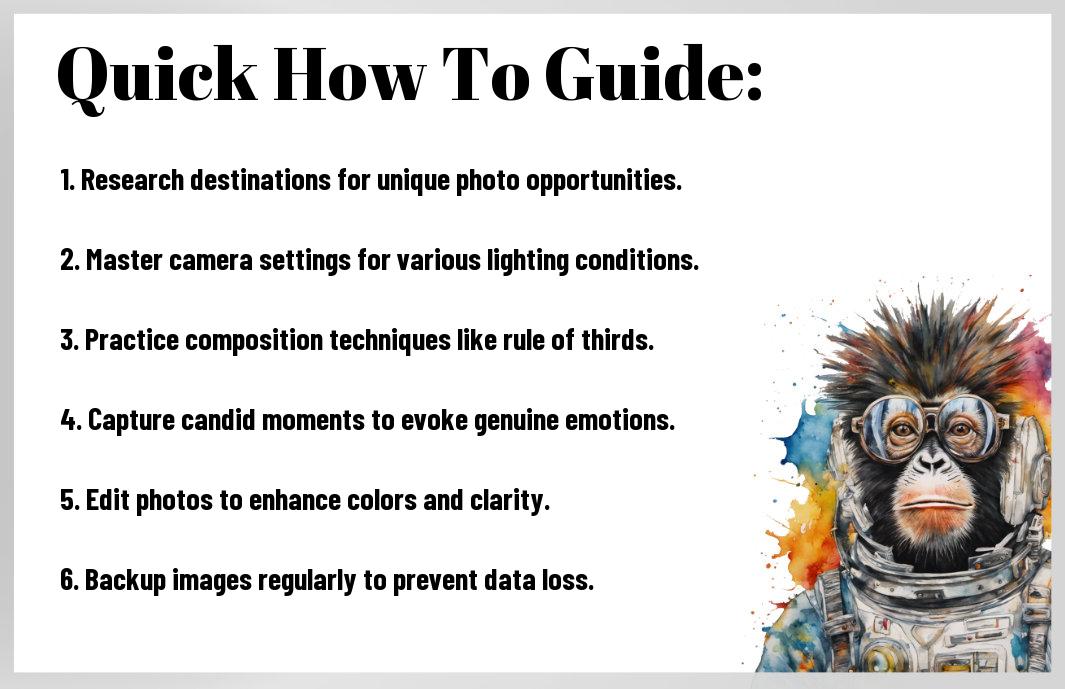
Capturing Stunning Compositions
Great travel photography hinges on your ability to craft eye-catching compositions that resonate with viewers. Seek out unique angles, leading lines, and natural frames to draw the viewer’s eye into your photos. Balance your images intentionally, whether by placing focal points off-center or by layering elements in the foreground and background to create depth. Explore the interaction between various elements in your scene to boost interest, and don’t hesitate to move around to find that perfect vantage point. The more effort you put into composing each shot, the more compelling your visuals will become.
The Rule of Thirds and Beyond
The Rule of Thirds provides a strong foundation for composition, dividing your frame into a grid of nine equal parts. Position key elements along the lines or at the intersections to create dynamic balance and visual interest. However, breaking this rule can lead to innovative compositions. Embrace unconventional methods, like symmetry or the golden ratio, to elevate your photography. Experimenting with these techniques will allow your creativity to shine while reinforcing solid composition principles.
Utilizing Natural Lighting for Impactful Shots
Natural light can transform your images, highlighting textures, colors, and emotions in ways artificial lighting cannot replicate. Morning and late afternoon, known as the golden hour, produce soft, warm light that enhances landscapes and portraits. Overcast days can yield vibrant colors and reduce harsh shadows, making them perfect for capturing details. Pay attention to the direction of light and how it falls on your subjects, and adjust your position to maintain optimal exposure. Mastering natural lighting will not only improve your skills but also provide your travel photography with a signature touch.
To effectively utilize natural lighting, consider how the sun’s position affects your subject throughout the day. Shooting with the sun behind you can create stunning, evenly lit images, while backlighting can produce dramatic silhouettes or ethereal glows that bring your subjects to life. During midday, when the sun is directly overhead, you may want to seek shaded areas or use reflectors to soften the light. This approach allows for rich colors without the distraction of harsh shadows. Observe and adapt your shooting technique based on the unique lighting conditions at each location, and you’ll consistently capture powerful, striking images.
Engaging with Your Subject
Building a connection with your subjects transforms a simple photograph into a compelling narrative. Approaching people with respect and genuine curiosity fosters trust, allowing you to capture authentic moments. Take the time to interact, ask questions, and immerse yourself in the environment before raising your camera. The photographs you take will reflect the rapport established, leading to deeper expressions, natural poses, and a rich storytelling experience in your travel photography.
Telling Stories Through Portraits
Portraits serve as windows into the lives and cultures you encounter, showcasing the unique stories of individuals around the world. By focusing on facial expressions, clothing, and surroundings, your images can convey emotions, traditions, and histories in a single frame. Strive to document not just faces, but the essence of each subject’s experience, creating a powerful visual narrative that resonates with viewers long after they’ve seen the photograph.
Cultural Sensitivity and Ethical Photography Practices
Conducting yourself with cultural sensitivity shapes your approach to photography and influences how your work is received. Always seek permission before photographing people, especially in communities where traditions and personal privacy are held in high regard. Understanding local customs and norms will help you navigate these interactions gracefully and respectfully, ensuring that your photography not only tells a story but honors the dignity of your subjects.
Ethical photography practices emphasize the importance of respect and consent in every image you capture. Engaging with local communities—asking for permission, sharing your work, and understanding their perspective—creates a mutual exchange of trust. For example, in many indigenous cultures, photography might be seen as intrusive unless done collaboratively. Showing a commitment to ethical practices not only enriches your own experience but can lead to more meaningful photographs that resonate with authenticity, helping to elevate marginalized voices through your art.
Post-Processing Like a Pro
Mastering post-processing elevates your travel photography from good to stunning. By leveraging software tools and techniques, you can refine your images, enhancing colors, correcting exposure, and adding unique touches that reflect your artistic vision. The goal should be to enhance, not overwhelm, your photographs while maintaining their authenticity. A well-edited photo can create an emotional response, drawing viewers into the journey you experienced.
Essential Editing Software and Techniques
Adobe Lightroom and Photoshop dominate the editing landscape, providing you with powerful tools for adjustment and manipulation. Lightroom excels in managing large volumes of images, offering batch processing and straightforward color correction. Photoshop, on the other hand, allows for detailed retouching and advanced compositional techniques. Exploring features like curves, local adjustment brushes, and presets can significantly refine your workflow, making your photos pop with vibrancy and clarity.
Building a Signature Style Through Editing
Establishing a consistent editing style enhances your visual storytelling and makes your work recognizable. Choosing specific color palettes, contrast levels, and sharpness settings will contribute to a cohesive body of work over time. Experiment with adjustments to saturation, shadows, and highlights until you find what feels true to your vision. Following a consistent approach, whether you prefer high contrast or soft, muted tones, helps create a signature aesthetic that defines your travel photography.
Incorporating a signature style involves experimenting with various editing techniques until you create a distinctive look. For instance, some photographers might favor warm tones that evoke a tropical vibe, while others might prefer the crispness of cooler shades. You can also consider applying similar presets across your photos; this technique will either amplify or soften certain colors based on the theme of your travels. As you refine your style, your audience will start to associate particular characteristics with your images, enhancing your personal brand as a travel photographer. Engaging in online communities or photography challenges can help you receive feedback, pushing you to evolve further while remaining true to your unique aesthetic.
Sharing Your Work Effectively
Sharing your travel photography effectively amplifies your reach and audience engagement. Using platforms strategically can attract potential clients and enthusiasts. Articulating the stories behind your images can pique interest, cultivating a deeper connection with your viewers. Focus on quality over quantity; select your best work and share it regularly to keep your audience engaged while avoiding oversaturation. Engaging with your audience through comments and collaborations can further enhance your visibility and impact.
Building a Travel Photography Portfolio
Your travel photography portfolio serves as your visual resume, showcasing your unique perspective and style. Curate a selection of your best images, ensuring diversity in destinations, subjects, and techniques. Aim for a cohesive look that reflects your personal brand, with compelling captions that narrate the story of each photograph. Present your portfolio on a professional website or an online gallery, which allows for easy sharing with potential clients and collaborators.
Utilizing Social Media and Online Platforms
Social media and online platforms are instrumental in sharing your travel photography. Instagram, for instance, prioritizes visuals, making it ideal for photographers. Create an appealing feed and utilize features like Stories and IGTV to discuss your creative process or share travel experiences. Other platforms like Pinterest serve as excellent visual discovery tools, allowing potential clients or followers to save and share images. Engaging with communities on platforms like Facebook or specific photography forums can help you network and gain valuable feedback on your work.
Leveraging social media effectively involves more than just posting photos; it’s about building a narrative around your work. On Instagram, consider using relevant hashtags to increase visibility—opt for a mix of popular and niche tags related to travel and photography. Building a consistent posting schedule keeps your audience engaged; aim for at least two to three posts a week. Interaction is key; respond to comments and messages to develop your community. Collaborating with other photographers or travel bloggers can also boost your visibility, opening doors to new audiences who appreciate your work.
Conclusion
On the whole, mastering travel photography is a rewarding journey that enhances your experiences and memories. By following this comprehensive how-to guide, you can effectively elevate your skills and capture stunning images that resonate with your unique perspective. Embrace these techniques, practice regularly, and allow your creativity to flourish; with time, you’ll notice significant improvements in your travel photography, making each adventure even more memorable.
Fine Art Photography Prints
Own a museum-quality archival print by Edin Chavez
Hahnemühle archival paper · From $95
BROWSE PRINTS LIMITED EDITIONS