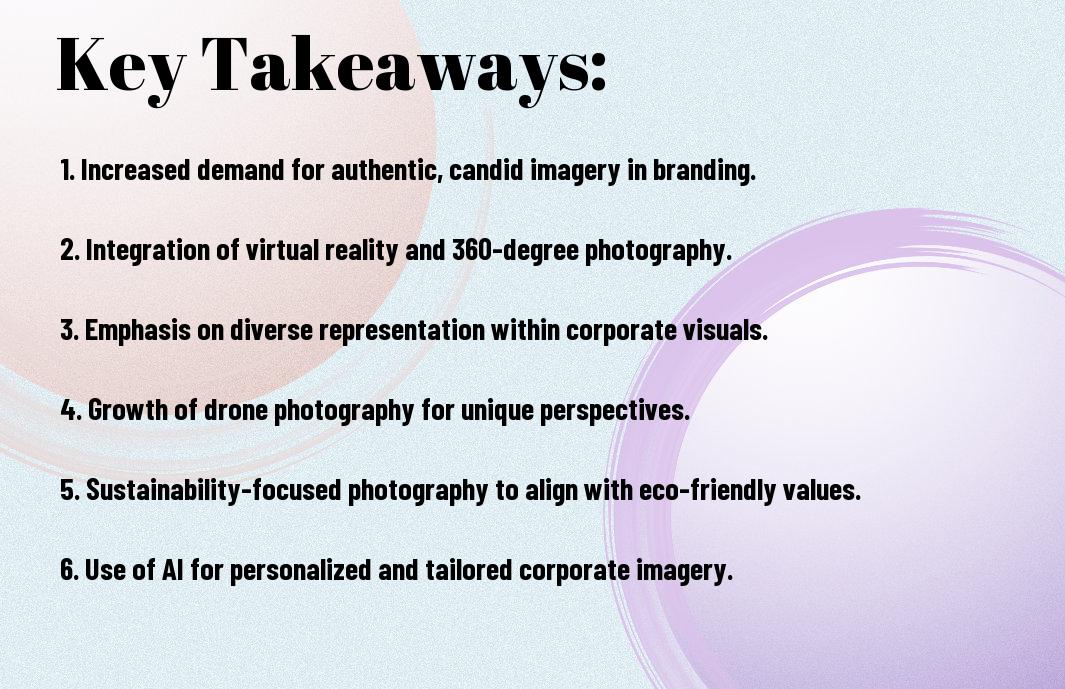
Trends in corporate photography are continually evolving, shaping how businesses present their visual identities. As you navigate this dynamic landscape, you’ll discover innovative techniques and styles that can elevate your brand’s image. In the coming years, you’ll want to keep an eye on emerging trends that focus on authenticity, diversity, and storytelling to connect with your audience more effectively. By staying ahead of these shifts, your corporate photography will not only reflect your brand’s values but also resonate strongly with your target market.

Historical Context of Corporate Photography
To truly understand the evolution of corporate photography, you must examine its origins and the development over decades. Corporate photography began as a way to portray a company’s identity and values, with a focus on professionalism and brand representation. As businesses grew and technology advanced, the art of corporate photography adapted, embracing new styles and techniques that resonate with audiences today.
Origins and Development
Among the earliest uses of photography in a corporate setting was in the late 19th century, when businesses would commission portraits of their leaders and employees. This aimed to establish credibility and connection with their customer base. Over time, these portraits evolved into more dynamic and engaging imagery as companies learned to leverage photography for storytelling and brand differentiation.
Influential Moments in Corporate Imagery
On the path of corporate photography’s development, several key moments have shaped how businesses present themselves visually. The introduction of color photography in the mid-20th century revolutionized commercial imagery, allowing brands to convey emotions and messages more effectively. Another significant shift occurred with the rise of digital technology, enabling brands to experiment with styles and formats that align with their evolving identities.
Development in photography techniques, such as the use of drones and 360-degree imaging, has broadened the visual storytelling tools available to brands today. These advancements allow you, as a corporate photographer or marketer, to create immersive experiences that engage your audience more meaningfully. Additionally, social media has transformed how companies present their images and stories, driving a continuous evolution in corporate photography that prioritizes authenticity and emotional connection.
Current Trends in Corporate Photography
Clearly, corporate photography is shifting towards a more dynamic and engaging approach. You may have noticed an increasing emphasis on storytelling, where images are used to convey your brand’s values and culture effectively. As companies adapt to the increasingly digital landscape, staying informed about current trends can help you elevate your visual content and connect with your audience on a deeper level.
Authenticity and Candid Imagery
Current trends show a strong preference for authenticity and candid imagery in corporate photography. You should embrace real moments that reflect your team’s culture and values, moving away from overly staged shots. This approach not only resonates with your audience but also fosters trust and relatability.
Integration of Technology and Innovation
For businesses looking to enhance their corporate photography, integrating technology and innovation is key. You can use drones, 360-degree photography, and virtual reality to create immersive experiences that showcase your brand in unique ways.
In fact, leveraging tools such as AI-powered editing software can significantly streamline your workflow and improve the overall quality of your images. With the rise of social media and online platforms, you can also take advantage of live streaming and interactive photography to engage your audience in real-time. Staying ahead in technology will not only refine your visual storytelling but also keep you relevant in an ever-evolving marketplace.
The Role of Social Media in Shaping Corporate Photography
Any effective corporate photography strategy now hinges on social media presence. Platforms like Instagram and LinkedIn have transformed how businesses present themselves, requiring images that not only captivate but resonate with your target audience. As you navigate this dynamic landscape, understanding the balance between professional visuals and authentic engagement becomes paramount for building your brand’s online identity.
Visual Storytelling and Brand Identity
Above all, visual storytelling plays a pivotal role in defining your brand identity. Through compelling imagery, you convey not only the essence of your products or services but also the values and culture of your organization. By harnessing the power of narrative through photography, you can create a memorable connection with your audience that fosters loyalty and recognition.
Impact of User-Generated Content
Photography that features user-generated content (UGC) offers a fresh perspective on your brand. This form of content encourages engagement and authenticity, as it represents real experiences shared by your customers. By leveraging images created by your audience, you can build community and trust, while also showcasing your products and services in a relatable context.
At the forefront of your marketing strategy, user-generated content not only elevates your brand’s visibility but also amplifies customer trust. By encouraging your audience to share their experiences through photography, you create a wealth of authentic material that humanizes your brand. This shared content can enhance your marketing campaigns, showcasing the diverse ways in which customers interact with your offerings and ultimately fostering a sense of belonging. As you embrace UGC, you can cultivate more meaningful connections with your audience, driving engagement and loyalty.

Emerging Technologies Affecting Photography
Now, as technology continues to evolve, corporate photography is being reshaped in exciting ways. Advances in emerging technologies like AI, automation, and immersive experiences are not only changing how you capture images but also how audiences engage with them. Keeping an eye on these trends will be important as you navigate the future of corporate visuals and adapt your strategies accordingly.
AI and Automation in Image Creation
Beside the traditional methods of photography, AI and automation are revolutionizing image creation. You can now rely on sophisticated algorithms to enhance your visuals, automate editing processes, and even generate images based on specific parameters. This not only saves you time but also allows your creativity to flourish in ways that were previously unimaginable.
Virtual and Augmented Reality Applications
Reality has evolved beyond static imagery, with virtual and augmented reality providing immersive experiences for your audience. These technologies allow you to present your brand and products in a dynamic setting, engaging viewers in a way that traditional photography cannot. By incorporating VR and AR into your corporate photography strategy, you can create captivating narratives that resonate with your clients.
Indeed, the power of virtual and augmented reality in corporate photography cannot be overstated. These technologies provide a platform to showcase your products or services in 3D environments, allowing viewers to explore and interact with elements in real-time. This interactivity not only enhances customer engagement but also sets your brand apart in a competitive landscape. By integrating VR and AR experiences into your campaigns, you can offer a unique perspective that informs, entertains, and captivates your audience.

Sustainability in Corporate Photography
All businesses today are recognizing the importance of sustainability, and corporate photography is no exception. As you evolve your visual branding strategies, consider sustainable practices that not only minimize environmental impact but also resonate with consumers who prioritize eco-conscious brands. By adopting these practices, you position your company as a forward-thinking entity committed to making a positive difference.
Eco-Friendly Practices and Choices
On your journey towards sustainable corporate photography, prioritize eco-friendly materials and practices. This includes choosing digital over printed formats, utilizing energy-efficient lighting, and working with suppliers who demonstrate a commitment to environmental responsibility. These choices not only lessen your carbon footprint but also appeal to eco-aware audiences in today’s market.
The Shift Towards Ethical Photography
Above all, the shift towards ethical photography signifies a focus on authenticity and representation in corporate imagery. As you align your brand with these values, it is important to reflect diverse voices and perspectives in your visual content. This approach strengthens your relationship with your audience, fostering trust and loyalty.
With the rise of social awareness, you must embrace ethical photography practices that reflect the diverse world we live in. By ensuring your images represent a range of backgrounds, cultures, and identities, you communicate inclusivity and respect for all individuals. This shift not only enhances your brand image but also contributes to broader societal change. Engaging with local communities and showcasing authentic stories enriches your corporate photography, allowing you to connect meaningfully with customers who value genuine representation.
Future Predictions for Corporate Photography
Unlike previous eras of corporate photography that focused solely on formal imagery, the future will embrace a blend of authenticity and creativity. As brands shift toward more genuine communication, you can expect photography to reflect real moments and emotions rather than just polished professionalism. This evolution will redefine how companies present themselves visually, encouraging innovation and experimentation in their imagery.
Evolving Aesthetics and Styles
To keep up with changing consumer preferences, your corporate photography may need to adopt more vibrant styles and relatable aesthetics. The growing emphasis on storytelling will drive the need for visuals that resonate with your audience. As more corporations seek to humanize their brand, expect a rise in diverse representations and alternative narratives in corporate imagery.
Anticipated Challenges and Opportunities
Around the bend, the corporate photography landscape poses both challenges and opportunities for you. As visual trends evolve, keeping pace with changing consumer expectations will require flexibility and adaptability. The demand for high-quality, authentic content may strain resources, but it also opens doors for innovative approaches that can set your brand apart in a crowded marketplace.
Another potential challenge is navigating the ethical considerations surrounding representation in photography. As organizations strive for inclusivity, you will need to ensure diverse voices and stories are authentically portrayed. However, this presents an opportunity for your brand to lead the conversation about ethics in visual storytelling. By embracing these changes and remaining responsive to your audience’s needs, you can not only meet challenges head-on but also ignite creativity and strengthen your corporate identity.
Conclusion
As a reminder, the evolution of corporate photography is continually shaped by technological advancements and changing consumer expectations. By staying informed about emerging trends such as authentic storytelling, virtual experiences, and diverse representation, you can effectively enhance your visual strategy. Embracing these trends will not only elevate your brand’s image but also resonate more deeply with your audience. Keep an eye on the horizon to ensure your corporate photography remains relevant and impactful in the years to come.
Fine Art Photography Prints
Own a museum-quality archival print by Edin Chavez
Hahnemühle archival paper · From $95
BROWSE PRINTS LIMITED EDITIONS