There’s a world of stunning landscapes and vibrant cultures waiting to be captured through your lens. In this guide, you’ll discover valuable insights that will elevate your travel photography, allowing you to tell compelling stories through your images. From choosing the right gear to mastering composition, this post will equip you with practical tips to create breathtaking photographs that will inspire others and evoke the beauty of your adventures. So grab your camera and get ready to transform your travel experiences into stunning visual narratives.
Crafting Your Vision: Decoding the Essence of Travel Photography
Understanding the essence of travel photography revolves around expressing your unique vision and showcasing your perception of the world. Your photos should not only document places but also evoke emotions and convey stories that inspire others. Reflect on what draws you to a location, whether it’s the colors, the culture, or the people, and let that guide your photography approach. Capture that essence through both the lens and your artistic choices, for this is what will ultimately resonate with your viewers.
Identifying Your Unique Perspective
Your perspective sets you apart as a photographer and shapes your travel stories. Take time to consider what makes your viewpoint distinct—perhaps it’s your affinity for candid street photography, an eye for architectural details, or an inclination for capturing nature in its purest form. Recognizing these aspects allows you to highlight your individuality through each shot, adding layers to your work and making it memorable.
Building a Storyboard for Your Journey
A storyboard lays the groundwork for your travel adventure, serving as both a creative blueprint and a practical guide. Start by jotting down key locations you wish to capture, and think about the themes you want to explore, such as cultural vibrancy or natural beauty. Sketch out the narrative arc of your journey, considering how each image contributes to a larger story. Taking this deliberate approach ensures that every photograph you capture has purpose and intent, making your portfolio not just a collection of images, but a cohesive tale.
Visualizing your journey through storyboarding brings clarity and focus to your travel photography. By creating a mood board or a digital collage, you can compile ideas that represent the atmosphere and message you want to convey. You might include color palettes inspired by local environments, keywords that capture the vibe, or textures you’ll encounter. This pre-visualization strategy helps you not only in planning compositions but also in identifying moments that will enrich your narrative, turning ordinary snapshots into captivating stories full of emotions and experiences. Aim to balance spontaneity with structure, allowing room for surprises while staying oriented to your artistic vision.
Mastering the Art of Composition: Techniques That Captivate
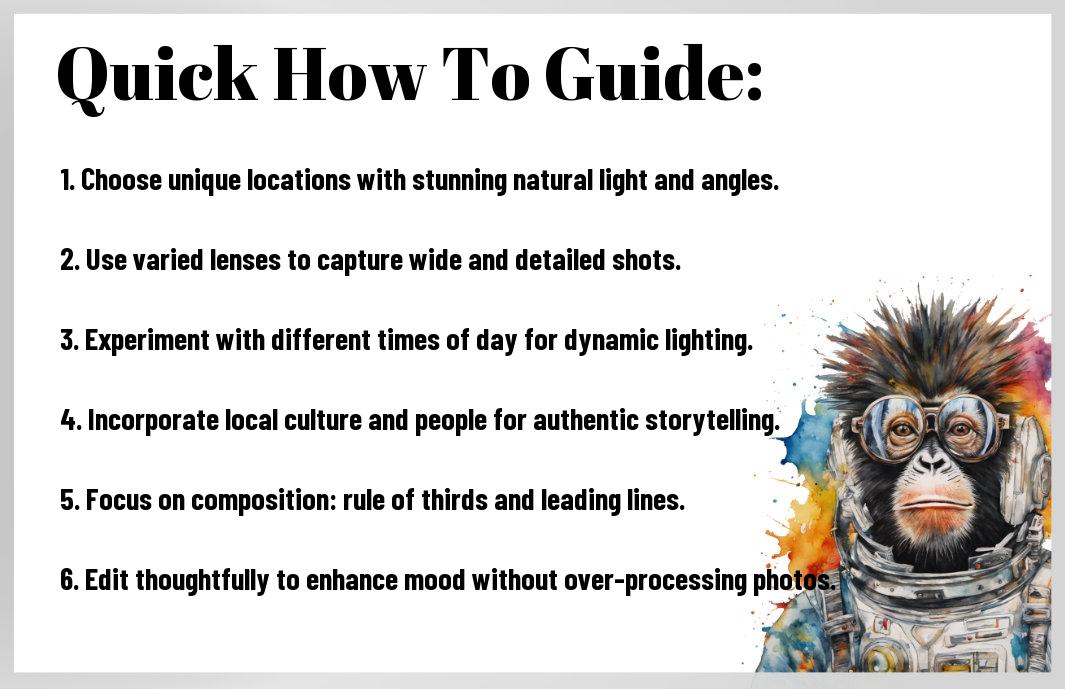
Composition is the backbone of stunning travel photography, transforming mere snapshots into compelling visual narratives. By mastering the elements that make up strong composition, you can engage viewers and evoke emotion through your photographs. This section breaks down key techniques, empowering you to frame each shot with intention and creativity, making your travel adventures even more memorable.
The Rule of Thirds and Its Creative Variations
The Rule of Thirds is a fundamental principle that divides your image into a grid of nine equal segments, guiding you to place focal points along the intersecting lines. By aligning elements like landscapes, faces, or architectural features with these divisions, your images gain balance and intrigue. Experimenting with variations, such as off-center compositions or combining the rule with symmetry, allows you to elevate your creativity and create more compelling visuals.
Utilizing Leading Lines for Dynamic Shots
Leading lines draw the viewer’s eye through your photograph, creating depth and guiding them toward the subject. Roads, rivers, or paths can serve as powerful tools in your composition arsenal. Use these elements to frame your subject or lead to a vanishing point in the background. When done effectively, leading lines can transform a flat image into a multi-dimensional experience that captivates and stirs emotion, beckoning viewers to travel along with you through your photography.
To effectively harness leading lines, consider the perspective from which you shoot. Low angles can emphasize the length of a road, while a high vantage point can showcase the curves of a river winding through a landscape. Pay attention to how these lines interact with the foreground and background, using them to create visual journeys within your frame. This technique is particularly powerful in landscapes and urban settings, where the viewer’s eyes can naturally follow the path laid out, immersing them deeper into the scene you’ve captured.
Harnessing the Power of Light: Timing and Techniques
Your success in travel photography largely hinges on your ability to master light. The interplay between natural light and your subject can drastically alter the mood and quality of your images. Knowing when and how to capture that light makes all the difference. Factors like the time of day, weather conditions, and your shooting techniques can elevate your photos from ordinary to extraordinary. Seizing opportunities during ideal lighting can transform any landscape into a mesmerizing visual experience.
The Golden Hour and Its Transformative Effects
The golden hour, occurring shortly after sunrise and before sunset, bathes your surroundings in a warm, soft glow. This magical light softens harsh shadows while enhancing colors, making it an ideal time for capturing landscapes and portraits alike. Shooting during this period can result in rich, vibrant tones, allowing you to evoke emotion and storytelling in your photography.
Playing with Shadows and Highlights for Depth
Utilizing shadows and highlights effectively can add depth and dimension to your images. By positioning your subject with the light source at strategic angles, you create striking contrasts that accentuate textures and shapes. Experimenting with backlighting, sidelighting, and even silhouettes can produce visually stunning results. The balance between light and dark can guide the viewer’s eye, emphasizing storytelling elements in your shot.
Consider using shadows not merely as dark areas but as integral components of your composition. For instance, a tree casting an intricate pattern on the ground can lead your eye through the frame while creating visual tension. Experiment with varying angles and settings, from urban environments to natural landscapes, to see how highlights can accentuate a feature like a mountain range. Engaging with shadows adds a layer of complexity, allowing your photographs to tell more intricate stories and draw your audience deeper into the scene.
Capturing Authentic Moments: The Human Element
Finding and highlighting the human element in your travel photography transforms your images from mere snapshots into compelling visual stories. Authentic moments reveal emotions, cultures, and connections that resonate personally with viewers. Engage with individuals in their environments, allowing their stories to unfold naturally, which can add layers of depth and context to your photographs, making them not just visually stunning but also heartbreakingly relatable.
Strategies for Engaging with Your Subjects
To connect with your subjects, approach them with genuine curiosity and respect. Start by observing their surroundings, taking note of small details that might spark conversation. A warm smile and open body language can break the ice, while asking thoughtful questions enhances engagement—whether it is about their craft, family, or traditions. Allowing subjects to feel comfortable will result in more authentic expressions, making your images powerful representations of their lives.
The Balance of Candid Versus Posed Shots
The art of captivating travel photography often rests in striking a balance between candid and posed shots. While candid moments can reveal unfiltered emotions and stories, posed portraits provide a sense of intentionality and focus, allowing you to highlight specific aspects of a subject’s life or culture. Together, these approaches create a richer narrative in your portfolio, illustrating the vibrant tapestry of human experiences across different locales.
Finding the right mix of candid and posed shots enhances your storytelling. Candid photos may capture spontaneous laughter shared between friends or the delicate movement of a local artisan at work, revealing the raw spirit of a place. In contrast, posed images can emphasize the pride of a festival performer in traditional attire or the strength of a child carrying jerry cans for miles. Switching between these styles invites viewers into these moments, inviting them to feel the connection without sacrificing authenticity. Experimenting with both approaches allows you to express the multifaceted nature of travel and the diverse characters you encounter along the way.
Post-Processing Magic: Elevating Your Images
The art of post-processing breathes new life into your travel photographs, allowing you to refine colors, adjust exposure, and create a cohesive visual narrative. From correcting minor flaws to enhancing the overall mood, your editing techniques can elevate your images to breathtaking levels while preserving the authenticity of your initial capture. Diving into editing software can seem daunting, but with practice, you’ll unlock a world of creative possibilities that will make your travel stories even more compelling.
Essential Editing Tools and Techniques
Selecting the right editing tools significantly impacts your workflow and output. Adobe Lightroom and Photoshop are industry standards, enabling you to adjust exposure, contrast, and saturation with precision. For quick fixes and mobile editing, apps like Snapseed and VSCO offer user-friendly options. Familiarizing yourself with techniques such as cropping for composition enhancement and using adjustment layers for selective editing can transform a good photograph into a stunning one.
Maintaining Authenticity While Enhancing Visual Appeal
Authenticity should always be at the forefront of your editing process. Strive to enhance your image without sacrificing the reality of the scene. Tools like clarity and vibrance should be used sparingly, ensuring that colors remain true to life while still standing out. A subtle approach to sharpening details and reducing noise can help maintain the natural feel of your photograph while making it visually engaging.
The challenge lies in maximizing visual appeal without drifting into over-editing. Use a light touch when adjusting the elements. For instance, increasing vibrance instead of saturation allows for richer colors while preserving skin tones in portraits. Regularly refer back to your original image to assess your edits, ensuring you stay grounded in the scene’s authenticity. By combining thoughtful adjustments with an eye for detail, your post-processing will reflect the wonder of the world you experienced, inviting others to find the same joy through your lens.
Summing up
Upon reflecting, it’s clear that your journey into breathtaking travel photography can be exceptionally rewarding with the right insights. By implementing the techniques shared, you can transform your adventures into stunning visual narratives that resonate with viewers. Embrace the art of storytelling through your lens, explore diverse perspectives, and capture the beauty around you. With practice and a keen eye, you have the power to create images that not only document your travels but also inspire others to initiate on their own photographic adventures.
Fine Art Photography Prints
Own a museum-quality archival print by Edin Chavez
Hahnemühle archival paper · From $95
BROWSE PRINTS LIMITED EDITIONS