Art and science intertwine beautifully in the field of photography, where each technological advance has shaped how you capture and perceive images. From the earliest pinhole cameras to modern digital innovations, understanding these historical milestones not only enriches your appreciation of photography but also enhances your own creative practice. In this blog post, you’ll explore the transformative technologies that have defined photography over the years, shedding light on how they influence your artistic expression today.
Capturing Light: The Fundamental Principles of Photography
Understanding the core of photography hinges on your ability to manipulate light. This medium is not just a tool but the very essence of how images are created. With varying exposure settings, such as aperture, shutter speed, and ISO, you control the amount of light that reaches your camera sensor. Mastering these components allows you to craft images that reflect your vision, whether it’s a sunlit landscape or a moody evening portrait.
The Physics of Light and Its Interaction with Surfaces
The behavior of light involves fascinating physics that impacts your photographs. When light strikes surfaces, it can be absorbed, reflected, or refracted. Each interaction alters the appearance of colors and details in your image. For instance, dull surfaces scatter light, providing texture, while shiny surfaces create highlights. Your understanding of these interactions helps you predict how certain surfaces will render under various lighting conditions, ultimately enhancing your photographic results.
Understanding Lenses: The Gateway to Detailed Images
Lenses, often deemed the heart of your camera system, dictate the clarity and depth of field in your images. They gather light and focus it onto the sensor, shaping the way you experience the world through your photos. Different types of lenses serve unique purposes; wide-angle lenses capture expansive landscapes, while telephoto lenses bring distant subjects closer with stunning detail.
Exploring the multitude of lens options opens up a new dimension in your photography. Prime lenses, typically featuring a fixed focal length, offer exceptional sharpness and low light performance. Zoom lenses, on the other hand, provide versatility in framing your shot without changing your position. Familiarity with lens construction and focal lengths allows you to compose photos that fulfill your creative vision. Factors like aperture size further influence bokeh and depth of field, letting you experiment with sharp subjects against soft backgrounds. By mastering your lens choices, you elevate your photography, transforming ordinary moments into extraordinary storytelling through visuals.
Milestones in Camera Technology: From Daguerreotypes to Digital
The trajectory of camera technology showcases brilliant advancements that mirror societal progress. Early innovations set the stage for breakthroughs that redefined how we capture and preserve moments.
- 1839: Daguerreotype introduced; many hailed as the first practical photograph.
- 1888: Kodak camera launched, simplifying photography for the masses.
- 1935: Introduction of Kodachrome film brought color photography to life.
- 1963: Polaroid filed for a patent on instant photography.
- 2000s: Digital cameras became predominant, revolutionizing photography.
Thou carry the legacy of innovation throughout the ages, from the first captured image to today’s digital marvels.
| Year | Innovation |
| 1800s | Invention of the camera obscura |
| 1839 | Daguerreotype by Louis Daguerre |
| 1900 | Kodak Box camera |
| 1960s | First commercial use of digital cameras |
The Invention of the Camera Obscura and Early Innovations
The camera obscura, originating in the 5th century BCE, served as the precursor to modern cameras. This simple device projected images of the external world onto a surface through a small hole, capturing light in ways previously unimaginable. Over centuries, various enhancements were made, leading to images being permanently recorded on surfaces, paving the way for true photography.
The Transition to Film: A Revolutionary Leap
Film photography marked a significant advancement in how you capture images, bringing convenience and vibrancy to the art form. The introduction of roll film in the late 19th century allowed photographers to shoot multiple images without cumbersome glass plates. This dramatic shift democratized photography, enabling amateur photographers to experiment with new techniques and styles.
The introduction of color film in the 1930s further changed the landscape, allowing for the richness of images that were previously only seen in black and white. As film technology evolved, so did the options available to you, from various emulsions to instant film. It set the stage for the transition to digital, giving way to the modern era where instant sharing of life’s moments became the norm.
Image Processing: From Darkroom Techniques to Digital Manipulation
The evolution of image processing has transformed the way you capture and enhance your photographs, transitioning from labor-intensive darkroom techniques to instantaneous digital manipulation. Each phase of this journey has unveiled innovative methods for improving image quality and expression, allowing photographers greater creative control. Understanding these advancements enriches your appreciation of the art and science behind photography.
Chemical Developments in Photographic Processing
In the early days of photography, chemical processes laid the groundwork for image development. Photographers relied on silver halides, which reacted to light during exposure, and then were developed using chemicals like developer, stop bath, and fixer. These darkroom techniques required precision and patience, as you mixed various chemicals to achieve desired contrasts and tones—each tray of development represented an opportunity to create something unique.
The Rise of Digital Editing: Software That Changed the Landscape
As technology progressed, the advent of digital editing software revolutionized the photography landscape. Programs like Adobe Photoshop and Lightroom shifted image processing from a physical to a digital domain, allowing photographers to manipulate images with unparalleled ease. You can adjust color balance, crop images, or apply effects instantaneously, shifting your workflow from meticulous darkroom procedures to a few clicks of a button.
Photoshop, which debuted in 1988, offered tools like layers and filters that changed the game for creative image manipulation. By the early 2000s, other programs advanced rapidly, with Lightroom allowing you to efficiently manage your photo library and perform batch edits, enhancing your productivity. These innovations have democratized photography; you no longer require extensive training or a darkroom setup to create stunning images, enabling everyone from novices to professionals to explore their artistic vision with digital flexibility.
The Impact of Technology on Artistry: A Dual Perspective
Technology’s evolution in photography has undeniably reshaped artistic expression, providing photographers with unparalleled tools and capabilities. As you explore the impact of these advancements, you’ll discover how they not only enhance creativity but also provoke discussions surrounding authenticity and the essence of artistry itself.
How Advances in Equipment Foster Creative Expression
With each fresh innovation in photography gear, from high-resolution sensors to advanced autofocus systems, your ability to capture images improves significantly. Camera systems equipped with features like low-light performance and creative filters can inspire you to experiment, pushing the boundaries of your creativity. Beyond traditional methods, mobile photography has introduced a whole new world, allowing for spontaneous capture and sharing, thereby expanding how you view art creation in everyday life.
The Debate: Is Technology Enhancing or Diluting Artistic Vision?
The debate on technology’s role in photography raises thought-provoking questions. Some argue that technological advancements enhance artistic vision, offering powerful tools for expressing complex ideas and emotions. Others contend that reliance on technology can lead to a dilution of the artist’s true vision, where the focus shifts from creativity to technical perfection. This duality invites you to ponder where the balance lies in your own practice.
Consider the example of renowned photographer Andreas Gursky, whose large-scale images blend meticulous detail with digital manipulation. Critics often argue that such techniques can overshadow raw talent, suggesting that the artist’s original intent may be lost amidst the layers of digital enhancement. Conversely, supporters see these methods as an evolution in artistic expression, enabling you to reflect deeper narratives and complex realities that traditional photography may not convey. This ongoing debate invites individual reflection on your experience, prompting the question of whether technology is a facilitator or an impediment to genuine artistic vision.
The Future of Photography: Trends Shaping Tomorrow’s Capture Techniques
Photography is on the brink of unprecedented transformation with trends that not only enhance how you capture moments but also reshape the very essence of visual storytelling. From advances in sensor technology to innovative editing software, you can expect a shift towards hyper-realistic imagery and immersive experiences. As the landscape continues to evolve, staying updated on these trends will equip you to harness the full potential of the technology in your photographic endeavors.
The Role of Artificial Intelligence in Image Creation
Artificial intelligence is revolutionizing image creation, allowing you to streamline workflows and enhance creativity. AI algorithms can analyze vast amounts of data, assisting in tasks such as automatic image tagging and content-aware editing. By predicting optimal camera settings and offering real-time editing suggestions, AI is transforming how you approach both shooting and post-processing, making photography more accessible and efficient.
Emerging Technologies: Drones, 360-Degree Photography, and Beyond
Drones and 360-degree photography are just the beginning of an exciting era in capturing perspectives previously thought unattainable. With compact drones equipped with high-resolution cameras, you can easily achieve stunning aerial shots that elevate your photography to new heights. 360-degree photography immerses viewers in a captivating visual experience, allowing them to explore scenes in full detail from every angle.
As drones become more affordable and user-friendly, the possibilities for creativity broaden significantly. You might find yourself experimenting with dynamic angles and unconventional compositions that were once reserved for professional cinematographers. Similarly, 360-degree cameras are not only reshaping landscape photography but also redefining genres such as real estate and virtual tourism. As these technologies advance, they open doors for storytelling and interactive visual experiences, transforming how you engage with your audience.
Summing up
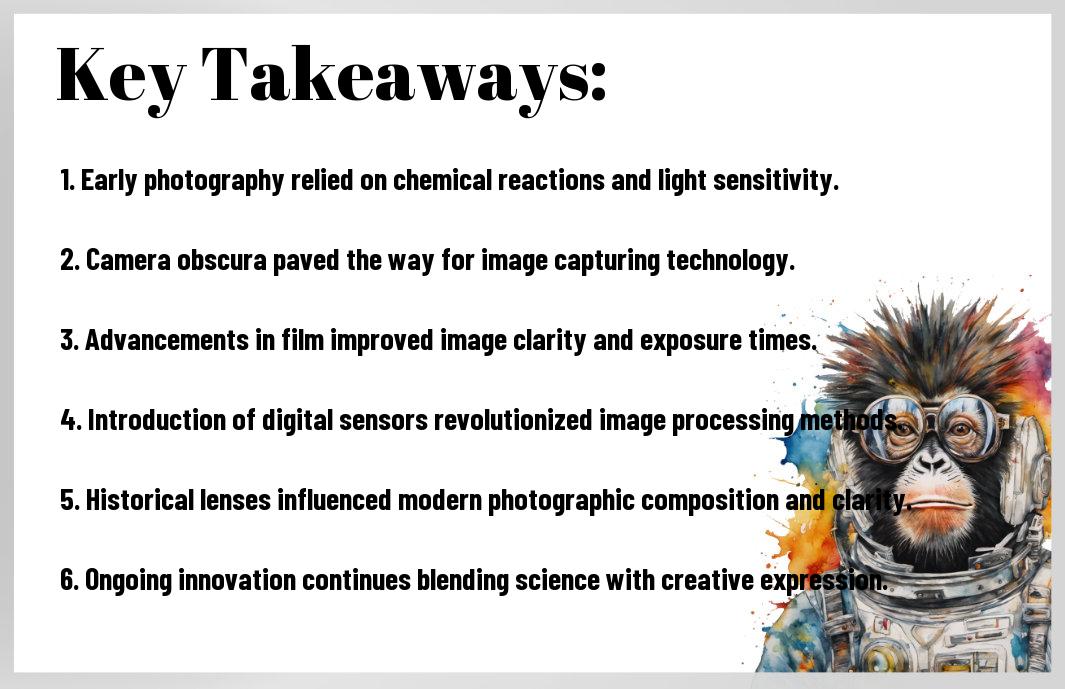
Following this exploration, you have gained insight into how historical advances in photography technology have shaped the art form you appreciate today. By understanding the scientific principles underlying these innovations, you can enhance your own photography skills and deepen your appreciation for the craft. As you continue to capture moments, think about the technological journey that has made it possible for you to express your unique vision through the lens.
Fine Art Photography Prints
Own a museum-quality archival print by Edin Chavez
Hahnemühle archival paper · From $95
BROWSE PRINTS LIMITED EDITIONS