Light shapes your perception of the world, and its manipulation has led to groundbreaking developments in photography. Throughout history, various innovations have refined how you capture moments, turning fleeting images into lasting memories. From early experiments with pinhole cameras to today’s digital revolution, each advancement has helped to transform your understanding of visual storytelling. In this blog post, you will explore the remarkable journey of photography’s evolution and discover how past inventions have paved the way for the stunning images you create today.
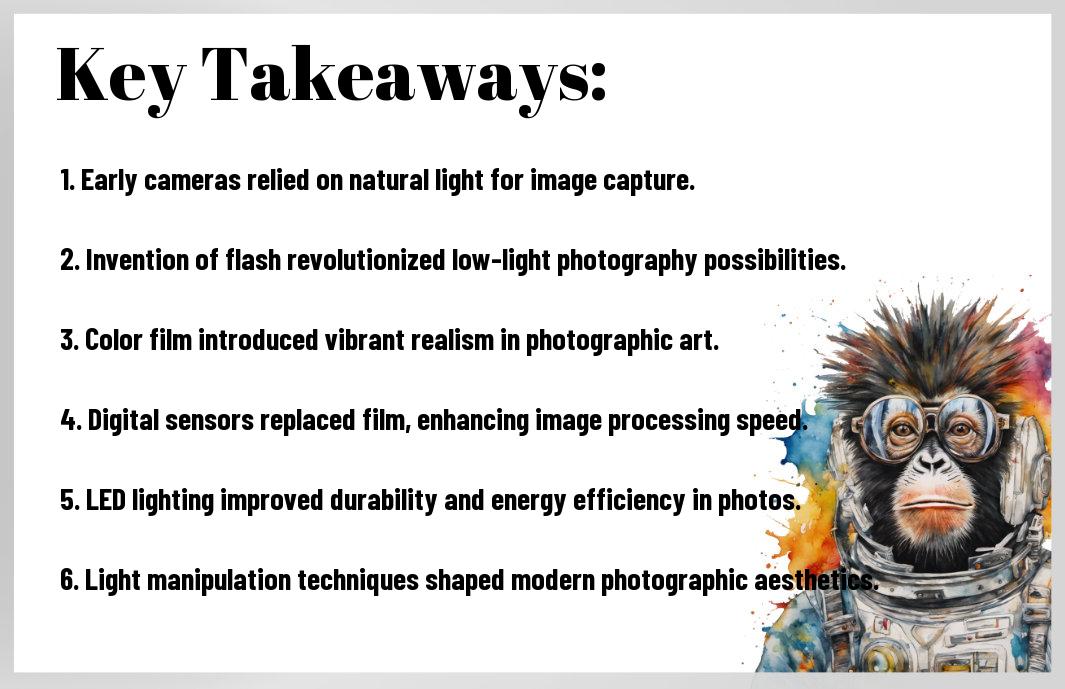
The Pioneering Inventions That Redefined Imaging
Throughout photography’s evolution, several pivotal inventions have dramatically redefined the way you capture and perceive images. From contraptions that laid the groundwork for future advancements to those that revolutionized image production, each innovation has played a significant role in shaping your understanding of photography today.
The Impact of the Camera Obscura on Early Photography
The camera obscura served as a foundational tool in the early study of optics and photography. By projecting an external scene onto a surface inside a darkened room or box, you could see an inverted image in real-time. This fascinating effect sparked the imagination of artists and scientists alike, encouraging exploration in capturing reality through lenses.
The Advent of Daguerreotypes and Their Cultural Significance
The introduction of daguerreotypes in 1839 marked a watershed moment in photography. This revolutionary method allowed for high-detail, one-of-a-kind images that captivated the public and altered cultural narratives. People could suddenly possess a lifelike representation of themselves or loved ones, creating fascination and demand for portraiture in both personal and societal contexts.
| Aspect | Details |
|---|---|
| Pioneering Inventor | Louis Daguerre |
| Year Introduced | 1839 |
| Image Quality | Incredibly detailed and sharp |
| Type of Image | Single, unique photographs |
| Impact on Society | Created a new demand for portraiture |
As you investigate deeper into the cultural significance of daguerreotypes, it’s noteworthy how their introduction generated profound changes in societal dynamics and personal identity. Individuals sought these portraits to document their lives, which in turn influenced fashion trends, social standing, and family legacies. Wealthy patrons often commissioned them for display, while the middle class soon gained access to the technology, reshaping how societies viewed themselves.
- Knowing that access to daguerreotypes fostered a new sense of self-perception and status among different social classes showcases the transformative power of photography.
| Aspect | Details |
|---|---|
| Popular Subjects | Individuals, families, and landscapes |
| Duration of Exposure | Ranged from several minutes to half an hour |
| Materials Used | Copper plates coated with silver iodide |
| Limitations | Unique images, no means for duplication |
| Legacy | Influenced future photographic processes |
The Evolution of Film: Capturing Moments in Time
The journey of photography evolved dramatically with the advent of film, enabling you to freeze fleeting moments in history. Film innovations transitioned from glass plates to lightweight celluloid, enhancing portability and accessibility for amateur photographers. This transformation allowed everyday people to document their lives, events, and milestones in ways previously restricted to professionals, reinforcing photography’s role as a tool for personal expression and cultural preservation. Together, these advancements paved the way for a vibrant visual history, leading to today’s omnipresent photography culture.
The Role of Celluloid Film in Democratizing Photography
Celluloid film played a pivotal role in making photography affordable and accessible for the masses. With its introduction in the late 19th century, you could easily carry your camera around without being burdened by the heavy glass plates that were once the norm. This shift transformed photography from an elite hobby into a widespread practice, allowing people from various backgrounds to capture their stories and experiences, ultimately reshaping societal narratives through personal imagery.
Innovations in Color Photography and Their Societal Impacts
The introduction of color photography in the early 20th century was a game-changer, extending the emotional resonance of images. This advancement captivated audiences and profoundly affected how you perceive both everyday life and historic events. With the ability to capture vibrant hues, you now can convey a more accurate representation of reality, enhancing connection and relatability in imagery.
The shift to color photography came in several noteworthy stages, starting with the autochrome plates in 1907. This innovation enabled photographers to showcase their subjects in lifelike color instead of monochrome, igniting fascination among the general public. By the mid-20th century, Kodachrome became popular, marking a new era in amateur photography that encouraged people to explore their world creatively. You likely notice how color images of key social movements and personal milestones often evoke stronger emotional responses, fostering a collective cultural memory. This emphasis on color not only shaped the aesthetic of photography but also influenced fashion, advertising, and entertainment, highlighting how visual storytelling impacts your view of the world.
Light Manipulation: Flash and Beyond
Advancements in light manipulation have significantly transformed photography, introducing artificial light sources that allow you to capture images under varied conditions. The introduction of flash photography dramatically expanded creative possibilities; suddenly, you could illuminate subjects in dim environments, enhancing detail and depth. From the iconic flashbulbs of the mid-20th century to modern speedlights, these innovations have not only transformed everyday photography but have also influenced professional practices across multiple genres.
The Development of Artificial Lighting Techniques
The evolution of artificial lighting techniques opened new doors for photographers throughout history. Early attempts, like the magnesium flash, allowed for brief but intense bursts of light, paving the way for more sophisticated lighting systems. Over time, technology improved, transitioning from flashbulbs to electronic flash units, which provided consistent and controllable light. These advancements not only facilitated nighttime photography but also allowed you to experiment creatively with shadow and illumination.
The Influence of Flash Photography on Journalism and Art
Flash photography significantly impacted both journalism and art, allowing you to document events with unparalleled clarity and emotion. In journalism, iconic images from conflicts and cultural movements gained power through the immediacy and drama created by artificial lighting. Artists too embraced flash, using it to manipulate light for striking visual effects, thereby challenging traditional techniques and perceptions of light in photography.
The profound influence of flash photography is evident in its ability to capture gripping moments with an intensity that natural light sometimes cannot achieve. Consider iconic images from the Vietnam War or the civil rights movement; flash photography enabled you to witness raw emotion and urgency, shaping public perception in real-time. Artists like Andy Warhol harnessed flash techniques to create impactful artworks, blurring the line between photography and fine art. By enhancing visibility in the dark, flash not only illuminated subjects but also breathed life into the very stories and narratives that resonate through history, forever transforming the visual landscape of photography.
From Analog to Digital: The Revolutionary Transition
The shift from analog to digital photography marked a pivotal moment in capturing and sharing images. Traditional film cameras required meticulous techniques, whereas digital cameras democratized photography, allowing you to take countless shots without the expense of film. This transition also streamlined the workflow; images could be instantly viewed, edited, and shared, leading to a significant reduction in the time between capturing a moment and presenting it. The evolution of accessibility and versatility redefined the boundaries of photography, encouraging more creativity and experimentation than ever before.
How Digital Sensors Changed the Photography Landscape
Digital sensors replaced film as the primary technology for capturing images, transforming the way you approach photography. These sensors offer a much higher dynamic range, enabling you to shoot in diverse lighting conditions while retaining exceptional detail. You no longer had to worry about the constraints of film grain or the limitations of exposure. The clarity and richness provided by digital sensors have led to significant advancements in professional photography, influencing genres such as portrait, landscape, and sports photography.
The Emergence of Smartphone Cameras and Their Global Effect
Smartphone cameras have revolutionized photography, placing high-quality imaging capabilities in the palm of your hand. With advancements in optics and software, these devices enable you to capture professional-grade images effortlessly. The proliferation of smartphones has made photography universally accessible, empowering billions of people to become creators and storytellers. Social media platforms have further fueled this trend, offering a space where images can be shared instantly, resulting in a global conversation around visual storytelling.
Smartphone cameras are now a primary method for photography across the globe, with over 3.5 billion smartphone users worldwide as of 2023. This immense reach fosters a cultural shift where everyone, regardless of background, can document their lives and share their experiences. Social media giants like Instagram and TikTok have contributed immensely to this phenomenon, where visual content reigns supreme. The immediacy of smartphone photography encourages spontaneity, giving rise to new styles and trends like on-the-go documentations and real-time sharing. As a result, you’ve witnessed an unprecedented surge in creativity, connecting people through shared imagery and inspiring movements around the world.
The Aesthetic Shifts in Photography: Changing Perspectives
The aesthetics of photography have continually evolved, influenced by technological advancements and cultural movements. From the meticulously staged compositions of early portraiture to the spontaneity of candid shots, photography reflects the changing values and tastes of society. Modern photographers often challenge traditional conventions, exploring new forms of expression. This shift encourages you to rethink what it means to capture the essence of a moment, pushing the boundaries of your own creativity.
The Rise of Abstract and Conceptual Photography
Abstract and conceptual photography emerged in response to the increasing availability of sophisticated camera technology and a desire to transcend mere representation. You might find artists experimenting with forms, colors, and unconventional subjects, blurring the lines between photography and fine art. These works often invite interpretation, allowing you to connect with the image on a personal level beyond its surface aesthetics.
The Role of Social Media in Shaping Modern Visual Culture
Social media has significantly transformed how you engage with photography, democratizing the medium and amplifying diverse voices. Platforms like Instagram and Pinterest enable instant sharing and feedback, which influences trends and styles in real-time. Photographers can showcase their work to global audiences, fostering community and collaboration while challenging traditional gatekeepers in the art world.
Consider platforms like Instagram, where over one billion active users share visual content daily. You are part of a global conversation that influences photographic trends, with hashtags driving the popularity of specific styles, such as minimalism or surrealism. This immediacy allows you to connect with other creatives and gain inspiration from around the world, making it clear that social media is not just a sharing tool, but an evolving canvas that enriches contemporary photography and visual expression.
To wrap up
On the whole, understanding the art of light and the historical innovations that transformed photography equips you with a deeper appreciation of both the medium and its evolution. As you explore the techniques and technologies that have shaped photographic practices, you gain insight into how these advancements reflect cultural shifts and personal expression. Embracing this knowledge not only enhances your photographic skills but also enriches your perspective on the rich tapestry of visual storytelling that continues to evolve today.
Fine Art Photography Prints
Own a museum-quality archival print by Edin Chavez
Hahnemühle archival paper · From $95
BROWSE PRINTS LIMITED EDITIONS