It’s time to elevate your macro photography skills with lesser-known techniques that can make a significant impact on your work. While you may have mastered the basics, exploring these often-overlooked tips will help you capture stunning details and achieve extraordinary results. From optimizing your equipment to utilizing natural elements in innovative ways, these insights will guide you in creating compelling and breathtaking macro images that truly stand out. Dive in to discover how these strategies can transform your approach and enhance your creative vision.
Understanding Macro Photography
Before you investigate the world of macro photography, it’s necessary to grasp its unique characteristics and intricacies. This genre showcases stunning close-up details of small subjects, allowing you to explore textures, colors, and patterns that often go unnoticed. By familiarizing yourself with the foundational principles of macro photography, you will not only enhance your skills but also elevate your overall photographic experience.
Defining Macro Photography
About macro photography, it is often defined as capturing subjects at a ratio of 1:1 or greater, meaning you photograph an object at its actual size or larger. This level of detail reveals intricate aspects of the subject, highlighting features that are typically absent in standard photography, making it a captivating form of artistic expression.
Common Challenges in Macro Photography
Around macro photography, you will encounter various challenges that can test your skills and patience. These can include managing depth of field, achieving sharp focus, and dealing with natural elements like wind and light. Each of these factors can significantly impact the quality of your images, necessitating a keen problem-solving approach.
For instance, achieving proper focus can be particularly elusive in macro photography, as the shallow depth of field often leaves much of the image blurred. This challenge requires precision and practice to refine your technique. Additionally, fluctuating conditions in outdoor environments can lead to unwanted movement, further complicating the process. Understanding these hurdles will prepare you to tackle them head-on, improving your photography significantly.
Essential Gear for Macro Photography
If you want to elevate your macro photography, investing in the right gear is vital. High-quality equipment can significantly impact the clarity and detail of your images. Focus on assembling a toolkit that complements your shooting style, allowing you to capture stunning close-ups with ease.
Camera and Lens Selection
Between DSLRs, mirrorless cameras, and dedicated macro lenses, choosing the right setup can be overwhelming. Prioritize a camera that offers good low-light performance and fast autofocus, paired with a macro lens that provides an optimal magnification ratio, typically between 1:1 to 2:1, to get that perfect shot of tiny subjects.
Tripod and Stability Solutions
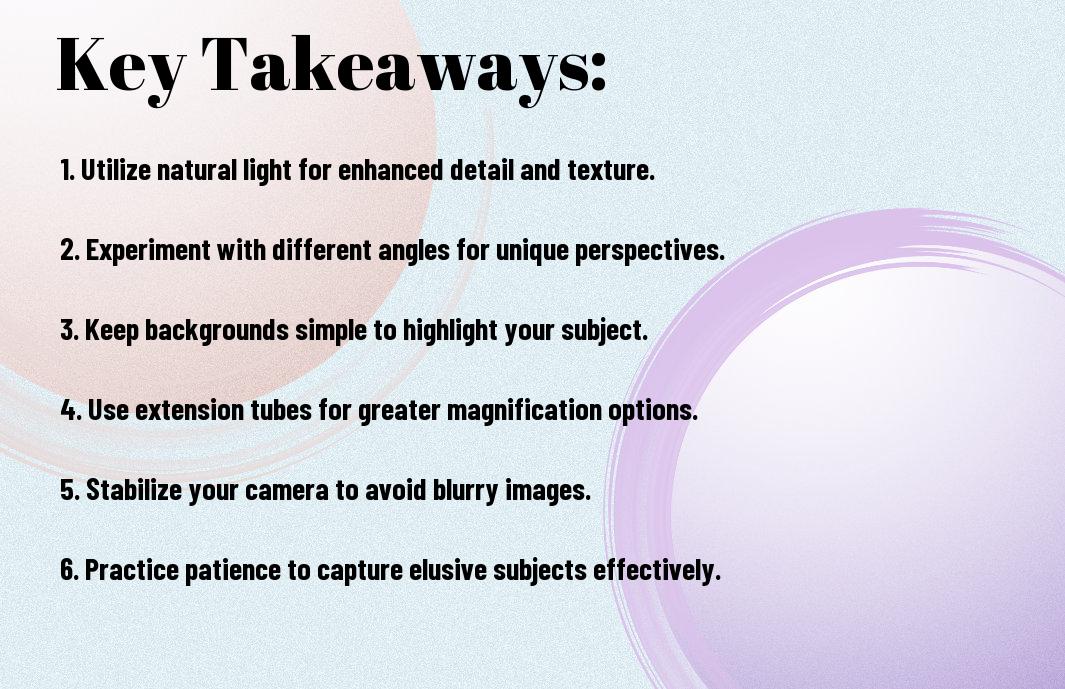
Gear that stabilizes your camera is vital to achieve sharp images in macro photography. When you’re capturing intricate details, even the slightest movement can blur your shot. A sturdy tripod, along with accessories like a focusing rail or remote shutter release, can greatly enhance your ability to shoot at slower shutter speeds.
Lens choice plays an important role in macro photography, but equally important is how you stabilize your setup while shooting. A reliable tripod minimizes camera shake, and employing techniques like peering through the viewfinder can help you maintain focus on your subject. Additionally, using a lens with vibration reduction (VR) or image stabilization (IS) can also further reduce blurriness, allowing for more flexibility in your shooting conditions.

Lighting Techniques for Macro Photography
Your ability to capture intricate details in macro photography largely hinges on your understanding and manipulation of light. Whether you’re photographing delicate petals or the texture of insects, the right lighting technique can significantly enhance your images. Experimenting with different sources and angles of light can reveal stunning details that you might otherwise miss.
Natural Lighting vs. Artificial Lighting
To achieve the best results in macro photography, you should consider both natural and artificial lighting options. Natural light, especially during golden hour, can provide a soft yet vibrant illumination to your subjects. On the other hand, artificial lighting, including LED panels and flash, allows for more control and consistency, enabling you to create stunning effects regardless of the time of day.
Using Reflectors and Diffusers
For optimal lighting in your macro photography, using reflectors and diffusers can make a significant difference in your images. Reflectors bounce light onto your subject, filling in shadows and providing a softer look, while diffusers help to soften harsh light, creating a more uniform illumination.
Understanding how to effectively use reflectors and diffusers can elevate your macro photography. By positioning a reflector opposite your light source, you can illuminate dark areas without introducing harsh lighting. Diffusers, on the other hand, can be placed between your subject and the light source, softening the brightness and reducing glare. This combination allows you to capture stunning, well-lit images that highlight intricate details without the distraction of harsh shadows or highlights.

Creative Composition Strategies
All successful macro photography relies on creative composition strategies to elevate your images. By focusing on unique arrangements and interactions between subjects, you can create compelling photographs that draw in viewers. Consider elements such as balance, pattern, and the rule of thirds, and don’t be afraid to break conventional rules to create a captivating visual narrative.
Utilizing Depth of Field
Before you shoot, take a moment to think about how depth of field will affect your image. A shallow depth of field can isolate your subject and create a pleasing bokeh effect, while a deeper focus might capture more of your surrounding environment, showcasing intriguing details. It’s all about finding the right balance that enhances your composition.
Framing and Perspective Tips
Depth plays a significant role in framing and perspective. By adjusting your angle and position, you can highlight the unique features of your subject. Consider the following strategies:
- Use natural frames, like branches or leaves, to draw attention to your subject.
- Create leading lines that guide the viewer’s eye towards the focal point of your image.
- Experiment with angles to determine the most flattering perspective for your subject.
After incorporating these techniques, you will notice a profound impact on your compositions.
Further enhancing your framing and perspective can significantly elevate your macro photography. Explore the environment carefully, and consider how different viewpoints can transform your image. Here are additional tips to help you refine your approach:
- Incorporate negative space to make your subject stand out even more.
- Vary your distance from the subject to capitalize on various perspectives.
- Pay attention to reflections and shadows that can add depth and mystery to your shots.
After exploring these techniques, your macro photography will be more dynamic and engaging.
Unconventional Tips for Better Macro Shots
To elevate your macro photography, consider these unconventional tips that can enhance your results:
- Utilize alternative light sources, such as LED lights or torches.
- Experiment with different angles and perspectives.
- Incorporate natural elements like dew, water droplets, or fog.
- Play with background textures to add depth.
- Use a shallow depth of field for isolation.
Perceiving the world through this lens can yield astounding results.
Experimenting with Unexpected Subjects
Across your macro photography journey, don’t hesitate to explore unconventional subjects like everyday items or discarded materials. Finding beauty in the mundane can reveal intricate details often overlooked and inspire fresh perspectives. From rusty tools to crumpled papers, let your creativity guide you to capture the unique textures and patterns that emerge when you shift your focus. This approach can transform ordinary objects into captivating visual stories that resonate with your audience.
Incorporating Motion and Abstract Elements
Shots that integrate motion or abstract elements can vastly enhance your macro photography by adding a sense of dynamism and intrigue. By capturing subjects in motion, like a fluttering insect or swaying flowers, you can convey life and energy. Abstract elements, such as out-of-focus backgrounds or swirling patterns, create visual interest and can depict your subject in a striking, non-literal way.
Elements like motion blur and creative framing can produce extraordinary aesthetics in your images. Deliberately capturing objects during movement allows you to portray not just what is seen, but how the subject interacts with its environment. Similarly, incorporating abstract motifs encourages viewers to engage their imagination while interpreting your work. By merging these aspects into your macro photography, you introduce layers of storytelling that make your images unforgettable.

Post-Processing Techniques
Despite your best efforts in the field, post-processing techniques are important for elevating your macro photography. These tools allow you to refine details, enhance colors, and achieve a professional finish that resonates with your audience. By utilizing software effectively, you can transform good images into stunning visuals that capture the essence of your subjects.
Enhancing Details and Textures
With careful editing, you can amplify the details and textures in your macro shots. Focus on sharpening specific areas to draw attention to intricate patterns and features of your subjects. This method not only showcases the beauty of the smallest details but also adds depth to your images, creating a richer visual experience.
Color Correction and Adjustments
On the other hand, achieving accurate colors is vital for true representation in macro photography. Utilize color correction tools in your editing software to adjust hues, saturation, and brightness, ensuring your images reflect reality. This technical adjustment can make a significant difference in the overall appeal of your photographs.
Color adjustments can transform a flat image into a vibrant masterpiece. By using tools like curves and levels, you can manipulate the brightness and contrast, making colors pop without sacrificing quality. It’s important to develop an eye for subtle shifts, as even minor tweaks can lead to impactful changes in mood and perception. Note, the goal is to enhance your subject’s natural beauty while remaining true to its original colors.
Conclusion
On the whole, integrating these rarely discussed tips into your macro photography practice can significantly enhance your skills and results. By focusing on elements like lighting, composition, and utilizing unique perspectives, you can create stunning imagery that sets your work apart. Experimenting with settings and techniques will empower you to capture intricate details that often go unnoticed. Embrace these strategies, and you will see your macro photography transform, allowing your creativity and vision to flourish.
Fine Art Photography Prints
Own a museum-quality archival print by Edin Chavez
Hahnemühle archival paper · From $95
BROWSE PRINTS LIMITED EDITIONS