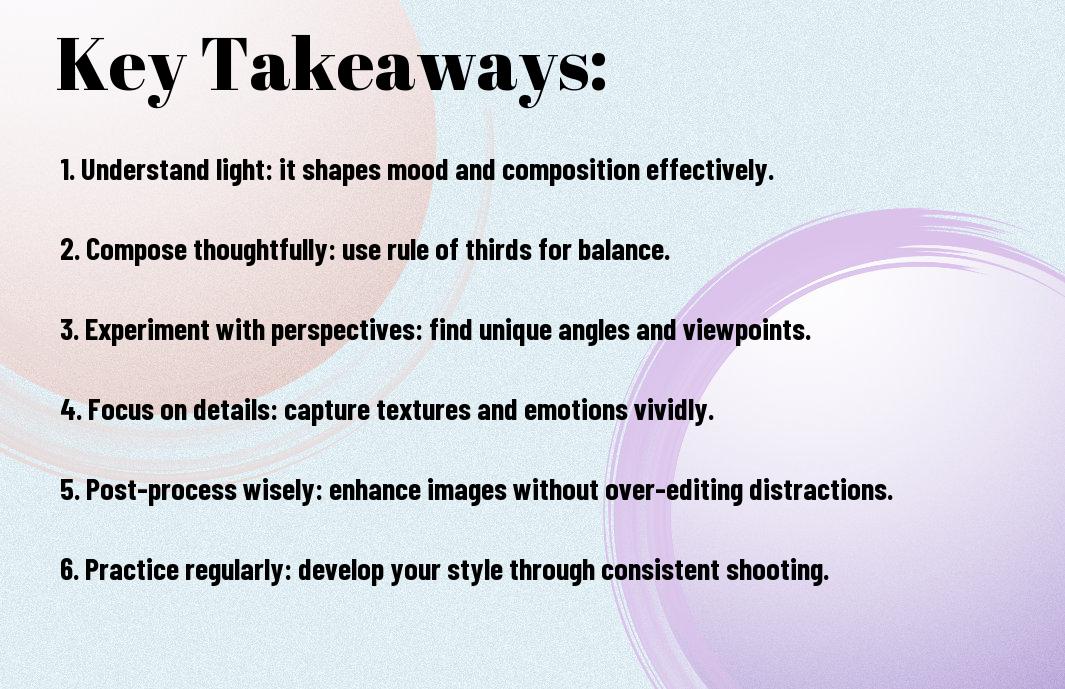
You often seek ways to enhance your photography skills and capture stunning images that tell a story. In this post, we will explore vital tips that can transform your approach to photography, helping you unlock your creative potential and elevate your craft. From mastering lighting techniques to understanding composition, these insights will empower you to take your photography to the next level. Join us as we explore into valuable strategies designed specifically for passionate photographers like you.
Understanding Camera Settings
For any photographer, mastering camera settings is key to elevating your craft. A good understanding of these settings allows you to control the exposure, focus, and overall aesthetics of your images. By familiarizing yourself with your camera’s capabilities, you can make informed decisions that enhance your photographs, ultimately leading to more impactful storytelling through your visuals.
Aperture: The Eye of Your Lens
Below the surface of your camera lies the aperture, which determines how much light enters through the lens. This setting affects the depth of field, enabling you to create stunning portraits with blurred backgrounds or sharp landscapes with every detail in focus. By experimenting with different aperture values, you can control not only the exposure but also the mood and emphasis in your images.
Shutter Speed: Capturing Motion
Understanding shutter speed helps you convey motion and energy in your photography. It is the length of time your camera’s sensor is exposed to light, directly influencing how movement is captured. Fast shutter speeds can freeze action, while slower settings can create beautiful motion blur, adding dynamism to your shots.
In fact, mastering shutter speed is vital for capturing everything from fast-paced sports to gentle water flows. By selecting a higher shutter speed, you can freeze a moment, making it look crisp and clear. Conversely, a longer shutter speed can produce artistic effects, such as smoothing out flowing water or creating light trails in urban scenes. By experimenting with different shutter speeds, you will gain insight into how to enhance the visual narrative of your photographs.
Composition Techniques
It’s necessary to master composition techniques to create visually striking photographs. By considering factors such as balance, symmetry, and the placement of subjects within the frame, you can enhance the overall impact of your images. Thoughtfully arranged elements not only draw the viewer’s eye but also convey a more compelling narrative, making your photography stand out. Experimenting with various techniques will allow you to develop your unique style and improve your storytelling abilities through images.
Rule of Thirds
By dividing your frame into a 3×3 grid and placing your subject along these lines or at their intersections, you create a more dynamic and engaging image. This technique encourages balance and often leads to a more interesting composition, allowing your viewer’s gaze to flow naturally throughout the photograph.
Leading Lines
At the heart of captivating photography is the use of leading lines, which guide the viewer’s eye towards the main subject or focal point of your image. These lines can be anything from roads, paths, or rivers to architectural elements like bridges and fences. You can enhance the depth and dimension of your photographs by positioning these lines strategically. Integrating leading lines not only creates a sense of movement but also invites your audience to explore the scene as if they were part of it.
It’s important to be mindful of how leading lines interact with other elements in your composition. Experimenting with angles and perspectives can significantly affect the way lines are perceived in your photographs. You can create a sense of depth by using lines that draw the viewer’s attention from the foreground into the background. This technique can be particularly effective in landscape photography, allowing you to create a compelling visual journey that keeps your audience engaged.

Utilizing Natural Light
Despite the advancements in artificial lighting, harnessing natural light remains one of the most effective ways to enhance your photography. You can create stunning images by carefully observing how sunlight interacts with your subject, adjusting your position throughout the day to capture the best qualities of natural illumination. Pay attention to the direction, intensity, and color of the light; they all play a significant role in determining the mood and quality of your photography.
Golden Hour Benefits
Golden hour occurs shortly after sunrise and before sunset, producing a warm, soft light that adds an enchanting quality to your photos. You should take advantage of this magical time for outdoor shoots, as the diffused sunlight enhances colors and reduces harsh contrasts. The result is an ethereal quality that elevates your images to a new level, making your subjects pop with a natural glow.
Handling Harsh Shadows
Besides the golden hour, managing harsh shadows is important to ensure your images look polished. You may find that shooting during midday can cast unflattering shadows on your subject, disrupting the overall balance of your composition. Learning to navigate these challenges can greatly enhance your photography skills.
Harsh shadows can detract from the overall quality of your images, but there are techniques to mitigate their impact. Consider using reflectors to bounce light back onto your subject or positioning yourself towards open shade to create softer light. Alternatively, you can experiment with diffusers to soften sunlight directly. Understanding how to manipulate your surroundings is key to achieving balanced and visually appealing images, even in less-than-ideal lighting conditions.

Editing Your Photos
Unlike capturing a great shot, editing your photos allows you to enhance and transform your images to reflect your artistic vision. This step can be fundamental in elevating your craft, helping you correct imperfections, enhance colors, and bring out the emotional impact of your work. By understanding the power of editing, you can turn a good photograph into a stunning piece of art.
Software Options
Editing your photos can be done using various software programs, each catering to different skill levels and preferences. Popular options like Adobe Lightroom and Photoshop offer advanced features for extensive edits, while user-friendly alternatives like Snapseed and Canva are perfect for quick adjustments on the go. Choosing software that suits your needs can streamline your editing process and enhance your creativity.
Basic Editing Techniques
With the right tools at your disposal, you can apply basic editing techniques to significantly improve your images. Start with adjustments like cropping to enhance composition, modifying exposure to brighten or darken your photos, and tweaking contrast to add depth. Additionally, refining colors through saturation and vibrance can create a more striking visual experience.
Editing can also involve straightforward techniques such as sharpening to enhance detail and reducing noise for a smoother appearance. Don’t overlook the power of applying filters or presets, as they can provide a unified aesthetic for your collection. By mastering these basic editing techniques, you’ll confidently elevate your photos, ensuring that they resonate with viewers and communicate your artistic intent.
Practicing Your Craft
Now that you’ve grasped the basics of photography, the next step is to dedicate time to practicing your craft consistently. Regularly engaging with your camera fosters familiarity and encourages you to explore new techniques. Make it a habit to shoot in various lighting conditions, subjects, and environments, allowing you to deepen your understanding and develop a distinctive style. Ultimately, practice helps reinforce your learnings and cultivates an intuitive approach to capturing images.
Experimentation with Styles
On your journey to mastery, experimenting with different styles expands your creative horizons. Don’t hesitate to explore various genres—such as portrait, landscape, or street photography—to discover what resonates with you. Trying out diverse editing techniques or shooting thematically can also lead to revelations about your unique voice. This exploration not only keeps your practice exciting but also enhances your understanding of what works and what doesn’t, enriching your overall skill set.
Seeking Feedback and Critique
Before honing your skills further, consider seeking feedback and critique from others. Engaging with fellow photographers or joining photography communities will expose you to different perspectives that can elevate your work. Constructive critiques can point out areas for improvement that you may overlook, while positive feedback can reinforce what you’re doing well.
Seeking feedback is an important part of your photographic growth. Sharing your images with others invites fresh perspectives and opens a dialogue about your work. Whether it’s through online forums, social media, or local photography groups, the insights you gain can help identify strengths and areas needing attention. Be open to suggestions, as they may reveal new techniques or approaches you hadn’t considered, ultimately contributing to your artistic development.

Building Your Portfolio
Many photographers overlook the significance of a well-crafted portfolio in showcasing their talent and style. Your portfolio is often the first impression potential clients and employers have of your work, making it necessary to present a cohesive collection that embodies your unique vision. Focus on selecting images that not only highlight your technical skills but also reflect your personal approach and artistic voice, ensuring that each piece contributes to a compelling narrative of your photographic journey.
Curating Your Best Work
Work hard to identify the images that truly represent your abilities and style. Take the time to sort through your extensive collection, selecting pieces that are not only technically proficient but also evoke emotion and tell a story. Aim for variety while maintaining a consistent theme, as this can help convey your overall brand and aesthetic to your audience.
The Importance of Presentation
About how you present your portfolio can significantly impact how your work is perceived. A well-organized and visually appealing presentation can enhance the viewer’s experience, allowing your images to shine and speak for themselves. Ensure that your portfolio is easy to navigate, with high-quality prints or digital displays that do justice to your photography, capturing the attention and appreciation of your audience.
To ensure that your portfolio stands out, consider the choice of presentation medium, be it a physical book, a website, or social media. Each platform offers unique advantages, allowing you to connect with different audiences. Pay attention to the layout, including the arrangement of images and use of whitespace, as a clean and professional look elevates your work and fosters a more engaging experience for viewers. Also, consider adding contextual details, such as captions or personal insights, to enhance the narrative of each piece, providing depth and capturing the viewer’s interest.
Conclusion
Now that you have explored the quintvital photography tips, you are well-equipped to elevate your craft. By honing your technical skills, understanding light and composition, and exploring the emotional elements of your subjects, you can create impactful images. Consistent practice, experimenting with different styles, and seeking constructive feedback will further refine your vision. Embrace every opportunity to learn and grow, and soon, your photography will reflect your unique perspective and passion.
Fine Art Photography Prints
Own a museum-quality archival print by Edin Chavez
Hahnemühle archival paper · From $95
BROWSE PRINTS LIMITED EDITIONS