There’s nothing quite like capturing the essence of your travels through stunning photography. With the right techniques and a bit of know-how, you can transform ordinary snapshots into exceptional visual stories. In this guide, you’ll learn proven methods to enhance your travel photography, from composition and lighting to selecting the right gear. By following these tips, you’ll not only improve your skills but also feel more confident in creating images that showcase the beauty of your adventures, making them memorable for years to come.
Mastering Your Gear: Beyond the Basics
Understanding your camera and its capabilities is key to elevating your travel photography. Beyond the basic functionalities, diving deeper into advanced modes like manual settings can unlock creative potentials you didn’t know existed. Experimenting with features such as ISO, aperture, and shutter speed will help you capture moments in their best light, allowing for more flexibility in varying environments. Get to know your gear as if it’s an extension of yourself; the more familiar you are with it, the better your results will be.
Essential Equipment for Top-Tier Travel Photography
Your choice of equipment significantly impacts the quality of your travel photos. A versatile camera body, such as a DSLR or mirrorless, leads the pack, but don’t overlook high-quality lenses suited for different scenarios. A durable tripod is invaluable for capturing clear images in low-light conditions, while polarizing filters help manage glare in bright environments. Additionally, having spare batteries and memory cards ensures you never miss capturing that perfect shot. For a streamlined experience, consider lightweight gear that won’t burden your travels.
Tips for Getting Comfortable with Your Camera Settings
Getting acquainted with your camera’s settings is imperative for achieving consistency in your photographs. Start by switching to manual mode and practice adjusting your ISO, aperture, and shutter speed in varying light conditions. Take the time to shoot in different modes to see how each affects your image output. Additionally, don’t hesitate to refer to your camera manual or seek online tutorials, as these resources can clarify complex aspects. The more you practice, the more intuitive these settings will become.
- Engage in practice shoots, setting specific challenges, like low light or motion capture.
- Apply the ‘exposure triangle’ concept to see how ISO, shutter speed, and aperture interact.
- Utilize the histogram on your camera to understand exposure levels better.
- Don’t shy away from experimenting; the best learning often comes from trial and error.
- Assume that every setting adjustment can dramatically change the storytelling of your image.
Mastering camera settings takes time, so be patient with yourself. Start small by familiarizing yourself with one setting at a time, such as focusing on aperture for depth of field. Once you feel comfortable, introduce ISO and shutter speed into the mix, focusing on how they impact your images cohesively. A keen understanding of your camera enables you to tell richer stories of your travels. Constantly challenge yourself to capture varied subjects and environments, and you’ll find your comfort level improving rapidly.
- Make a habit of reviewing your photos after every shoot to assess what worked and what didn’t.
- Experiment with white balance under different lighting conditions for more accurate colors.
- Stay updated with camera firmware updates to enhance performance and features.
- Join photography forums or groups for tips and invaluable feedback.
- Assume that your journey to mastering your camera is continuous and always evolving.
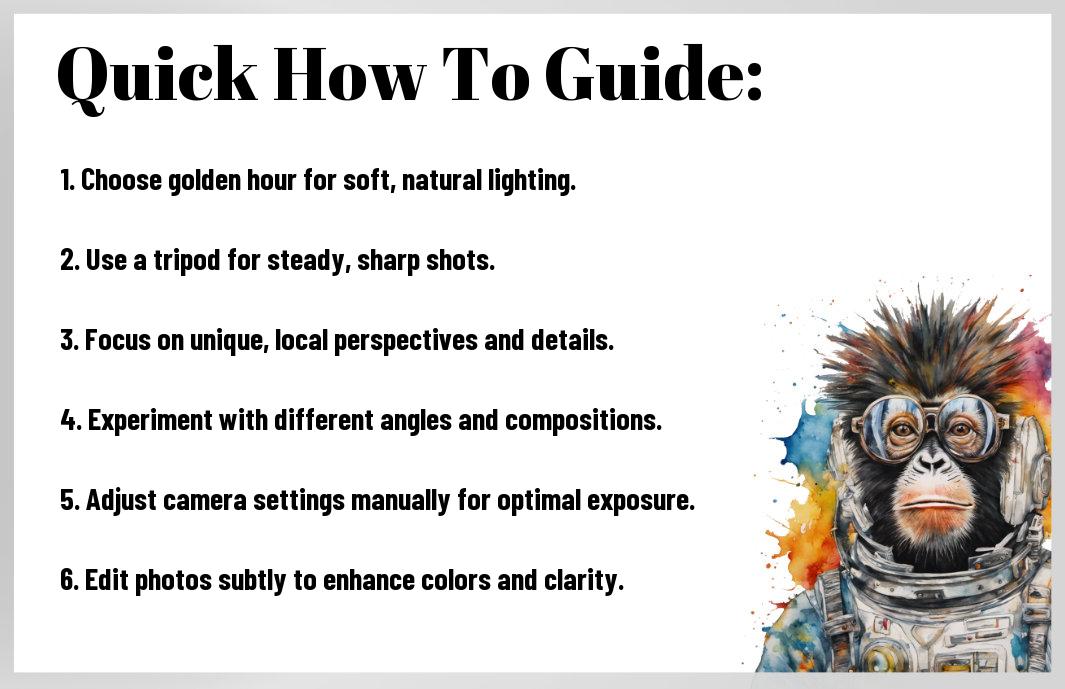
Composing Captivating Shots: The Art of Framing
Your travel photography can achieve new heights by understanding composition techniques that direct the viewer’s eyes to the focal points of your images. By mastering the art of framing, you can create more engaging visuals that tell compelling stories about the places you visit, making your portfolio stand out. Explore various composition techniques, such as leading lines, symmetry, and layers, to craft stunning moments that capture the essence of a destination.
Rule of Thirds and Beyond: Secrets of Effective Composition
The Rule of Thirds serves as a foundational principle in composition, suggesting that you divide your frame into a grid of nine equal parts and position key elements along these lines or at their intersections. This technique encourages balance and invites the viewer’s gaze naturally, enhancing the overall impact of your photograph. Beyond this rule, experiment with negative space and unconventional angles to add depth and intrigue to your shots, making them truly unique.
Utilizing Natural Light: Timing and Positioning for Impact
Natural light plays a pivotal role in elevating your travel photography. Focusing on the golden hours—early mornings and late afternoons—offers soft, diffused light that enhances colors and reduces harsh shadows. Positioning yourself strategically to take advantage of light’s direction can add drama and dimension to your images, transforming mundane scenes into breathtaking compositions.
To make the most of natural light, pay attention to varying weather conditions and how they affect your setting. On cloudy days, you’ll find softer shadows that can create a more ethereal look, while sunny days might offer bright highlights that make colors pop. Experimenting with backlighting, such as capturing silhouettes against a setting sun, can lead to striking images that leave a lasting impression. Observing how light interacts with your surroundings helps you understand when and where to shoot for the best results, ensuring your travel photos are rich and dynamic.
Capturing Authentic Moments: The Human Element
Authentic travel photography resonates deeply, reflecting real-life interactions and genuine human emotions. To capture these moments, look beyond posed shots and embrace spontaneity. Focus on the everyday exchanges between people, the bustle of local markets, or a child’s laughter in a sunlit street. These fleeting instances often tell the story of a place far more powerfully than any landmark ever could.
Techniques for Engaging with Subjects and Locals
Building rapport is key to capturing authentic moments with subjects and locals. Approach them with a warm smile and a polite demeanor. Take time to engage in conversation; share your interest in their culture or craft. This genuine interaction not only eases any tension but often leads to more candid and expressive shots as they become comfortable in front of your lens.
The Ethics of Street Photography: Respect and Representation
Street photography comes with a responsibility to represent your subjects ethically. Always consider the impact of your images on the individuals and communities you photograph. Consent plays a critical role, and being mindful of cultural nuances is important to avoid exploitation or misrepresentation.
Maintaining ethical standards in street photography means understanding the context and background of the communities you’re capturing. For instance, consider the potential repercussions of showcasing individuals in vulnerable situations, which can lead to unintended harm or misrepresentation. Engaging with subjects, when appropriate, can foster an environment of respect and trust, promoting a sense of ownership over how they are portrayed. This approach not only enhances your work’s integrity but also invites deeper connections and more powerful storytelling in your photography. Balancing artistic expression with ethical considerations is vital for creating meaningful and respectful representations of the humanity within your frame.
Post-Processing Like a Pro: Enhancing Your Images
Post-processing is the finishing touch that can transform an ordinary image into an extraordinary one. With the right techniques, you can enhance colors, adjust lighting, and add contrast, making your travel photos truly captivating. Whether you are creating a digital portfolio or sharing on social media, mastering post-processing will elevate your photographic storytelling and allow your work to shine.
Simple Editing Tools to Elevate Your Photos
There are a plethora of user-friendly editing tools available that can significantly enhance your images with minimal effort. Programs like Adobe Lightroom and Photoshop offer intuitive functionalities to tweak exposure, sharpness, and color balance. Mobile apps such as Snapseed and VSCO provide vital editing features right at your fingertips, allowing you to make impactful changes on the go.
Developing a Consistent Style: Filters, Color Grading, and More
Establishing a cohesive visual style sets your work apart and can help cultivate a recognizable brand. By utilizing filters and color grading techniques, you create a signature look that resonates with your audience. Consistent application of these elements across your photos not only enhances your storytelling but also conveys a sense of familiarity and professionalism.
When developing your visual style, experiment with various filters to find ones that enhance the mood of your travel photography. Tools like Lightroom presets can help maintain color consistency while still allowing for creative expression. Additionally, explore color grading techniques to evoke different emotions—warm tones can invoke happiness while cooler hues may suggest tranquility. This thoughtful attention to detail will differentiate your images in a saturated market, making your travel photography instantly recognizable and genuinely your own.
Safeguarding Your Memories: Backup and Storage Solutions
Ensuring the safety of your travel photography should be as important as capturing it. Implementing a robust backup and storage solution will protect your precious memories from potential loss due to device failure, theft, or accidents. Utilize cloud storage services paired with external hard drives for a comprehensive safety net, enabling you to access your files anywhere while also keeping physical backups secure at home.
Best Practices for Digital Archiving and Backup
To maintain your cherished travel photos, adopt best practices for digital archiving. Create a consistent file-naming system and categorize images by date and location for easy retrieval. Regularly transfer photos to your cloud service or an external hard drive after every trip. Consider using redundant systems, such as a second cloud service, to ensure multiple layers of protection for your data.
Protecting Your Gear: Travel Insurance and Precautions
Travel insurance tailored for gear can save you a considerable headache. Look for policies that cover theft, loss, and damage to your photography equipment while traveling. Always carry your gear in a quality padded bag, avoid leaving it unattended in public spaces, and invest in lens caps and weatherproof covers to shield against the elements. Additionally, consider registering your equipment with the manufacturer for added security in case of loss.
Having travel insurance specifically for your gear offers peace of mind that allows you to focus on your photography rather than stress over potential mishaps. Choose policies that include worldwide coverage, ideally with coverage limits that account for the full value of your equipment. Always document your gear with serial numbers and photos for easier claims processing should you need it. Ultimately, the small investment in insurance can save you thousands of dollars should an unforeseen problem arise while you’re documenting your travels.
To wrap up
Taking this into account, by applying proven how-to methods, you can elevate your travel photography to new heights. Focus on composition, lighting, and storytelling to capture stunning images that resonate with your audience. Don’t shy away from experimenting with different techniques and settings, as this will enhance your skills over time. Most importantly, stay patient and persistent in your practice, and you’ll see exceptional results that beautifully reflect your travel experiences.
Fine Art Photography Prints
Own a museum-quality archival print by Edin Chavez
Hahnemühle archival paper · From $95
BROWSE PRINTS LIMITED EDITIONS