There’s a vast world of photography waiting for you, filled with artistry and technical skill. Whether you’re just starting out or looking to refine your talent, understanding core concepts is necessary for taking your photography to the next level. In this post, we will explore the fundamental principles that every aspiring photographer should grasp to create stunning images, from mastering exposure settings to composing your shots effectively. Dive in and unlock the potential of your camera as you initiate on your photographic journey.
Understanding Camera Types
For every aspiring photographer, knowing the various types of cameras available is important. Each type has its unique features and advantages that cater to different photography styles. Here’s a breakdown to help you choose the right one for your needs:
| Camera Type | Description |
| DSLR | Offers interchangeable lenses, optical viewfinder, and excellent image quality. |
| Mirrorless | Compact design, uses electronic viewfinder, and has fast autofocus. |
| Compact Camera | Lightweight, simple design, great for casual shooting. |
| Smartphone | Built-in camera, highly portable, with advanced computational photography features. |
| Action Cameras | Small, rugged, and waterproof, ideal for adventure and sports photography. |
Assume that you have a clearer understanding of your options.
DSLRs vs. Mirrorless
DSLRs provide a traditional photography experience with their optical viewfinders and extensive lens options. In contrast, mirrorless cameras are lighter, offering the same image quality in a more compact form. You may prefer a DSLR for its ergonomic feel, while mirrorless cameras are ideal for those who prioritize portability. The choice ultimately depends on your shooting style and preferences.
Compact Cameras and Smartphones
Against traditional camera options, compact cameras and smartphones have surged in popularity for everyday photography. They’re user-friendly and often equipped with features to help you capture great images without the technical complexities.
Mirrorless options and compact cameras have transformed photography accessibility. If you find yourself opting for convenience, these devices allow you to capture high-quality images anywhere with ease. This portability, combined with increasingly sophisticated technology found in modern smartphones, ensures that you can produce professional-looking photos without needing a full camera setup.
Fundamentals of Exposure
You need to understand the fundamentals of exposure to capture stunning photographs. Exposure is the balance of three key elements: shutter speed, aperture, and ISO. Mastery of these components enables you to manipulate light and achieve the desired effect in your images. Knowing how to combine these elements will take your photography skills to the next level.
Shutter Speed
Across various shooting scenarios, shutter speed determines how long your camera’s sensor is exposed to light. A fast shutter speed freezes motion, perfect for action shots, while a slow shutter speed can create beautiful motion blur, ideal for capturing the smoothness of flowing water or light trails. Adjusting shutter speed allows you to creatively control the depiction of time in your photography.
Aperture
Below the surface of basic photography, aperture plays a vital role in determining the depth of field. This aspect affects how much light enters your lens and influences the sharpness of your background. Think of it as a window: a wider aperture allows more light to flood in, resulting in a shallow depth of field, while a narrower aperture brings more of the scene into focus.
In fact, adjusting your aperture can help you achieve artistic effects. A wide aperture (low f-stop number) produces a blurred background, isolating your subject, whereas a narrow aperture (high f-stop number) keeps most of the scene in focus, ideal for landscapes. Understanding aperture will enhance your creative vision and broaden your storytelling capabilities in photography.
ISO
Behind the scenes, ISO affects the sensitivity of your camera’s sensor to light. A low ISO setting is ideal for bright conditions, offering clean images with minimal noise. Conversely, increasing your ISO can help you shoot in darker environments but may introduce graininess. Finding the right ISO balance is important for achieving your desired image quality under varying light conditions.
At higher ISO levels, you might find your images becoming more susceptible to noise, which can diminish their overall clarity. Therefore, it’s wise to exercise caution when adjusting your ISO settings, aiming for the lowest possible value that still allows for a well-exposed photograph. This will help ensure your images maintain their detail and quality while accommodating various lighting conditions.
Composition Techniques
Despite the technical aspects of photography, composition plays a pivotal role in capturing compelling images. Understanding composition techniques elevates your photography by guiding the viewer’s eye and enhancing the emotional impact of your photographs. Mastering these techniques allows you to create images that tell stories, evoke feelings, and capture attention effectively.
Rule of Thirds
Against common belief, placing your subject in the center can lead to less engaging images. The Rule of Thirds suggests dividing your frame into a grid of nine equal sections with two horizontal and two vertical lines. By positioning key elements along these lines or intersections, your photographs can become more dynamic and balanced, capturing the viewer’s interest.
Leading Lines
Before you pick up your camera, consider how leading lines can guide the viewer’s eye through your image. This technique involves using natural lines in the scene—such as roads, pathways, or fences—to create a sense of depth and perspective, making your photos more inviting and immersive.
But leading lines don’t just direct attention; they also add context and can enhance the storytelling aspect of your photographs. Carefully incorporate them into your composition to establish a journey for the viewer’s eye, leading from the foreground to the background or through key elements in your frame. This approach creates a more engaging visual experience.
Framing and Depth
With the use of framing techniques, you can shape your photograph and add layers that draw viewers in. By incorporating elements in the foreground or around your subject, you create a natural frame that provides depth and context, making the image feel more three-dimensional.
Thirds of the image can be utilized effectively through framing by creating structure and enhancing visual balance. Position objects—like trees, doorways, or arches—in a way that surrounds or leads to your main subject, giving the viewer a clearer focus while adding intrigue. This technique can transform a simple shot into a rich, layered composition.

Lighting Mastery
Your ability to manipulate and understand lighting can make or break your photography. Mastering lighting enables you to create mood, highlight subjects, and add depth to your images. An vital skill for any aspiring photographer, lighting mastery involves recognizing the qualities of different light sources and knowing how to use them effectively to achieve your artistic vision.
Natural vs. Artificial Light
The differences between natural and artificial light significantly impact your photography. Natural light, sourced from the sun, offers a dynamic and changing quality, providing warmth during golden hours and varying colors throughout the day. In contrast, artificial light, such as flash or studio lighting, allows for precise control and consistency, making it invaluable for staged shoots and low-light situations.
Golden Hour and Blue Hour
Around dawn and dusk, the lighting conditions change, creating two magical times for photographers known as the golden hour and blue hour. During the golden hour, the sunlight appears soft and warm, wrapping your subjects in a beautiful golden hue. The blue hour follows, providing cooler, softer tones as the sun dips below the horizon, perfect for capturing dreamy, atmospheric images.
Another exciting aspect of the golden hour and blue hour is how they can completely transform your compositions. The warm glows of the golden hour can infuse life into landscapes and portraits alike, while the cooler tones of the blue hour evoke a sense of calm and tranquility. By planning your shoots around these times, you can enhance the emotional impact of your photographs, leveraging nature’s palette to elevate your artistry.

Color Theory in Photography
Many aspiring photographers often overlook the power of color in their compositions. Understanding color theory can elevate your images by guiding your audience’s emotions and enhancing your storytelling. By mastering this concept, you can create striking photos that not only capture attention but also evoke desired feelings, making your work more impactful.
Understanding Color Harmony
On your journey as a photographer, grasping color harmony will allow you to create visually pleasing images. Color harmony involves the combination of colors that work well together, creating balance and unity in your photos. By using techniques like analogous, complementary, and triadic color schemes, you can guide the viewer’s eye and establish a strong aesthetic appeal.
Using Color to Evoke Emotion
Along with harmony, the emotional response evoked by color plays a significant role in photography. Different colors can trigger specific feelings, such as warmth and comfort from reds and oranges, or calm and tranquility from blues and greens. By strategically incorporating these colors into your work, you can draw your audience into the mood you wish to convey.
Due to the psychological impacts associated with colors, understanding their emotional resonance can greatly enhance your photography. For instance, you could use vibrant yellows to inspire happiness, or deep blues to impose a sense of sadness. By being intentional with your color choices, you can create a visual narrative that resonates deeply with viewers, transforming your photographs into powerful emotional experiences.

Post-Processing Basics
All aspiring photographers can benefit from mastering post-processing, as it enhances your images and allows you to express your artistic vision. With the right techniques and tools, you can transform your photographs, correct imperfections, and create a cohesive style that sets your work apart. Understanding the basics of post-processing will empower you to elevate your photography and produce striking visuals that captivate audiences.
Introduction to Editing Software
To begin your journey into post-processing, you’ll need to familiarize yourself with a variety of editing software options. Programs like Adobe Lightroom and Photoshop are popular choices among professionals, offering powerful features tailored for all levels of photographers. Exploring these tools will help you understand their unique capacities, enabling you to choose the right one for your editing style and needs.
Essential Editing Techniques
Between basic adjustments like cropping and straightening, and more advanced techniques, mastering necessary editing methods can vastly improve your photography. From adjusting exposure and contrast to fine-tuning color balance and sharpness, these editing skills will enhance your photos and allow your creative vision to shine.
Plus, developing your editing skills involves exploring tools such as sliders, masks, and layers to achieve the desired outcome. Learn how to apply adjustments selectively, creating depth and emphasis in your images. Experimenting with filters, sharpening techniques, and noise reduction can also contribute to a polished final product. With practice, you will refine your editing style, ensuring that your photographs not only reflect reality but also tell a compelling story.
Summing up
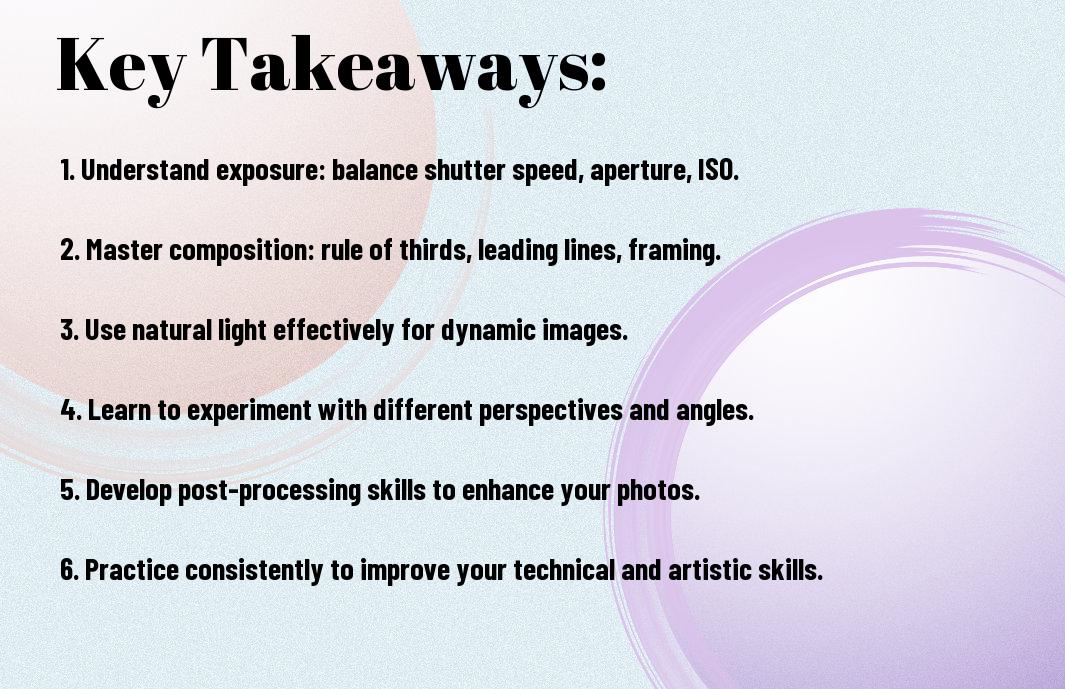
Hence, mastering the core concepts of photography will empower you to elevate your skills and express your unique vision. By understanding areas such as exposure, composition, and lighting, you can create captivating images that resonate with your audience. Equip yourself with this foundational knowledge, practice regularly, and stay curious, and you’ll find your growth as a photographer both rewarding and profound. Embrace the journey, as each click of the shutter brings you closer to mastering your craft.
Fine Art Photography Prints
Own a museum-quality archival print by Edin Chavez
Hahnemühle archival paper · From $95
BROWSE PRINTS LIMITED EDITIONS