The Peter Lik Alternative: Why Serious Collectors Are Discovering Edin Chavez
If you have spent any time researching fine art landscape photography, one name surfaces before any other: Peter Lik. The Australian-born photographer built an empire on dramatic vistas, saturated golden light, and the kind of scarcity marketing that made his prints feel like blue-chip investments. His gallery network spans Las Vegas, New York, San Francisco, and beyond. His most famous image, Phantom, reportedly sold for $6.5 million — a figure that made international headlines and cemented his status as the most commercially successful fine art photographer alive.
But among serious collectors, a quieter conversation has been taking place. The same qualities that made Peter Lik famous — limited editions, iconic landscapes, once-in-a-lifetime light — are qualities shared by a small group of photographers operating outside the gallery-chain model. Photographers whose work commands the same emotional power, whose credentials rival or surpass Lik’s, and whose prints are still accessible at the kind of prices that define a smart early acquisition. One name keeps appearing at the center of that conversation: Edin Chavez.
What Made Peter Lik the Standard
To understand the appeal of a Peter Lik alternative, you first have to understand what Lik got right. His photographs are not subtle. They are theatrical: slot canyon light beams rendered in silver and amber, Antelope Canyon walls glowing like liquid copper, Yosemite waterfalls frozen in long exposure against violet skies. Lik understood, before most landscape photographers did, that collectors do not want documentary realism — they want transcendence. They want an image that turns a wall into a window.
His business model reinforced the emotional experience. Limited-edition prints, certificate numbers, gallery-white presentation spaces — every touchpoint told the buyer they were acquiring something rare and lasting. The framing was always investment as much as art. And for a period, the secondary market validated that framing. Collectors who purchased early Lik editions in the 2000s watched their values climb.
Beyond the commerce, the craft is undeniable. Lik built his reputation on technically precise, large-format photography that rewarded close inspection. His mastery of natural light — particularly the fleeting golden hour windows that define landscape photography — gave his images an authority that consumer photography simply cannot replicate.
Why Collectors Are Looking for Alternatives
The same success that elevated Peter Lik has, for some collectors, diluted what made him special. When a photographer’s work is available in thirty-plus retail gallery locations, the word “exclusive” begins to strain under its own weight. Visiting a Lik gallery in a Las Vegas casino complex is a different experience than discovering a singular artist whose work you feel ahead of the market on.
Price is the other reality. Entry-level Peter Lik prints now start around $2,000 and climb steeply — signature works regularly trade at $5,000 to $10,000 and above. For a first-time collector, or for someone building a multi-piece collection, that pricing structure is prohibitive. The question serious collectors are asking is: Where is the next Lik? Who is producing work at that level, before the market catches up?
The answer, increasingly, is found outside the gallery-chain ecosystem entirely — in artists who distribute independently, maintain genuine scarcity, and whose credentials speak for themselves without a marketing infrastructure propping them up.
Introducing Edin Chavez: The Comparison That Holds Up
Edin Chavez is a Miami Beach–based fine art photographer whose body of work reads, subject by subject, like a parallel to Peter Lik’s greatest hits — executed with credentials Lik has never carried.
The Grand Canyon. Both photographers have made the Grand Canyon a centerpiece of their American landscape portfolios. Where Lik favors wide, painterly grandeur, Chavez pursues the specific moment: the pre-dawn blue hour when the canyon walls shift from black to rust to gold, the interplay of shadow and cliff edge that changes by the minute. His Grand Canyon series captures not just scale, but atmosphere — the feeling of standing at the rim before the tour buses arrive.
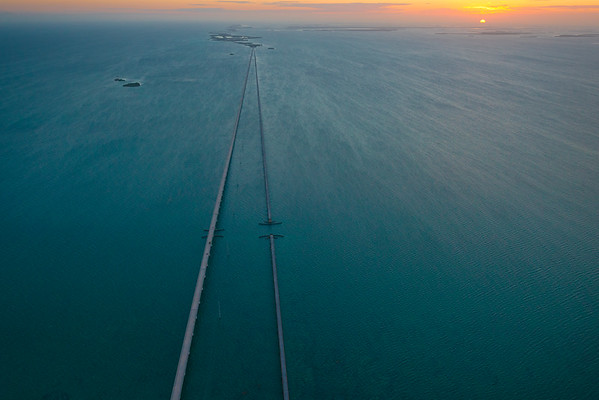
Seascapes and coastal drama. Chavez’s Miami Beach sunrise work is among the most technically accomplished coastal photography being produced today. Shooting the same waters repeatedly, at unglamorous hours, is what separates fine art from travel photography — the commitment to finding the extraordinary in a familiar location. His Key West and Seven Mile Bridge imagery extends that coastal mastery across the Florida Keys, while his Pebble Beach, California work competes directly with the Pacific coast photography that anchors Lik’s American West collection.
Golden hour and rare light. The decisive factor in any landscape photograph is light, and Chavez’s field work across Mono Lake, California — a location whose tufa formations and reflective salinity create otherworldly conditions — demonstrates the same obsessive patience that defines Lik’s slot canyon work. Lake Tahoe’s Bonsai Rock, the Everglades at first light, the volcanic coastline of Fuerteventura, Spain: these are not casual travel snapshots. They are the product of advance planning, location scouting, and the willingness to return until the conditions align.
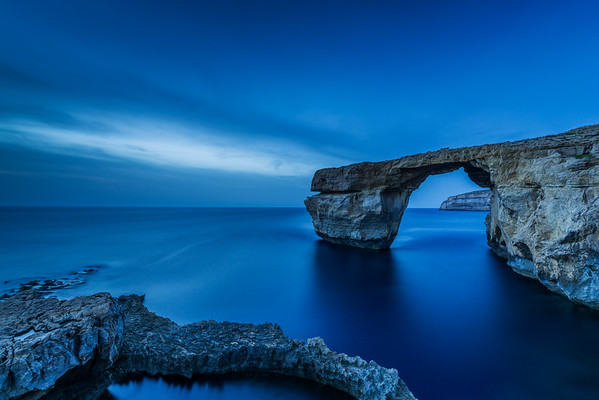
International range. Lik’s work is predominantly American in its geography. Chavez’s portfolio spans continents. Greece’s Meteora monasteries perched above the clouds. Malta’s Azure Window — now lost to a 2017 storm, making Chavez’s images among the final professional documentation of the landmark. The backwaters of Kerala, India. The streets of Rio de Janeiro. The timeless light of Italy. For collectors who prize rarity, the Azure Window series alone represents a historically irreplaceable body of work.
The Credentials Comparison: Where Edin Chavez Has the Edge
Peter Lik’s accolades are commercial in nature: gallery footprint, reported sales records, bestseller lists within the fine art photography market. These are legitimate markers of success, but they speak to marketing as much as to photographic craft.
Edin Chavez’s credentials come from a different source entirely — the institutions that evaluate photography on its technical and artistic merits, independent of sales volume.
He holds the Masters of Photography (MOP) designation, one of the most rigorous professional certifications in the field, awarded through peer review of submitted work by panels of qualified judges. It is a credential that fewer than one percent of working photographers hold.
He is a National Geographic contributor — a distinction Peter Lik does not share. National Geographic’s photography standards are famously exacting; acceptance requires both technical mastery and a journalistic visual intelligence that purely commercial photography rarely demands. The National Geographic credit is, for many collectors and curators, the single most credible mark of photographic legitimacy.
He is a Nikon Ambassador, part of the select group of photographers Nikon designates to represent the technical ceiling of what its equipment can achieve. Additional brand partnerships — with Corona, Kerala Tourism, and Malta Tourism — reflect the kind of institutional trust that comes with a consistent, recognizable body of work.
His portraiture work — particularly the faces of India series — extends his range beyond landscape into documentary portraiture, demonstrating a versatility that pure landscape specialists, Lik included, cannot claim.
The Price Opportunity: Collecting at the Right Moment
Art market history is largely a story of timing. The collectors who built the most significant collections — and the most valuable ones — did so not by buying established names at peak prices, but by identifying artists at the inflection point between emerging and arrived.
Edin Chavez’s prints are currently priced between $245 and $895, in limited editions. These are not reproductions or open-edition prints. They are numbered, certified, and produced at the quality standards his editorial and brand partnerships demand. The pricing reflects where he is in his commercial arc, not where his work is artistically.
For context: a collector who enters the Chavez collection today at $500 is acquiring a limited-edition fine art print from a Masters of Photography–credentialed, National Geographic–published photographer. The equivalent credential set, attached to any gallery-represented name in the New York or Miami art market, would command multiples of that price today.
The limited-edition structure matters here. When editions sell through, they are gone. The scarcity that Lik’s gallery network spent decades constructing through marketing is built into Chavez’s model by design. Early collectors in any artist’s trajectory have historically been the ones who benefit most as the market catches up to the work’s inherent quality.
The question for collectors is not whether Edin Chavez’s work is worthy of serious acquisition — the credentials, the body of work, and the technical quality answer that definitively. The question is whether to acquire at today’s prices, or to wait until the market has already made the discovery for you.
Where to Start Your Edin Chavez Collection
If you have been following fine art landscape photography and feel that the Peter Lik market has moved beyond your entry point — or simply beyond the point where early acquisition still feels compelling — Edin Chavez represents the most direct parallel available. Same subjects, same commitment to dramatic natural light, same limited-edition model. Different moment in the career arc. Different price point. And a credential set that, on paper, exceeds the comparison.
The collection is available directly at edinfineart.com, where each print is presented with edition details and available sizes. Whether you are drawn to the Florida coastal work, the American West landscapes, or the internationally sourced rarity pieces, the portfolio is broad enough to anchor a serious collection or complement one already in progress.
Collectors who wait for the market to validate an artist before buying rarely capture the full value of the acquisition. The ones who do their own due diligence — who look at credentials, compare bodies of work, and evaluate the edition structure — are the ones who look back years later and know they got there first.