Most photographers understand that natural lighting can make or break a shot, but few know how to harness its power effectively. In this blog post, you’ll discover insider tips to enhance your photography skills using natural light, regardless of your environment. Whether you’re shooting indoors or outdoors, these secrets will help you capture stunning images that truly reflect your subjects. Get ready to elevate your photography game with practical advice that you can apply right away!

Understanding Natural Light
A solid grasp of natural light is vital for capturing breathtaking photos. The way light interacts with your surroundings dramatically influences the mood, texture, and overall quality of your images. By understanding the characteristics of natural light, you can harness its power to create stunning visuals, no matter the environment or time of day.
Types of Natural Light
- Direct sunlight – Bright and harsh, often creates strong shadows.
- Soft light – Diffused by clouds or mist, producing gentle shadows.
- Golden hour light – Warm tones during sunrise and sunset.
- Cool light – Often found in shaded areas, it has a bluish hue.
- Artificial light – Natural sources like fire or street lamps can offer unique effects.
After identifying these types, you can select the most suitable light for your photography style.
| Type of Light | Characteristics |
| Direct sunlight | Harsh, bright, creates strong contrasts |
| Soft light | Gentle, diffused, even shadows |
| Golden hour light | Warm, flattering, ideal for portraits |
| Cool light | Blueish tint, often found in shade |
| Artificial light | Unique effects, useful in low-light conditions |
The Golden Hour
Behind every stunning photograph taken at sunset is the magical phenomenon known as the golden hour. This time, shortly after sunrise and before sunset, offers your images a warm, golden light that enhances colors and softens shadows. Photographers cherish this period because it casts a radiant glow on subjects and landscapes, creating a captivating atmosphere that’s hard to replicate at any other time of the day.
Natural light during the golden hour drastically transforms the visual quality of your photographs, turning even ordinary moments into extraordinary images. You’ll find that colors become richer and textures more pronounced, giving your photographs a dreamy quality. Planning your shoots around this time ensures that you take advantage of nature’s beautiful lighting, allowing you to create images that truly stand out. You can maximize this opportunity by scouting locations in advance and understanding how the sun’s position affects your compositions during these magical moments.

Best Practices for Using Natural Light
The key to mastering natural light in your photography lies in understanding how to control and manipulate it. From choosing the right time of day to utilizing the environment around you, these best practices will help you capture stunning images that utilize the power of sunlight. Embrace outdoor lighting to enhance the mood and clarity of your photographs, ensuring that your subjects shine.
Positioning Your Subject
Around your subject, the light creates an atmosphere that can significantly influence the final result. Position your subject strategically in relation to the light source, particularly during the golden hour when the sunlight is soft and warm. Adjusting your angle can help you achieve a flattering effect, highlighting details and enhancing textures.
Reflectors and Diffusers
Natural light can sometimes be overwhelming or uneven, making reflectors and diffusers invaluable tools to have in your photography kit. Reflectors bounce light onto your subject, softening shadows and illuminating facial features, while diffusers help to scatter and soften harsh sunlight, creating an even glow.
Considering the type of light you’re working with is vital when choosing your reflectors and diffusers. Light-colored reflectors, for instance, can add a gentle touch, while silver or gold reflectors create a more vibrant shine. Diffusers can range from specialized equipment to simple materials like thin fabric or sheer curtains, giving you flexibility to adapt to various lighting situations. Utilizing these tools allows you to customize the way the natural light interacts with your subject, ensuring a beautifully lit photograph every time.
Overcoming Lighting Challenges
Many photographers encounter challenging lighting conditions that can make capturing stunning images feel impossible. Whether you’re shooting outdoors in intense sunlight or indoors with limited natural light, there are effective strategies you can employ to achieve beautiful results. Embrace these tips to elevate your photography, no matter the environment.
Shooting in Harsh Sunlight
With the sun blazing overhead, shadows can become harsh and unflattering. To combat this, try shooting early in the morning or late in the afternoon when the light is softer. Alternatively, seek shade or use a diffuser to help soften the light and reduce contrasting shadows.
Indoor Natural Light Solutions
Sunlight streaming through windows can create beautiful soft light for your indoor photography. Position your subject near a window, and take advantage of sheer curtains to diffuse the light. If the sunlight is too harsh, consider using reflective surfaces to bounce light around the room, illuminating your scene more evenly.
To enhance your indoor natural light setup, position your subject to catch the most flattering angles of light. Experiment with different distances from the window to find the sweet spot where the light is neither too overpowering nor too dim. Using white walls or light-colored ceilings can also help to reflect and amplify the available light, making your photos appear more vibrant and well-lit.

Enhancing Photos with Editing
Once again, enhancing your photos through editing is an art that pairs beautifully with natural light. Even the most well-captured shots can benefit from a little fine-tuning. With the right editing techniques, you can elevate your images, making them more visually striking and true to the scenes you experienced. Whether you prefer using software on your computer or apps on your phone, mastering a few key adjustments can lead to stunning results.
Adjusting Exposure and Contrast
Photos often need a boost in exposure and contrast to bring out details and depth. Start by adjusting the exposure to lighten or darken your image, ensuring it reflects the ambiance you intended. Next, enhance the contrast to give your photo a more dynamic range, allowing darker shadows and brighter highlights to stand out, adding dimension to your composition.
Color Correction Techniques
Color often requires your attention to ensure that it accurately depicts the scene.
Correction involves adjusting the white balance and saturation to achieve a more accurate representation of colors. Utilize tools in your editing software to eliminate any unwanted color casts that may have resulted from uneven lighting. Don’t hesitate to tweak saturation levels to either enhance or mute colors, ensuring they resonate with the feel of the original setting. By giving careful attention to these elements, you can dramatically improve the visual impact of your photos, making them more vibrant and engaging.
Tips for Different Scenarios
All photographers should adapt their approach to lighting based on the environment. Here are some quick tips for various scenarios:
- Find shade in bright conditions
- Utilize golden hour for soft, warm light
- Avoid harsh midday sun for softer shadows
- Experiment with reflections for interest
- Adjust your angle to control light direction
Knowing how to manage natural light can elevate your photography in any situation.
Portraits
An optimal portrait requires soft, diffused lighting to flatter your subject. Look for shaded areas or use a translucent reflector to bounce light, avoiding harsh shadows on the face. Position your subject with their back to the sun to create a beautiful, even glow, giving your portraits a polished, professional look.
Landscapes
Different times of day dramatically influence landscape photography. The soft, warm hues of dawn and dusk can enhance the beauty of your subject, while clearer midday skies often result in less dramatic images.
Consequently, consider scouting locations ahead of time to discover the best angles and compose your shots thoughtfully. Utilizing foreground elements can add depth, and experimenting with a variety of perspectives can create compelling images. Understanding the impact of weather and time of day on light will significantly enhance your landscape photography skills.
Conclusion
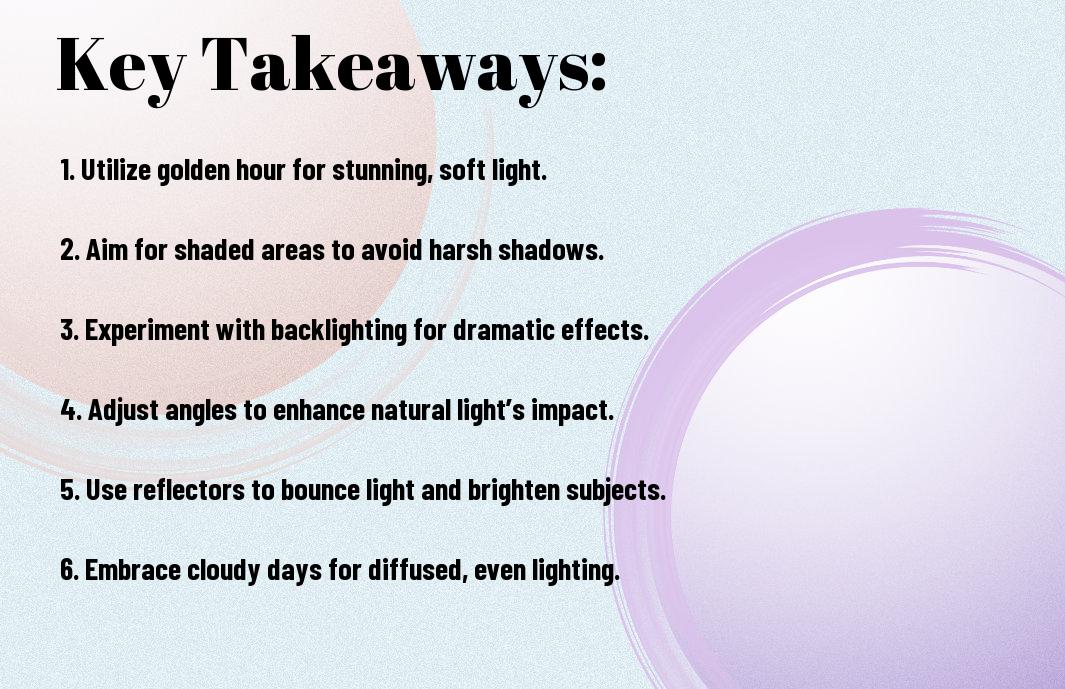
Taking this into account, mastering natural lighting can greatly enhance your photography skills, allowing you to capture stunning images in any environment. By understanding the time of day, experimenting with angles, and using reflectors effectively, you can create impactful photos that truly resonate with viewers. Embrace these tips and techniques, and you’ll be well on your way to achieving perfect lighting in your photography, no matter when or where you shoot.
Fine Art Photography Prints
Own a museum-quality archival print by Edin Chavez
Hahnemühle archival paper · From $95
BROWSE PRINTS LIMITED EDITIONS