Natural light can transform your photography, adding depth and emotion to your images. In this guide, you’ll discover techniques from renowned photographer Edin Chavez that will elevate your ability to harness sunlight effectively. Whether you’re shooting during the golden hour or utilizing soft diffused light on an overcast day, Edin’s insights will help you unlock the secrets of natural light and maximize your creative potential. Get ready to enhance your skills and capture stunning photographs that truly resonate.
Understanding Natural Light
Before plunging into photography, it’s important to grasp the concept of natural light. Understanding how light behaves and changes in different environments will help you make informed decisions when capturing images. This knowledge allows you to harness the power of natural surroundings to achieve stunning results, whether you’re shooting landscapes, portraits, or street scenes.
The Characteristics of Natural Light
To master natural light, you need to be aware of its various characteristics, including quality, direction, and color. Each of these elements plays a significant role in how your photos will turn out. For instance, soft light produces gentle shadows, while harsh light creates strong contrasts, so understanding your environment can greatly influence your creative choices.
The Role of Time of Day
Against the backdrop of natural light, the time of day impacts its quality and quantity, shaping your photographic outcomes. Different times influence mood, contrast, and color in your images. Morning and evening provide a warm, golden glow, while midday can result in harsher, colder light.
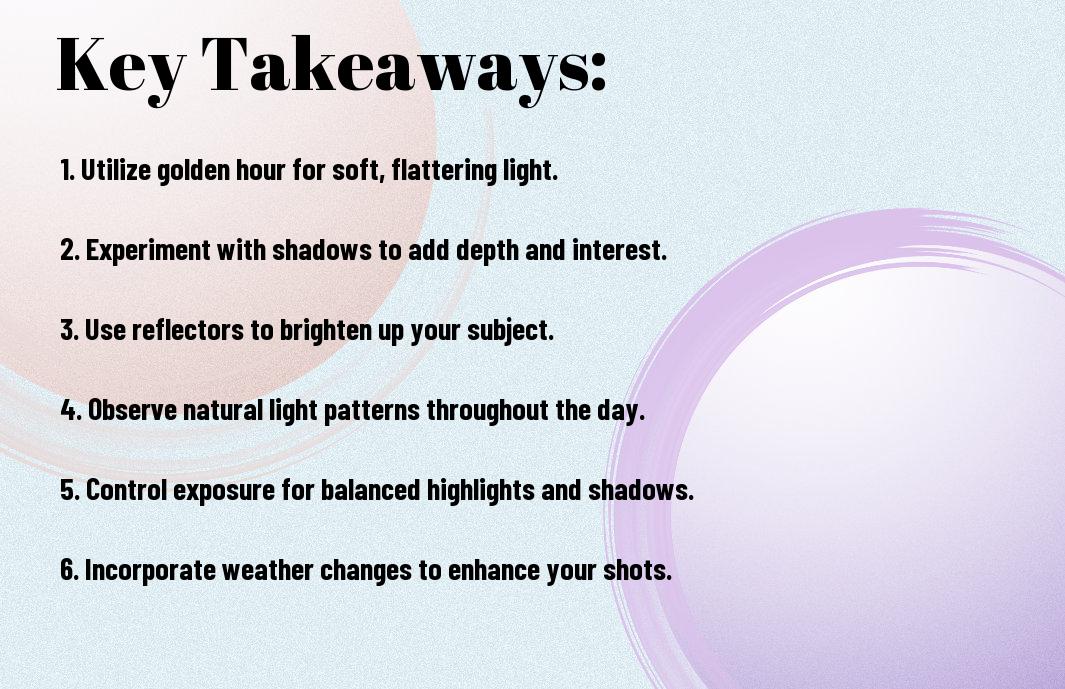
Hence, shooting during the golden hour—just after sunrise or before sunset—can enhance the emotional resonance of your images. During these times, the light is softer and casts long shadows, which can add depth and interest to your photographs. Conversely, midday sunlight might need careful management to avoid overexposure or unwanted shadows. Understanding these dynamics will empower you to choose the best moments for your shots, leading to breathtaking photography results.
Techniques for Outdoor Photography
Any outdoor photographer knows the importance of natural light in capturing stunning images. To achieve breathtaking shots, you need to be aware of how different times of day affect light and the overall mood of your photographs. From understanding golden hour to manipulating shadows and highlights, these techniques will elevate your outdoor photography game and help you create breathtaking visuals.
Utilizing Golden Hour
Beside offering soft, flattering light, the golden hour provides a magical quality that can transform your shots. Shooting during the hour just after sunrise or before sunset allows you to capture rich colors and beautiful contrasts. Use this time to experiment with backlighting and silhouettes, as the warm glow can enhance your subject’s appearance and create captivating atmospheres.
Working with Shadows and Highlights
Highlights play a significant role in your photography, enhancing textures and creating depth in your images. By understanding how shadows interact with light, you can incorporate them into your compositions to add drama and interest. Use the direction and intensity of sunlight to highlight your subject while also being mindful of how shadows can define and frame your subject, creating a more dynamic image.
The interplay between shadows and highlights can dramatically influence the mood in your photos. When you position your subject correctly, shadows can lead the viewer’s eye toward focal points in your composition. Experiment with different angles and times of day; a well-placed shadow can add depth, while strategically managing highlights can draw attention to textures or key elements. Balancing both can create images that resonate.
Mastering Indoor Natural Light
Unlike outdoor photography, indoor natural light presents unique challenges and opportunities. To capture stunning images, you must learn to harness the available light within your space. By understanding how to manipulate and enhance indoor lighting, you can create a range of moods and styles in your photography, allowing your subjects to shine in a new light.
Window Light Techniques
Around windows, you will discover a delightful source of soft, diffused light that can transform your indoor photography. Position your subject near the window to take advantage of this natural light source, and experiment with angles to see how different positions affect the final image. You can also use sheer curtains to soften harsh sunlight, creating a more ethereal effect that flatters your subject.
Balancing Artificial and Natural Light
Techniques for balancing artificial and natural light can enhance your indoor photography. By mixing light sources, you bring depth and dimension to your images, ensuring that no single light source overwhelms the scene. Start by assessing the color temperature of the various lights present in your setting and make adjustments as necessary to achieve a cohesive look.
At times, balancing artificial and natural light involves using a combination of light sources effectively. You can adjust your camera settings to compensate for color differences or utilize reflectors to redirect light and fill in shadows. If you’re using flash or artificial lighting, try setting them to a lower power to allow the natural light to take precedence, helping you create a harmonious blend that enhances your composition.
Creative Approaches to Natural Light
Despite the unpredictability of natural light, you can master it by embracing creative techniques that elevate your photography. Experimenting with how light interacts with various environments can lead to captivating outcomes. By stepping outside traditional boundaries and thinking outside the box, you can capture stunning images that tell a story through light’s dynamic qualities.
Experimenting with Filters
An effective way to modify natural light is by using filters. These tools can enhance your photographs by adjusting color temperatures or reducing glare, allowing you to create a specific mood or aesthetic. Whether it’s a polarizing filter for vibrant skies or a neutral density filter for long exposures, experimenting with different options can significantly improve your shots.
Using Reflections and Translucency
About utilizing reflections and translucent materials, you can add depth and complexity to your images. Incorporating mirrors, water, or sheer fabrics can create interesting compositions, capturing the play of light in unique ways. You can achieve a sense of atmosphere that transforms ordinary scenes into extraordinary visuals.
Another way to explore this concept is by positioning your subject near reflective surfaces, like glass or water, which can double the impact of the natural light hitting them. This technique often evokes a sense of intrigue and enhances the storytelling element of your work. Additionally, translucent materials like lace or leaves can soften and diffuse light, providing a dreamy effect that elevates your photography to new heights. Experiment with different angles and compositions to discover the endless possibilities that reflections and translucency can offer.

Essential Gear for Natural Light Photography
After you’ve grasped the fundamentals of natural light photography, the right gear can elevate your craft. Selecting the appropriate tools will help you capture stunning images that harness natural light effectively. From cameras and lenses to accessories that enhance your shooting experience, understanding your gear will allow you to seize the moment in any lighting condition.
Recommended Cameras and Lenses
After considering the importance of your equipment, you should look for cameras that perform well in various lighting situations. Full-frame DSLRs or mirrorless cameras offer excellent dynamic range and low-light capabilities. Pair your camera with lenses that have wide apertures, such as a 24-70mm f/2.8 or a 50mm f/1.8, to maximize your ability to capture light beautifully.
Accessories to Enhance Natural Light
Against the backdrop of natural light, the right accessories can make a significant difference in your photography. Items such as reflectors, diffusers, and neutral density filters can help you manipulate the available light, ensuring you achieve the desired effect in your images.
Accessories can maximize your creative possibilities in natural light photography. A reflector bounces the light onto your subject, reducing harsh shadows and creating a more flattering look, while a diffuser softens strong sunlight for portraits. Neutral density filters allow you to control the light entering your lens, enabling longer exposures even in bright conditions. Incorporating these tools into your setup can profoundly impact the quality of your photographs.
Common Mistakes to Avoid
Many photographers overlook the importance of mastering natural light, leading to common pitfalls that can hinder your creative process. By understanding these mistakes, you can elevate your photography and capture stunning images that resonate with your audience. Avoiding these errors will enhance your ability to work effectively with light, resulting in better exposure and composition in your photographs.
Overexposing Images
Images that are overexposed can lose detail and vibrancy, resulting in unappealing shots. To prevent this, pay close attention to your camera settings and the available light. Adjust your exposure compensation if necessary, and consider using your histogram to ensure you capture balanced highlights and shadows in your images.
Ignoring the Background
Ignoring the background of your shot can detract from your subject and overall composition. Always assess the surroundings and evaluate how they impact your image before pressing the shutter. A cluttered or distracting background can take attention away from your subject, while a well-chosen backdrop can enhance your photograph.
Also, consider incorporating elements of the background that complement your subject, such as color contrasts or textures. Look for leading lines or natural frames that draw the viewer’s eye to your main subject. A thoughtful background can add depth and context to your photograph, making it more visually appealing and telling a compelling story. By sharpening your awareness of the background, you can significantly enhance your photography results.
Conclusion
Summing up, mastering natural light is important for elevating your photography skills, and Edin Chavez’s techniques provide you with the tools to achieve stunning results. By understanding light’s nuances and adapting your approach to different conditions, you can enhance the mood and storytelling of your images. Implement these strategies consistently in your practice, and watch as your photographs transform, capturing the beauty of your subjects in ways that resonate deeply with viewers.
Fine Art Photography Prints
Own a museum-quality archival print by Edin Chavez
Hahnemühle archival paper · From $95
BROWSE PRINTS LIMITED EDITIONS