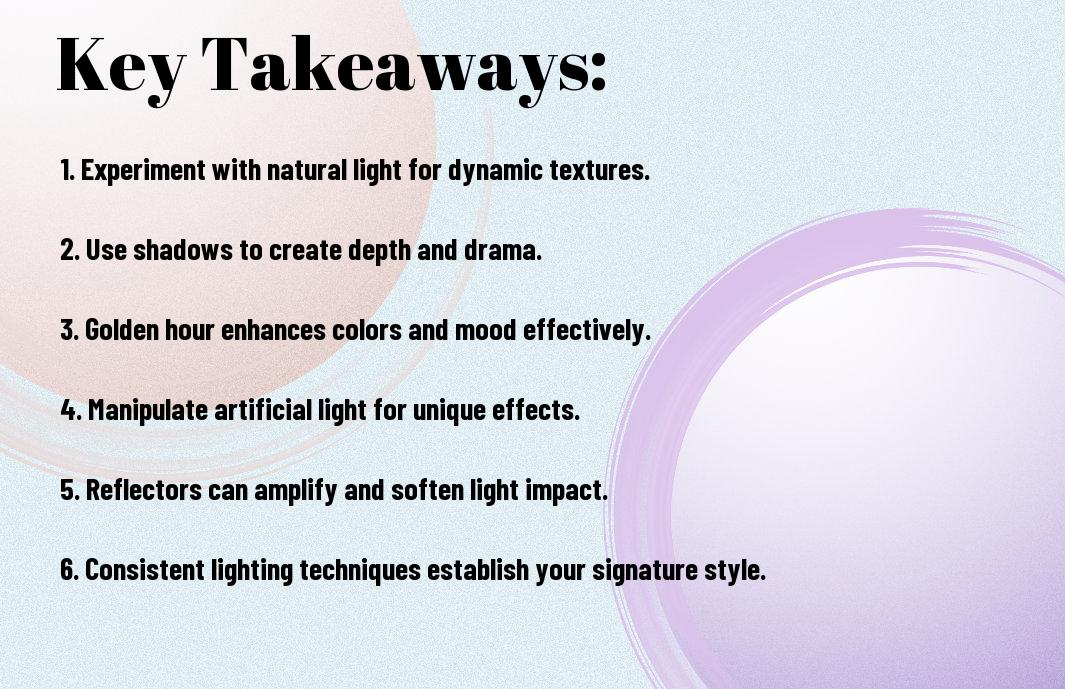
Many photographers underestimate the transformative power of light in their work. Understanding how to manipulate natural and artificial light sources can elevate your photography from ordinary to extraordinary. Whether you’re shooting portraits, landscapes, or product photography, mastering light is imperative for highlighting textures, colors, and mood in your images. In this post, you will explore techniques and tips to enhance your use of light, helping you achieve the stunning results you’ve always desired in your shots.
Understanding Light in Photography
To truly excel in photography, you must grasp how light affects your images. Light is not just an accessory to your frame; it’s the very essence that shapes mood, texture, and depth. By becoming attuned to the qualities of light, you can harness its potential to elevate your photography to extraordinary levels.
Natural vs. Artificial Light
On one hand, natural light provides an organic quality with its soft gradients and varying hues, allowing for vibrant captures, especially during golden hours. On the other hand, artificial light offers versatility and consistency, letting you create compelling visuals in controlled environments. Understanding both enables you to manipulate these elements effectively in your shots.
The Importance of Lighting in Composition
Between foreground and background, lighting plays a fundamental role in establishing visual hierarchy and guiding your viewer’s eye. Effective lighting highlights your subject, creates contrast, and adds dimensionality, all while helping to convey the story behind your shot.
The interplay of light and shadows can dramatically alter the composition of your photographs, transforming a mundane scene into something captivating. By highlighting specific areas, you can direct the viewer’s attention and define the mood of your image. Mastering how to position and manipulate light allows you to craft powerful narratives, ensuring that each photograph you take resonates and holds significance.

Types of Light and Their Effects
Even the subtle differences in lighting can greatly influence the atmosphere and quality of your images. Understanding various types of light helps you create compelling visual narratives. Here’s a breakdown to guide you:
| Type of Light | Effect |
|---|---|
| Natural Light | Creates a soft and authentic look |
| Hard Light | Produces strong shadows and highlights |
| Soft Light | Offers a flatter, more diffused appearance |
| Backlight | Illuminates your subject from behind |
| Colored Light | Enhances mood and artistic expression |
Assume that you regularly assess how different lighting types impact your work to effectively choose the right one for your creative vision.
Hard Light vs. Soft Light
The distinction between hard and soft light is fundamental in photography. Hard light generates sharp, well-defined shadows that create a dramatic effect, drawing attention to textures and details. Conversely, soft light results in gentle shadows, leading to a more even and flattering portrayal of subjects. Choosing the right type depends on the mood you want to convey in your composition.
Color Temperature and Mood
About color temperature, it plays a significant role in establishing the mood of your photography. Warmer tones (yellows and reds) evoke feelings of warmth and comfort, while cooler tones (blues and greens) can create a sense of calm or sadness. Adjusting the white balance settings on your camera can help you manipulate these effects to align with your artistic vision.
Types of Color Temperature
| Color Temperature | Emotional Response |
|---|---|
| Warm (2000-3000K) | Welcoming and cozy |
| Neutral (3500-4500K) | Balanced and natural |
| Cool (5000-6500K) | Calm and serious |
| Daylight (5000-6500K) | Dynamic and vibrant |
| Blue Hour (1500-1800K) | Mysterious and serene |
Types of light play a pivotal role in how viewers perceive emotions in your photos. By experimenting with different color temperatures, you can significantly enhance the narrative of your compositions. Warm lighting can invite viewers into a scene, while cooler tones may instill introspection. Tailoring your lighting choice to the message you wish to convey ensures a more compelling visual story.
Techniques for Utilizing Light
Despite the abundance of natural and artificial light sources, understanding how to manipulate them effectively is key to capturing stunning images. You can elevate your photography by exploring various techniques that allow you to take full advantage of light’s potential. From controlling exposure and aperture settings to creatively harnessing shadows and highlights, mastering these elements can transform your shots from ordinary to extraordinary.
Controlling Exposure and Aperture
To achieve the desired look in your photographs, you must control exposure and aperture. Adjusting these settings lets you balance light entering the camera and create different depths of field. A wider aperture allows more light but shallower focus, while a smaller aperture decreases light and enhances depth. Understanding the interplay between these elements can enable you to capture the ambiance of any scene, whether bright and cheery or soft and moody.
Harnessing Shadows and Highlights
Exposure plays a significant role in shaping the visual narrative of your images. By skillfully managing shadows and highlights, you can produce a dynamic range that adds depth and texture to your shots. Shadows can create mystery and drama, while highlights can bring attention to focal points. Both elements work in harmony to enhance the emotional impact of your photographs.
Indeed, shadows and highlights are powerful tools in your photography toolkit. When you find the right balance, shadows can add depth and dimension to your images, while highlights draw your viewer’s eye to the most important details. Experiment with various light sources and angles, observing how they play off surfaces and forms. This exploration can lead to extraordinary compositions and elevate the story your photographs tell, ensuring they resonate with your audience.

Creative Use of Light in Different Settings
All photographers can enhance their craft by exploring the diverse qualities of light in various settings. Whether you are capturing portraits or expansive landscapes, experimenting with natural and artificial light sources can significantly alter the mood, texture, and depth of your images. Adjusting your approach based on the light available not only enhances your creativity but also allows you to tell a unique story through your photography.
Portrait Photography
Before you take a portrait, consider the direction and quality of light. Soft, diffused light is often flattering, while harsh light can create stark shadows that might not serve your subject. Positioning your subject near a window or utilizing reflectors can dramatically enhance your portraits. Be mindful of how the light interacts with your subject’s features for a more striking image.
Landscape Photography
Photography in landscape settings offers vast opportunities to play with light. The time of day significantly impacts how you capture the scene; dawn and dusk provide golden hour lighting that bathes the landscape in warm tones. Pay close attention to how shadows and highlights shape the terrain, as these elements can create depth and interest in your shots.
Indeed, landscapes transform dramatically depending on the light conditions. For instance, a scene under a bright midday sun may appear flat, while the same scene at twilight can result in vibrant colors and dramatic contrasts. Utilize weather conditions and time shifts to your advantage; fog can add mystery, while dramatic clouds can provide dynamic backdrops. Your ability to adapt to and utilize natural light effectively can set your landscape photography apart and elevate your work significantly.

Post-Processing: Enhancing Light in Editing
Keep in mind that post-processing offers you an opportunity to refine the light in your shots, turning a good image into a stunning one. Whether you enhance shadows, adjust highlights, or fine-tune contrast, these adjustments can breathe new life into your photographs. Mastering these editing techniques allows you to create the mood and atmosphere you envisioned while capturing your image, ensuring that the art of light is harmoniously integrated into your final work.
Using Software to Adjust Lighting
To enhance the lighting in your photos, software like Adobe Lightroom or Photoshop can be invaluable. These tools allow you to make precise adjustments to exposure, brightness, and shadow details. By carefully manipulating these elements, you can amplify the impact of light and shadow, transforming the overall aesthetic of your images and achieving the desired emotional resonance.
Maintaining Natural Aesthetics
Across your editing process, it’s vital to balance enhancements with a commitment to maintaining the natural look of your photos. While it can be tempting to push the limits of editing, you want your images to retain a sense of authenticity that resonates with viewers.
Hence, be mindful of over-editing, which can lead to unnatural results. Aim for adjustments that feel true to the original scene, preserving the integrity of your subject and surroundings. Subtle changes such as slight brightness tweaks or soft shadow enhancements can maintain the charm of natural lighting, striking a perfect balance between artistic vision and realism. This practice ensures your photos communicate their intended message authentically, creating a lasting impression on your audience.
Common Mistakes and Solutions
Unlike many seasoned photographers, beginners often overlook the importance of light in their shots, leading to mistakes that can diminish the quality of their work. These common errors can easily be corrected with a bit of understanding and practice, allowing you to harness the extraordinary power of light in your photography.
Overexposure and Underexposure
Above all, you should pay attention to the exposure settings on your camera. Overexposed images lose details in bright areas, while underexposed shots can appear muddy and dark. Utilizing your camera’s histogram can help you achieve a balanced exposure, ensuring your subjects are illuminated correctly without sacrificing detail in shadows or highlights.
Misjudging Light Direction
At times, you may find that the direction of light creates shadows that distract from your intended subject rather than enhance it. Properly understanding how light interacts with your subject can transform your images dramatically.
Overexposure or underexposure can occur simply because you misjudge the light direction. When light hits your subject from behind, it may create silhouettes that lack detail. Conversely, front lighting might wash out textures. To avoid this, take a moment to observe how light falls on your subject, adjusting your position or angle, or using reflectors and diffusers to modify the light’s impact for the best results.
Conclusion
As a reminder, utilizing the inimitable art of light in your shots can vastly enhance your photography. Each time you frame a shot, consider how light interacts with your subject and environment. This awareness not only elevates the aesthetic quality of your images but also communicates emotion and depth. By experimenting with natural and artificial lighting, you can discover new dimensions in your work. Embrace this element to refine your craft and set your photography apart from the rest.
Fine Art Photography Prints
Own a museum-quality archival print by Edin Chavez
Hahnemühle archival paper · From $95
BROWSE PRINTS LIMITED EDITIONS