Elevating Your Eye: The Essential Components of Great Travel Photography
Great travel photography transcends mere snapshots; it captures the essence of a moment, a place, and its culture. By honing specific techniques, you can elevate your eye for detail. Composition plays a pivotal role, as does understanding how to utilize light effectively. Mastering these elements not only enhances the visual appeal of your photos but also communicates your perspective uniquely. In essence, it’s about weaving a story through your lens that resonates with your audience.
The Power of Composition: Rule of Thirds and Beyond
Utilizing the Rule of Thirds can drastically improve your compositions by dividing the frame into nine equal parts, allowing you to position focal points along the lines or their intersections. Experiment with breaking this rule by placing your subject in unexpected areas or using leading lines to draw the viewer’s eye through the scene. Great travel photography often emerges from a thoughtful, composed frame that tells a story, engages emotions, and highlights the beauty of a destination.
Mastering Light: Natural vs. Artificial Illumination
The interplay between natural and artificial light can drastically alter the mood and quality of your shots. Golden hour, shortly after sunrise or before sunset, casts a warm glow that is perfect for landscapes and portraits. Artificial light sources, whether they’re street lamps or indoor lighting, can add character and depth to urban scenes or evening shots. Being able to adapt to various lighting conditions is necessary for creating dynamic and engaging travel photographs.
Natural light can often be your best friend in travel photography, as it tends to produce softer shadows and a more authentic feel. For example, shooting at sunrise illuminates landscapes in exquisite warmth, enhancing textures and colors. On the flip side, mastering artificial illumination can set a dramatic tone; consider using the neon lights of a bustling market to complement the energy of the scene. Playing with both types of light can expand your creative options and help you capture remarkable images, showcasing your unique travel narrative and perspective.
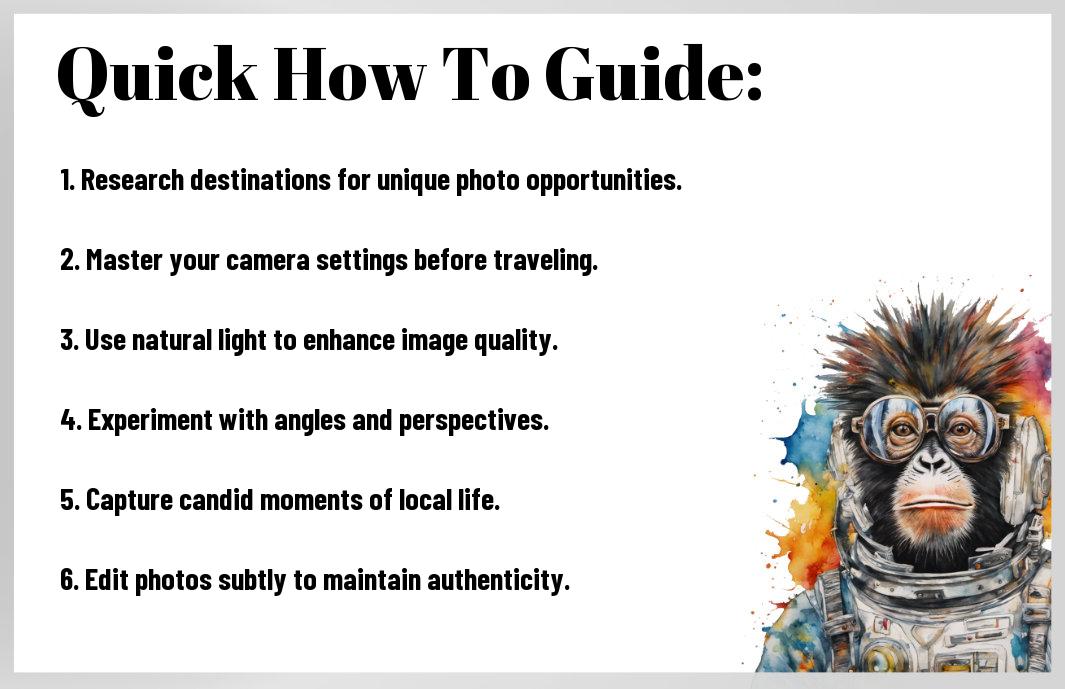
Gear Up: Selecting the Right Equipment for Your Journey
Choosing the right equipment can make or break your travel photography experience. Understanding your specific needs and the environments you’ll be capturing will guide your decisions. Whether you’re hiking in rugged landscapes or exploring vibrant city streets, having the right gear ensures you don’t miss those perfect moments. Consider factors like weight, versatility, and usability when selecting your equipment. Investing in gear that suits your shooting style can dramatically enhance the quality of your photos, allowing you to focus on creativity rather than equipment limitations.
Camera Choices: DSLRs, Mirrorless, and Smartphones
Your choice of camera significantly impacts your travel photography. DSLRs offer superior image quality, extensive lens options, and fast autofocus, making them ideal for serious photographers. Mirrorless cameras provide a compact design with similar features, allowing for greater portability without sacrificing quality. On the other hand, smartphones, equipped with advanced camera technology and editing apps, are perfect for convenience and spontaneous shots. Understanding the strengths and weaknesses of each type will help you select the best option for your travel adventures.
Accessories That Matter: Lenses, Tripods, and Filters
The right accessories can elevate your travel photography to new heights. Lenses vary widely, with wide-angle lenses capturing sweeping landscapes, while telephoto lenses are perfect for wildlife and distant subjects. A sturdy tripod stabilizes your shots in low light while allowing for longer exposures or creative compositions such as panoramas. Filters can enhance colors, reduce glare, and saturate skies, making a noticeable difference in your images. Packing the right combination of these accessories can help you adapt to diverse shooting conditions and achieve professional results, even while on the go.
Different types of lenses play specific roles in capturing your journey. A wide-angle lens (around 16-35mm) is fantastic for landscapes and cityscapes, while a standard zoom (24-70mm) provides versatility for various situations. Telephoto lenses (70-200mm) let you zoom in on distant subjects and capture unique details. Tripods should be lightweight for travel yet sturdy enough to support your gear in various conditions, and options like foldable or mini-tripods are great for saving space. Filters, such as polarizers, can enhance skies and reduce reflections, while ND filters help manage exposure levels for long-exposure shots. Investing in the right accessories will ensure you’re ready for practically any photographic scenario you encounter during your travels.
Capturing Authenticity: Techniques for Genuine Moments
Authenticity often eludes photographers seeking postcard-perfect shots. Strive to engage with your subjects and immerse yourself in their environment. Emphasize spontaneity by observing rather than staging moments, allowing emotions to unfold naturally. Approach people with genuine curiosity and respect, building trust that in turn fosters more valuable interactions and emotions in your images. Seek out local festivals, candid street scenes, or intimate gatherings, as these experiences typically yield more sincere expressions and stories, enhancing the authenticity of your photography.
The Art of Portraits: Connecting with Your Subjects
Creating meaningful portraits hinges on establishing a connection with your subjects. Engage them in conversation, finding common ground to ease any tension. A sincere smile or an authentic reaction often arises from this interaction, enhancing your portrait’s emotional depth. Use natural light for flattering results and experiment with various angles to capture the essence of your subject’s personality. Remember that people often open up when they sense your genuine interest, allowing for more intimate and candid moments.
Telling Stories Through Landscapes: Beyond the Standard Shot
Photographs of landscapes should transcend the ordinary; they’re opportunities to narrate a story about a place’s spirit and life. Instead of capturing generic tourist destinations, consider the elements that give a location its uniqueness—weather conditions, the interplay of light, or even the local wildlife. Aim to incorporate foreground interest that leads the viewer’s eye into the frame, creating depth and context. Your composition can tell tales of the shifting seasons, the passage of time, or the culture intertwined with the scenery.
To deepen your landscape storytelling, think beyond mere postcard views. Try to capture a moment that conveys weather changes, seasonal transformations, or human interactions with the environment. For example, a photograph showcasing a solitary tree in a vast field during sunset can evoke solitude, while an image of children playing in a river might depict joy and freedom in nature. Explore varied focal lengths to shift perspectives, and consider using techniques like long exposure to add movement to clouds or water, enriching the narrative of your landscapes.
Post-Processing Magic: Transforming Your Images with Editing
Post-processing adds that final touch to your travel photos, allowing you to refine your shots and unleash your creative vision. This stage is where you can enhance colors, adjust lighting, and remove distractions, ultimately transforming good images into stunning visuals. Embrace editing as an opportunity to tell your story more vibrantly and compellingly while staying true to the essence of your travel experience.
The Basics of Editing Software: A Beginner’s Guide
Diving into photo editing starts with choosing the right software. Familiarize yourself with popular options like Lightroom and Photoshop, which offer user-friendly interfaces and powerful editing tools. Invest time in exploring basic functionalities like cropping, exposure adjustment, and color correction, as these foundational skills lay the groundwork for more advanced techniques. Online tutorials and beginner courses can further accelerate your understanding.
Advanced Techniques: Color Grading and Retouching
Elevating your images requires mastering color grading and retouching to achieve your desired aesthetic. Color grading allows you to create mood and atmosphere by altering hues, shadows, and highlights, while retouching helps in refining the details, removing blemishes, and enhancing the overall sharpness. This combination can effectively change the narrative of your photo, making it more captivating. Paying keen attention to these elements can significantly elevate your photography to a professional level.
- Experiment with different color palettes to find your unique style.
- Utilize layers in Photoshop for targeted adjustments.
- Focus on subtle enhancements; excessive editing can detract from the image.
| Tip | Details |
|---|---|
| Use Presets | Presets can save time and offer a basis for your edits. |
| Learn Shortcuts | Familiarize yourself with editing software shortcuts for efficiency. |
To truly master color grading and retouching, practice is key. Play around with different styles and techniques until you discover what resonates with your vision. Explore the use of curves for precise tonal adjustments, and don’t shy away from utilizing brushes for nuanced touch-ups. Regularly seek inspiration from established photographers and keep an eye on current trends to see how you can incorporate them into your own editing process.
- Experiment with split-toning to add depth to your images.
- Add vignettes to draw focus to the subject.
- Develop a consistent editing style to create a cohesive portfolio.
| Advanced Tool | Purpose |
|---|---|
| Dodge and Burn | Highlight and shadow adjustments to add dimension. |
| Gradient Filters | Control exposure and color across various parts of your image. |
Building Your Portfolio: Showcasing Your Best Work
Creating a cohesive portfolio that highlights your unique strengths is imperative for any travel photographer. Focus on curating a selection of your most compelling images, ensuring they reflect the diversity of your experiences and the destinations you’ve captured. Aim for at least 20-30 images that demonstrate your versatility, striking compositions, and distinct storytelling ability. Organize your work by theme, location, or style, enabling potential clients to quickly grasp your artistic vision and broaden your appeal.
Selecting Signature Shots: What Defines Your Style
Your signature shots should encapsulate your artistic vision and personal style. Identify images that resonate with you and engage your audience, whether it’s a breathtaking landscape or an intimate cultural moment. By focusing on recurring themes, techniques, or color palettes, you can establish a recognizable brand that sets you apart from other photographers. Choose pieces that not only showcase your technical skills but also evoke emotion and connect with viewers on a deeper level.
Crafting an Online Presence: Websites and Social Media Strategies
Building an engaging online presence is vital for showcasing your work and attracting clients. A well-designed website acts as your digital portfolio, so ensure it highlights your best photos, biography, and contact information. On social media, adapt your strategy for each platform; use Instagram for visual storytelling, Pinterest for theme inspiration, and Facebook for community engagement. Regularly post your images, behind-the-scenes content, and personal anecdotes to foster a genuine connection with your audience. Consistency in posting and engaging with followers will help grow your reach and establish you as a go-to resource in travel photography.
For your website, consider incorporating a blog to provide insights into your travel experiences, photography tips, or destination guides. Keeping the content fresh allows you to showcase your expertise and improves search engine visibility. On social media, use relevant hashtags and collaborate with other photographers or brands to enhance your exposure. Engaging in photography challenges or communities can also help you gain followers and showcase your artistry, making you more visible to potential clients and collaborators alike.
Navigating Cultural Sensitivities: Photography Etiquette Around the World
Capturing images that tell the story of a culture requires understanding and respect. Each destination holds its own set of cultural norms and unwritten rules that govern photography. Whether it’s asking for permission before snapping a portrait, acknowledging religious practices, or being aware of clothing codes, your actions matter. Embrace the beauty of a place while ensuring you maintain the integrity of its people and their traditions. Photographing openly, but with sensitivity, can lead to richer experiences and more authentic images that connect you with the spirit of the locales you visit.
Respecting Local Norms: Do’s and Don’ts
Observing local customs is important to responsible photography. Do seek permission from subjects, especially in intimate settings or conservative areas. Don’t invade personal spaces or photograph sensitive events without consideration. Each culture has unique views on privacy, modesty, and the role of photography, so doing a little homework before your journey can make all the difference. Always carry an open heart and mind, ready to learn from the communities you encounter.
Engaging with Communities: Building Trust and Relationships
Creating genuine connections enhances your travel photography experience. Striving to build trust with the local community not only enriches your work but leads to incredible stories behind the images. Spend time conversing with locals, participating in traditions, and showing respect for their way of life. Approaching people with curiosity and kindness paves the way for meaningful interactions, making them more likely to welcome you into their world. In turn, you gain access to intimate moments that showcase the essence of the culture, all while fostering a sense of mutual respect and understanding. The result is not just stunning visuals but lasting memories.
Final Words
With these considerations, you can elevate your travel photography skills to new heights. By understanding the fundamentals of composition, lighting, and camera settings, you unlock the ability to capture the essence of your adventures. Embrace experimentation, learn from your experiences, and don’t hesitate to seek inspiration from others. Your unique perspective will shine through, enriching not only your personal memories but also the visual stories you share. As you begin on your photography journey, let each click of the shutter be an opportunity to express your creativity and passion for travel.
Fine Art Photography Prints
Own a museum-quality archival print by Edin Chavez
Hahnemühle archival paper · From $95
BROWSE PRINTS LIMITED EDITIONS