Uncategorized
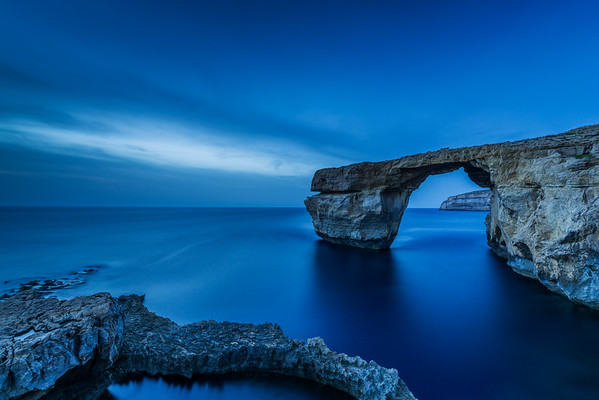
For most of the twentieth century, serious collectors kept photography at arm’s length. Paintings and sculpture were the prestige assets; photographs were considered reproductions. That perception has changed. Today, fine art photography investment is one of the most discussed topics in collector circles, driven by watershed auction results, a sharper understanding of edition mechanics, and a new generation of image-makers whose credentials rival those of any painter. If you are considering adding photography prints to your collection — or simply want to understand what separates a decorative poster from a genuine investment-grade print — this guide is for you.
Not every photograph qualifies as a collectible asset. Value in fine art photography is determined by a clear set of factors that serious buyers evaluate before committing capital.
Edition size is the most immediate lever. A print produced in an edition of ten commands exponentially more scarcity than one produced in an open edition. When edition sizes are small — typically 25 to 50 prints — each individual work becomes rarer as editions sell through, and secondary market prices respond accordingly.
Artist credentials and trajectory matter as much. An artist with major institutional recognition, publishing credits, and brand partnerships signals durability — independent validations that the market outside the artist’s own gallery has recognized the work’s merit.
Provenance and documentation anchor authenticity. A Certificate of Authenticity (COA) that is hand-signed and numbered provides a verifiable chain of custody — essential if you ever sell on the secondary market.
Print quality and archival materials determine physical longevity. Investment-grade prints are produced on archival paper or metal using archival inks rated for 100-plus years of fade resistance. A print that degrades in a decade holds no residual value regardless of the artist’s reputation.
These factors describe a photography print investment with real upside: limited supply, credentialed artist, documented ownership, and physical permanence.
Scarcity is the oldest mechanism of value in art. Limited edition photography prints formalize it deliberately — a painting is already singular, while a photograph must impose scarcity through strict edition control.
When an artist commits to editions of 25 or 50 prints per image and closes each edition upon sell-through, the remaining prints gain value as supply shrinks. A collector who owns print 3 of 25 holds something that becomes harder to acquire with every subsequent sale. Editions in the 25–50 range are accessible at entry price yet scarce enough that demand from a modestly growing collector base will compress supply — the range where limited edition photography print value tends to compound most predictably over time.
In any asset class, third-party validation reduces risk. In fine art photography, the credential stack an artist carries is that validation layer — signaling not just current quality but the probability that the work remains relevant over the decades a collector holds it.
The most durable credentials fall into three categories. Editorial recognition — particularly credits with publications like National Geographic — means independent photo editors have judged the work publishable at the highest level. That validation does not expire. Technical certifications, such as the Masters of Photography (MOP) designation, reflect peer-evaluated mastery that distinguishes working professionals from serious artists. Brand partnerships with major imaging companies demonstrate that commercial entities have staked their own reputations on association with the artist’s work.
When these credentials converge in a single artist, the risk profile of a fine art landscape print purchase changes materially. You are backing a track record with independent verification, not speculating on taste alone.
Collectors who buy fine art photography print editions from credentialed artists before major institutional recognition occurs are buying ahead of the widest market awareness — historically the highest-return window.
The clearest case study in fine art photography investment returns is Peter Lik. Early buyers who acquired Lik’s landscape prints at release prices in the 1990s and early 2000s saw them appreciate by ten times or more as editions sold through and secondary market demand built. His print Phantom sold at private sale for $6.5 million in 2014 — a figure that would have seemed absurd to anyone who bought at gallery price a decade earlier.
The mechanism is edition exhaustion meeting rising demand. Once an edition closes, the only way to acquire the work is through owners willing to sell — and they set their own floor. Collectors who enter early, while editions still have inventory and prices reflect current rather than future standing, capture the full arc of appreciation.
The risk is identifying the right artist before the market prices in their trajectory — which is precisely where the credential stack above functions as a filter.
Before committing to any photography print investment, run through this checklist:
Whether you seek a collector fine art landscape print or a travel image, this checklist separates speculative buying from informed collecting.
Edin Chavez occupies exactly the position that sophisticated early buyers look for: a credentialed, award-winning artist whose market is still accessible, with edition discipline already in place.
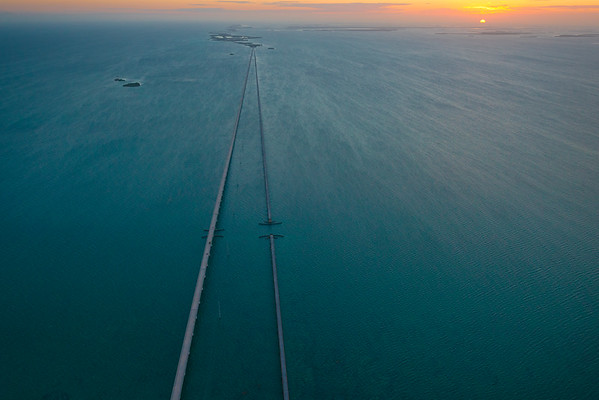
His credential stack is unusually strong for an artist at his current price point. He holds the Masters of Photography (MOP) designation — a peer-evaluated certification held by a small fraction of working photographers globally. His work carries National Geographic credits, providing independent editorial validation. He serves as a Nikon Ambassador, a partnership major brands extend only to photographers whose output consistently represents the highest level of the craft. Based in Miami Beach, his subjects span landscapes, seascapes, travel, and aviation — image categories with durable collector demand.
His editions are limited to 25–50 prints per image, with a current price range of $245 to $895. Collectors can enter at meaningful positions before edition exhaustion drives secondary market pricing. Once an edition closes, buyers who want the image must find a willing seller — and that seller sets the floor. The combination of verifiable credentials, strict edition discipline, archival production, and an accessible entry price makes his work a strong case study in what early-stage fine art photography investment looks like in practice.
The window for buying ahead of the market in any artist’s career is finite. Price points rise as recognition grows, and the buyers who act during the accessible phase are the ones who hold the most valuable prints once it closes.
Browse Edin Chavez’s current collection of limited edition fine art photography prints at edinfineart.com. Every print is hand-signed, individually numbered, produced on archival materials, and accompanied by a Certificate of Authenticity. Editions are strictly limited — when they close, they close permanently.