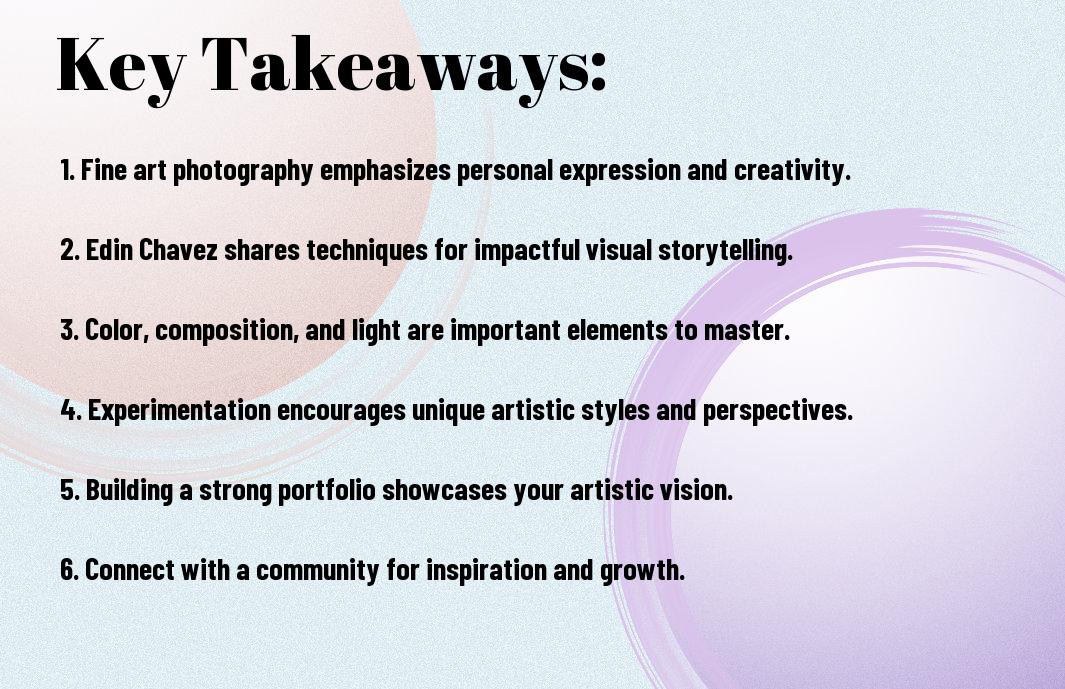
It’s time to immerse yourself in the captivating realm of fine art photography with insights from renowned artist Edin Chavez. In this deep dive, you will discover the intricate techniques, creative processes, and artistic visions that define this unique genre. By the end of this exploration, you will gain a better understanding of how fine art photography transcends traditional boundaries and becomes a powerful form of expression. Join us as we unravel the layers of this beautiful art form and elevate your appreciation for the world of visual storytelling.

The Evolution of Fine Art Photography
To understand fine art photography, you must explore its evolution over time. This genre has developed through various phases, influenced by technological advancements and artistic movements, allowing photographers to express their unique visions and provoke thought through their imagery. As you examine deeper, you’ll discover how historical context and cultural shifts shaped this art form into what it is today.
Historical Context
An exploration of fine art photography reveals a rich historical context that has significantly influenced its development. From the invention of the camera in the early 19th century to its recognition as a legitimate art form, you will find that each era contributed unique perspectives and techniques that shaped the photographers’ artistic expressions and the audience’s reception.
Key Movements and Influences
For a comprehensive understanding of fine art photography, it’s important to consider the various key movements and influences that have emerged throughout history. These movements, including Pictorialism, Surrealism, and Modernism, have played vital roles in defining the aesthetic and conceptual approaches to photography. You’ll find that these influences not only reflect broader artistic trends but also challenge traditional notions, enabling photographers to convey deeper meanings through their works.
Movements such as Pictorialism emphasized artistic expression over technical precision, encouraging you to view photography as a medium equivalent to painting. Surrealism, on the other hand, introduced dream-like qualities that pushed boundaries, allowing you to explore the unconscious. Modernism brought about a departure from the past, embracing abstraction and minimalism, which opened up new avenues for creative interpretation. Each movement has contributed to your understanding of fine art photography, inspiring you to find your own voice in visual storytelling.

The Vision of Edin Chavez
Clearly, Edin Chavez’s artistic vision transcends traditional photography, inviting you to explore the beauty of the world through his unique lens. His ability to capture fleeting moments and transform them into captivating stories allows you to see landscapes and urban environments from fresh perspectives, evoking emotions and inspiring curiosity in every frame.
Artistic Journey and Philosophy
To understand Edin Chavez’s work, you must investigate into his artistic journey, which reflects a lifelong passion for exploration and creativity. His philosophy centers around the belief that photography is not just about capturing an image, but about expressing deeper narratives that resonate with viewers, encouraging you to find your own connection to the art.
Signature Techniques and Styles
Any examination of Edin Chavez’s portfolio reveals a mastery of various techniques and styles that define his work. You’ll notice his distinctive use of natural light, long exposures, and unique compositions that transport you to the very essence of each scene, making his photography stand out in fine art.
Also, Edin expertly employs vibrant colors and contrasts in his pieces, drawing your eye to the details that might otherwise go unnoticed. His ability to blend realism with artistic interpretation creates a dreamlike quality, captivating your attention and inviting you to immerse yourself in the stories behind his breathtaking images. By exploring his signature techniques, you gain deeper insight into how he communicates emotions and experiences through every photograph.
The Role of Emotion in Fine Art Photography
Now, as you explore into fine art photography, the role of emotion emerges as a pivotal element in transforming mere images into profound storytelling vessels. It is through the mastery of emotion that your photographs can resonate deeply with viewers, transcending mere visuals to evoke feelings and provoke thought, ultimately enriching the viewer’s experience.
Capturing Momentary Feelings
Across your journey as a photographer, you should focus on harnessing those fleeting moments that encapsulate raw emotion. These momentary feelings can convey a wide spectrum of human experiences, allowing you to connect authentically with your audience through your imagery.
The Impact of Colors and Composition
For every fine art photograph you create, the impact of colors and composition plays an undeniable role in communicating emotion. These elements work in harmony to evoke specific feelings, guiding your viewers’ interpretations and enhancing their overall experience of the artwork.
Composition skews your viewer’s perception and adds depth to your emotional narrative. By thoughtfully arranging elements within your frame, you can direct the viewer’s gaze and create a mood that resonates with personal experiences. Coupled with the choice of colors, which can evoke a spectrum of feelings—warm tones suggesting comfort and joy, while cooler hues might convey sadness or calm—your ability to manipulate these aspects will significantly amplify emotional responses, making your fine art photography not just seen, but felt deeply.

Equipment and Technology in Fine Art Photography
After delving into the creative aspects of fine art photography, it’s imperative to consider the equipment and technology that can elevate your work. The right tools not only enhance your ability to capture stunning images but also assist in translating your artistic vision into reality. From cameras to software, understanding the importance of each component will help you create captivating photographs that resonate with your audience.
Camera Gear and Settings
After you have selected your vision, the next step involves your camera gear and settings, which play a significant role in fine art photography. Invest in a quality camera that suits your style, and learn how to adjust settings like aperture, shutter speed, and ISO to achieve the desired effect. Mastering these elements empowers you to capture images that reflect your artistic voice and intent.
Post-Production Techniques
An imperative part of fine art photography lies in the post-production techniques you employ. Editing can significantly influence the final outcome of your images, allowing you to enhance colors, contrast, and overall composition. Embrace software like Adobe Lightroom or Photoshop to refine your work and bring your artistic vision to life.
Photography is not just about the click of the shutter; it extends into post-production, where your artistic interpretation flourishes. You have the opportunity to manipulate elements such as lighting, tone, and textures, using layers and masks for precision. Developing a workflow that suits your style will enable you to create consistent visuals that resonate with your audience, pushing the boundaries of creative expression.
The Art of Storytelling Through Photography
Not every photograph tells a story, but when it does, it captivates and resonates with the viewer. Fine art photography allows you to convey emotions, thoughts, and narratives through visual elements, inviting your audience to engage and interpret your work in a personal way. By mastering the art of storytelling in your photography, you elevate your images beyond mere visuals to a form of expression that connects on a deeper level.
Narrative Elements in Fine Art
Any photograph that conveys a story uses narrative elements such as character, setting, conflict, and resolution. These components guide you in crafting your images to not just document a moment but to narrate an experience. By thoughtfully integrating these narrative elements, you invite your audience to immerse themselves in the world you’ve captured, fostering a sense of connection and understanding.
Blending Personal Experiences with Art
Around every great photograph is a personal story that shapes your perspective and artistry. By incorporating your experiences, emotions, and insights into your fine art photography, you create a unique narrative that reflects your individuality. This fusion of life and art allows your viewers to glimpse your journey and interpretations of the world, making your work not just visual but deeply meaningful.
With each click of the shutter, you have the opportunity to blend your personal experiences into your art, transforming your photographs into reflections of your life’s journey. Whether you draw inspiration from moments of joy, struggle, or discovery, letting your own narrative seep into your work enriches the storytelling aspect. This authentic approach can deeply resonate with viewers, as they see pieces of your life while engaging with your artistic vision, allowing them to form a connection that transcends the image itself.
Navigating the Fine Art Photography Market
Your journey into the world of fine art photography involves understanding the nuances of the market. Familiarizing yourself with current trends, key galleries, and influential collectors can help you position your work effectively. As you investigate deeper, you’ll find ways to distinguish your art while also recognizing how to attract the right audience, ultimately enhancing your visibility and sales potential.
Exhibiting and Selling Artwork
Around the globe, artists showcase their work through a variety of avenues, including galleries, art fairs, and online platforms. Each option provides unique exposure and sales opportunities, allowing you to connect with potential buyers and fellow artists. By strategically choosing where to exhibit, you can gain traction in the competitive fine art photography landscape.
Building a Personal Brand
Below the surface of photography lies the importance of establishing a personal brand that reflects your unique vision and identity as an artist. This brand sets you apart, fostering relationships with collectors and audiences.
Plus, a well-defined personal brand allows you to communicate your artistic narrative, vision, and values effectively. From your website and social media presence to the style of your photography, consistency is key. Craft an engaging story around your work that resonates with your audience, giving them a reason to connect and invest in your art. As your brand flourishes, you’ll see greater recognition and opportunities within the fine art photography market.
Conclusion
From above, you have explored into the captivating world of fine art photography alongside Edin Chavez. This exploration has offered insights into creative techniques, the importance of personal vision, and the emotional depth that defines this genre. By embracing your unique perspective and experimenting with different styles, you can enrich your artistic journey. Let the lessons learned guide you as you craft compelling narratives through your lens, and continue to push the boundaries of your creativity in photography.
Fine Art Photography Prints
Own a museum-quality archival print by Edin Chavez
Hahnemühle archival paper · From $95
BROWSE PRINTS LIMITED EDITIONS