Just like any art form, photography allows you to express your unique perspective of the world around you. Whether you’re using a smartphone or a DSLR, mastering a few crucial techniques can significantly enhance your skills. In this post, you’ll discover simple steps that will inspire you to capture stunning images that tell your story. From understanding composition to playing with lighting, these beginner-friendly tips will empower you to explore photography with confidence and creativity. Get ready to transform your snapshots into meaningful visual narratives!

Understanding Your Camera
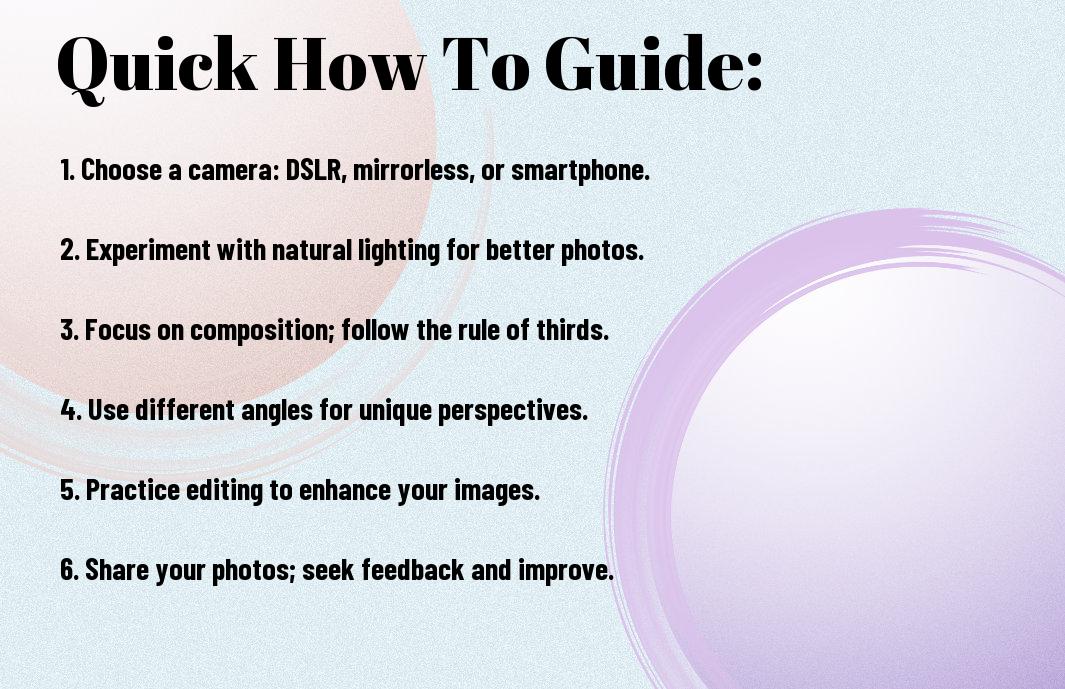
While entering into photography, it’s crucial to understand your camera, as it is the primary tool for capturing your vision. Familiarity with your equipment will empower you to make the most of every shot, leading to better compositions and more impactful photos. Learn the various features and functions of your camera, allowing you to tailor your approach to different scenes, lighting conditions, and subjects.
Choosing the Right Camera
One of the first steps in your photographic journey is selecting a camera that suits your needs and style. Various options exist, from smartphones to DSLRs and mirrorless cameras. Consider your budget, desired capabilities, and portability when making your choice, as these factors will influence your experience and the types of photos you can capture.
Familiarizing Yourself with Camera Settings
Camera settings play an important role in capturing the photos you envision. Understanding features like shutter speed, aperture, and ISO can significantly impact the outcome of your shots.
With a basic grasp of your camera’s settings, you can manipulate exposure, depth of field, and motion blur to suit your creative vision. Spend time experimenting with these parameters in various lighting and subject scenarios to see how changes affect the final image. This hands-on approach will lead to greater confidence in your ability to produce compelling photographs, enabling you to capture your world effectively.
Composition Techniques
Even as a beginner photographer, mastering composition techniques can elevate your images from ordinary to extraordinary. Effective composition draws the viewer’s eye and guides them through your photograph, making your story come alive. By understanding various compositional methods, you can create balanced and engaging pictures that resonate with your audience.
The Rule of Thirds
Assuming you’re ready to enhance your photographic skills, the Rule of Thirds is a fundamental guideline you can apply immediately. By dividing your frame into a 3×3 grid, you can position your subject along the intersecting lines or at their intersections. This technique creates more dynamic and visually appealing images, drawing attention to your focal point naturally.
Framing Your Shots
For a well-composed shot, framing your subject can add depth and context, making your images more engaging. By using elements within your environment, such as trees, windows, or doorways, you can create a “frame within a frame” that isolates your subject and adds layers to your photograph.
Plus, effective framing can enhance the sense of place in your images. It allows you to guide the viewer’s gaze directly to your subject while providing a sense of context around it. Experiment with different framing elements, and don’t hesitate to move around until you find the perfect balance that captures both your subject and its environment beautifully.
Lighting Fundamentals
Once again, understanding lighting is key to enhancing your photography skills. It can dramatically alter the mood and feel of your images. Good lighting creates dynamic, engaging shots, while poor lighting can detract from your subject. Experiment with different light sources and angles to find the best illumination that highlights the beauty of your environment.
Natural Lighting Tips
The best photographs often utilize natural light. Take advantage of golden hour during sunrise or sunset for softer, warmer tones. Here are some tips for using natural light effectively:
- Position your subject to avoid harsh shadows.
- Use reflectors to bounce light onto your subject.
- Experiment with backlighting for dramatic effects.
Thou can achieve stunning results by being mindful of your surroundings and the way natural light interacts with your subjects.
Using Flash Effectively
Natural light is fantastic, but sometimes you need to incorporate flash to bring your vision to life. Flash can help fill in shadows, illuminate your subject in low-light settings, and provide creative lighting effects. The key is to use it sparingly and strategically.
Tips for using flash effectively include diffusing the light to soften harsh edges, bouncing it off reflective surfaces for a natural look, and adjusting flash power to complement ambient light. By mastering these techniques, you can enhance your images significantly and achieve a professional finish even in challenging conditions.
Essential Photography Tips
Not every photograph is automatically stunning; it takes a skilled touch to enhance your shots. Here are a few imperative tips to elevate your photography:
- Understand natural light and how it affects your images.
- Use the rule of thirds to create balanced compositions.
- Experiment with different settings and modes on your camera.
- Pay attention to your background to avoid distractions.
- Practice regularly to hone your skills.
Assume that with dedication and continuous improvement, you will see noticeable progress in your photography.
Experimenting with Angles
The way you position your camera can dramatically change the perspective of your subject. By tilting your camera, trying different heights, or moving around your subject, you can discover unique viewpoints that bring your photos to life. Don’t hesitate to crouch low or climb high; these simple shifts can lead to striking results that stand out.
Capturing Movement
Even in static environments, conveying motion can make your photographs more dynamic. To effectively capture movement, consider the speed of your subjects and adjust your shutter speed accordingly. Quick movements may require a faster shutter speed to freeze the action, while slower movements can benefit from a slower shutter to create a sense of fluidity.
Tips for capturing movement include panning your camera along with the subject to create a blurred background while keeping the subject sharp. Alternatively, you can experiment with burst mode to take several photos in quick succession, increasing your chances of getting the perfect shot. Utilizing these techniques, you’ll be able to convey emotion and energy in your images, transforming a simple photograph into a captivating story.

Post-Processing Basics
Keep in mind that post-processing is an important part of your photography journey. It allows you to enhance your images and bring your creative vision to life. With the right tools and techniques, you can transform your photos from good to extraordinary, helping you to showcase your unique perspective of the world around you.
Introduction to Editing Software
On your photography journey, choosing the right editing software is vital. Options range from beginner-friendly programs like Adobe Lightroom and Snapseed to more advanced tools like Photoshop. Familiarizing yourself with these platforms will enable you to manipulate your images and create stunning edits that reflect your style and vision.
Simple Editing Techniques
You can elevate your photography by implementing a few simple editing techniques. Basic adjustments such as cropping, adjusting exposure, and enhancing contrast can significantly improve the overall composition of your images. These small tweaks can make a big difference without overwhelming you as a beginner.
Editing doesn’t have to be complex. Start by cropping your images to create better framing or remove distractions. Adjust the exposure to enhance the brightness and make colors pop. Experiment with contrast to add depth and drama. Additionally, you can fine-tune saturation to enrich or mute colors as needed. By mastering these basic edits, you’ll lay a solid foundation for more advanced techniques in the future.

Outdoor Photography Factors
Your outdoor photography experience can be greatly influenced by various factors. Understanding these will help you take captivating shots that truly represent your vision. Here are some key elements to consider:
- Lighting conditions
- Location and composition
- Time of day
- Weather patterns
- Environmental awareness
Assume that navigating these factors with confidence will enhance your photography skills.
Best Times to Shoot Outdoors
Photography outdoors shines brightest during the golden hours—shortly after sunrise and before sunset. These times provide soft, warm lighting that can transform ordinary scenes into stunning visuals. Depending on the season, these hours might vary, so plan to be on location early or scout areas beforehand. You’ll discover that the right lighting can make a significant difference in the emotions conveyed through your images.
Handling Different Weather Conditions
Little surprises from nature can often enhance your outdoor photography adventures. Instead of shying away from overcast skies or rain, use them to your creative advantage. Cloud cover can act as a giant softbox, creating even lighting that reduces harsh shadows, while the rain can bring out vibrant colors and reflections.
The ability to embrace changing weather conditions can open up a new world of photographic opportunities. Experiment with shooting in fog for a moody atmosphere or capturing a rainbow after a storm. Always protect your equipment, and consider using weather-resistant gear. Each scenario will offer unique perspectives, so let the weather inspire your shoots and lead you to extraordinary results.
To wrap up
As a reminder, embracing beginner photography can transform your perspective on the world around you. By following these simple how-to steps, you’ll gain confidence in capturing stunning images that reflect your unique vision. Keep practicing your skills, experimenting with different techniques, and exploring various subjects. Over time, you’ll find your niche and develop your own style, allowing you to truly capture your world through your lens. So pick up that camera and start shooting—your photographic journey begins now!
Fine Art Photography Prints
Own a museum-quality archival print by Edin Chavez
Hahnemühle archival paper · From $95
BROWSE PRINTS LIMITED EDITIONS