Just because you’re exploring the world doesn’t mean your travel photography has to fall flat. In this guide, you will discover proven methods that will elevate your photography skills and help you capture stunning images that resonate with the essence of your travels. From mastering composition and utilizing natural light to embracing local culture, these tips are tailored to enhance your unique perspective. Get ready to turn your travel memories into visual masterpieces!
Mastering Your Gear: The Tools of Travel Photography
Understanding your gear is fundamental to achieving exceptional travel photography results. Every photographer has a unique style and demands that dictate their choice of equipment. Mastering your tools not only enhances your creative expression but also empowers you to adapt to various environments and situations, ensuring you capture the essence of your travels.
Choosing the Right Camera for Your Journey
Selecting the right camera can make or break your travel photography experience. A lightweight mirrorless camera offers versatility and excellent image quality, ideal for those on the move. Alternatively, if you prioritize compactness, a high-quality point-and-shoot might be your perfect match. Evaluate your shooting style, and consider user-friendly options that won’t overload you during adventures.
Essential Accessories for Maximum Impact
The right accessories elevate your travel photography to new heights. Ensure you pack a sturdy tripod for stability during low-light shots, ND filters to manage exposure in bright conditions, and extra batteries to avoid missing that perfect moment. Additionally, a good camera bag protects your gear while providing ease of access as you navigate bustling markets or serene landscapes.
Accessories that can enhance your photography experience include lens wipes to keep your gear clean in unpredictable weather and an external flash for better lighting in tricky situations. A dedicated strap can also provide comfort during long shooting days, ensuring you remain agile while documenting your journey. The right combination of accessories transforms ordinary photos into unforgettable memories, allowing you to fully immerse yourself in the experience without worrying about technical limitations.
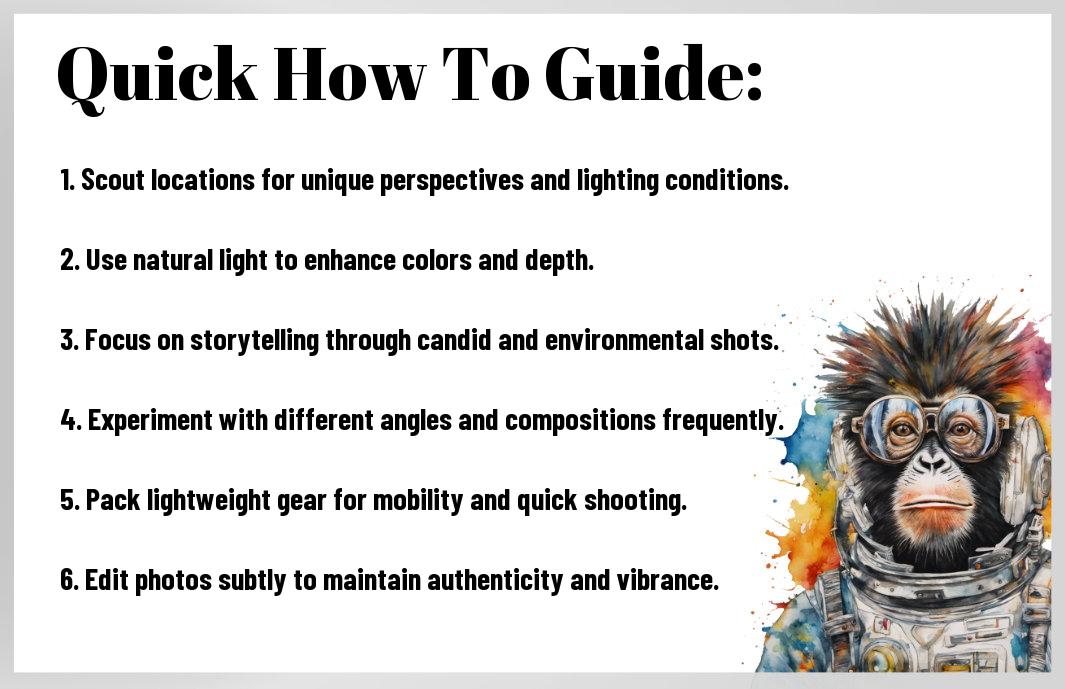
Composition Techniques: Framing the Perfect Shot
Mastering composition techniques leads to striking and memorable travel photos. By understanding how to frame your subjects effectively, you can create images that tell a story and evoke emotion. Techniques like the Rule of Thirds, leading lines, and utilizing natural frames help to guide the viewer’s eye, ensuring that your photographs not only capture a moment but also communicate the essence of the scene.
Rule of Thirds and Beyond: Advanced Composition Strategies
Employing the Rule of Thirds can elevate your photography game, but exploring advanced composition strategies will take your skills further. Consider integrating these techniques:
- Golden Ratio: Use the Fibonacci spiral to create dynamic compositions that naturally draw attention.
- Framing: Use elements in the foreground to frame your subject, creating depth.
- Symmetry and Patterns: Look for symmetrical structures or patterns to create striking visuals.
- Balance: Place subjects in a way that creates visual harmony within the frame.
Leading Lines and Natural Frames: Enhancing Depth and Interest
Integrating leading lines and natural frames significantly enhances the depth and interest of your photographs. These techniques can guide viewers’ eyes to the focal point of your image while contributing to the overall aesthetic. Roads, rivers, or even fences can serve as leading lines, drawing the viewer into the scene. Meanwhile, natural frames—like tree branches or windows—can add layers to your composition, enriching the visual narrative.
Leading lines not only direct attention but create a sense of journey and anticipation within your travel photography. For instance, a winding road through a majestic landscape invites exploration, building excitement for what’s beyond the frame. Similarly, positioning your subject within a natural frame can isolate it from distractions, allowing it to stand out in clarity and significance. By using these compositional elements effectively, you craft images that resonate with the viewer and imbue your travel stories with an unforgettable sense of place.
Capturing the Right Light: Timing and Techniques
Mastering light is indispensable for exceptional travel photography. It requires an eye for the right moment and a keen understanding of various lighting techniques. Knowing how to navigate natural light allows you to capture incredible landscapes and candid moments while being conscious of the unique challenges different environments present. You want to harness those fleeting instances of light that can elevate your images from good to extraordinary.
The Golden Hour: Optimizing Light for Stunning Photography
The golden hour, occurring shortly after sunrise and before sunset, offers a soft, warm glow that adds a magical touch to your photos. During this period, shadows are soft and the hues are rich, allowing you to capture depths of color and texture that are hard to replicate at other times of day. Plan your shoots around this window to make your travel images truly stand out.
Understanding Natural vs. Artificial Light: Making Smart Choices
Navigating between natural and artificial light can dramatically influence your travel photography’s outcome. Natural light varies—think of the bright midday sun versus cloudy conditions—each creating distinct atmospheres. Artificial light can provide creative control; however, using it effectively often hinges on your ability to blend different light sources or enhance shadows to achieve an aesthetically pleasing balance.
Consider a bustling market at noon, where harsh sunlight casts strong shadows. Embracing the natural light may not provide the best results, while an artificial light setup, such as a portable softbox, can soften those shadows, enhancing details and colors in your shots. Conversely, during twilight, using natural light allows for breathtaking effects where street lamps softly illuminate your subjects, creating a more immersive experience. Understanding when to use each type equips you to adapt to your surroundings and ensures your travel photography shines with creativity and clarity.
Evoking Emotion: Storytelling Through Images
Images have the power to evoke emotions and tell compelling stories, transforming a mere photograph into a cinematic experience. To achieve this, focus on capturing moments that resonate with viewers, whether it’s the joy of a local festival or the solitude of a majestic landscape. Consider the emotions you felt while taking the shot; that energy can transfer to your audience, creating a profound connection. Your goal is to produce images that not only illustrate a scene but also invite others to step into the narrative you experienced.
The Power of Subject and Context: Creating Captivating Narratives
Your choice of subject significantly affects the story conveyed by your photograph. By consciously selecting subjects that reflect local culture and context, you can weave richer narratives within your images. For instance, a portrait of a local artisan immersed in their craft tells a story of tradition and passion that enhances the visual impact. The interplay between your subject and their surroundings sparks curiosity and deepens the viewer’s understanding, drawing them deeper into the tale behind the image.
Combining Elements for Impact: Merging Culture and Emotion in Your Photos
Combine cultural elements with emotional resonance to create striking images that stand out. Capturing local customs, architecture, or daily life combined with spontaneous emotional moments will breathe life into your travel photography. A candid shot of a child laughing at a market, framed by colorful textiles, provides not only beautiful aesthetics but also a glimpse into cultural vibrancy. This blend allows you to convey a more holistic story, impacting those who view your work, enabling them to feel the heartbeat of the place you visited.
Infusing culture with emotion elevates your photography far beyond simple representation. Consider a travel photo of street performers during sunset: the vibrant colors alone may attract attention, but the expressions of joy or longing on the performers’ faces connect emotionally with viewers. Using this technique, you can effectively highlight elements of local tradition and heartfelt experiences simultaneously. Seek moments where culture and emotion intersect, and you’ll find opportunities to tell unforgettable stories through your lens, captivating your audience and leaving them wanting to know more about the world you’ve captured.
Post-Processing Magic: Transforming Your Shots
Post-processing is where the magic happens, turning a good image into a stunning visual narrative. With the right tools and techniques, you can enhance your travel photographs, making them pop with vibrancy and clarity that captures the essence of the moment. Implementing thoughtful adjustments can elevate your storytelling, ensuring that your images resonate deeply with your audience.
Software Essentials: Choosing the Right Editing Tools
Selecting the right editing software is foundational for superb travel photography. Popular options include Adobe Lightroom for its user-friendly interface and powerful cataloging features, while Adobe Photoshop excels in detailed retouching and manipulation. Alternatively, consider mobile apps like Snapseed or VSCO for on-the-go editing. Choose tools that align with your workflow and provide the features you need for your specific style.
Techniques for Enhancing Color and Composition in Post
Boosting color and composition in post-processing involves applying techniques that improve visual appeal. Simple adjustments like tweaking exposure, contrast, and saturation can significantly enhance the vibrancy of your images. Additionally, consider utilizing cropping to refine composition, adhering to the rule of thirds or achieving symmetry. Layering adjustments can also bring attention to focal points and create a more immersive viewer experience.
Utilizing color grading is a powerful way to convey mood; for instance, a warm hue can evoke nostalgia, while cooler tones may impart a sense of calm. Experiment with tools like histograms to check your exposure levels, ensuring that highlights and shadows are balanced properly. Regularly revisiting your images with fresh eyes often leads to new insights and edits that uncover their full potential. Balancing colors and enhancing details can transform images from ordinary to extraordinary, making them memorable captures of your travels.
Summing up
Considering all points, implementing proven methods for exceptional travel photography results will significantly elevate your skills and the quality of your images. By mastering composition, lighting, and effective storytelling, you not only capture moments, but also create lasting memories. Utilize the right equipment, stay adaptable in different environments, and practice regularly to hone your craft. With dedication and creativity, you can transform ordinary scenes into extraordinary photographs that resonate with viewers and showcase your unique perspective on the world.
Fine Art Photography Prints
Own a museum-quality archival print by Edin Chavez
Hahnemühle archival paper · From $95
BROWSE PRINTS LIMITED EDITIONS