Most aspiring photographers struggle with understanding the basics that lead to stunning images. In this guide, you will discover imperative tips and techniques that will elevate your photography skills, helping you capture breathtaking shots with confidence. Whether you’re using a smartphone or a professional camera, these straightforward principles will enable you to master your craft and unleash your creativity. Get ready to explore the imperatives that will transform your photographs and enhance the memories you create today!
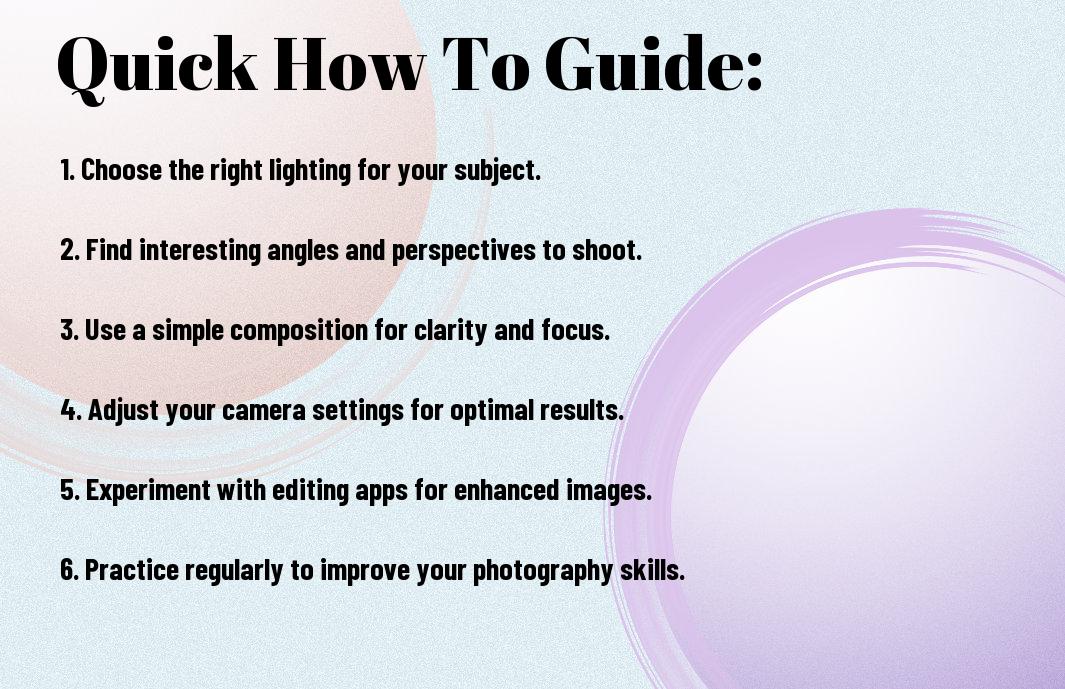
How-to Get Started with Photography
The journey into photography begins with a curiosity to capture moments and express yourself visually. Start by exploring various styles and subjects that intrigue you, such as landscapes, portraits, or street photography. Familiarize yourself with the basics of composition, lighting, and focus. Most importantly, practice consistently to develop your skills and find your unique perspective. Embrace the learning process and enjoy creating stunning visuals that reflect your individuality.
Choosing the Right Camera
If you’re wondering what camera to start with, consider your budget, goals, and preferred shooting style. Whether it’s a smartphone, point-and-shoot, or DSLR, each option has its advantages. A smartphone offers portability and convenience, while DSLRs provide better image quality and control. Evaluate what features matter most to you, and select a camera that feels comfortable to use and inspires you to explore your photographic journey.
Understanding Camera Settings
While plunging into photography, grasping the basics of camera settings can significantly enhance your images. Focus on key features such as aperture, shutter speed, and ISO, as they directly impact exposure and image quality. Experimenting with adjustments will help you learn how each setting affects your photographs, allowing you to achieve the desired look and feel in your work.
Plus, delving deeper into these settings will empower you to manipulate light and motion to your advantage. Aperture controls depth of field, helping you manage the background blur for a dreamy effect or keeping everything in focus. Shutter speed allows you to freeze action or create motion blur, while ISO adjusts your camera’s sensitivity to light. Familiarizing yourself with these aspects will elevate your photography, giving you the tools to capture stunning images tailored to your vision.
Essential Photography Tips
Some of the most effective photography techniques stem from a combination of the right tools and knowledge. Here are a few foundational tips to enhance your skills:
- Understand your camera settings.
- Experiment with different angles.
- Use the rule of thirds.
- Practice framing your subject properly.
- Don’t be afraid to step outside your comfort zone.
Perceiving the world through your lens will lead to stunning photography.
Composition Techniques
To create visually striking images, focus on composition techniques that draw the viewer’s eye. Use principles such as leading lines, symmetry, and the rule of thirds to guide your framing. Pay close attention to balance and contrast between elements within your frame, while also considering negative space. This will help you build an engaging and aesthetically pleasing photograph that tells a story.
Lighting Fundamentals
Tips for mastering lighting include understanding the golden hour and utilizing natural light to your advantage. Try shooting during early morning or late afternoon when the sun casts softer shadows and enhances colors. Use reflectors or diffusers to manipulate light, and explore both indoor and outdoor settings to see how light changes and affects your subjects. With practice, you’ll develop an eye for how light transforms your images.
Techniques such as backlighting, sidelighting, and using artificial lights can elevate your photography. Backlighting will create silhouettes that add drama, while sidelighting accentuates textures and shapes. Experiment with these lighting scenarios, allowing you to explore various moods and atmospheres in your work. Your ability to utilize light effectively will distinguish your photographs and highlight the details you want to showcase.

Key Factors for Beautiful Photos
Many aspects contribute to creating beautiful photographs that resonate with viewers. To elevate your photography, consider the following key factors:
- Lighting
- Composition
- Color
- Focus
- Subject Matter
- Emotion
Assume that mastering these elements will significantly improve the quality of your images.
The Role of Color
While color can evoke emotions and set the mood of your images, it also influences how viewers interpret what they see. Utilizing a harmonious color palette can enhance the appeal of your photos, drawing attention to the central subject while creating a visually pleasing experience.
Importance of Focus
Little attention to focus can lead to images that fail to capture your intended subject. Precisely controlling your focus helps guide the viewer’s eye, emphasizing the vital details in your composition.
For instance, when photographing a portrait, ensuring that the subject’s eyes are in sharp focus draws the viewer’s attention directly to the expression, creating a connection. Conversely, a blurred foreground can add depth while keeping the subject clear, adding layers of interest to your photograph. Effective use of focus can transform a simple shot into a powerful narrative.

Post-Processing Techniques
Keep in mind that post-processing is where your images can truly transform into stunning visual stories. Mastering editing techniques will allow you to enhance mood, adjust colors, and correct imperfections, thereby improving the overall quality of your photographs. A little editing can go a long way in elevating your work from basic to extraordinary.
Basic Editing Software
Assuming you’re just starting out, there are several user-friendly editing software options available that won’t overwhelm you while still providing crucial tools. Programs like Adobe Lightroom and Snapseed offer straightforward interfaces and numerous features, making it easier for you to learn the basics of image manipulation and enhancement.
Enhancing Your Images
An crucial part of photography is learning how to enhance your images effectively. You can achieve striking results by adjusting elements like exposure, contrast, and saturation, which can significantly improve the overall look of your photos.
With just a few tweaks, you can set the mood of your photograph. Start by adjusting the exposure to brighten or darken your image, then fine-tune the contrast to add depth. Saturation and vibrance can help colors pop, while cropping can focus the viewer’s attention on your subject. Explore filters and presets but apply them sparingly to maintain authenticity in your work. Combining these techniques will help you develop a unique style and make every shot stand out.

Practicing and Improving Your Skills
Unlike many creative pursuits, photography thrives on practice and consistency. The more you shoot, the better your eye becomes for composition, lighting, and subject matter. Experiment with different techniques, settings, and styles to discover what resonates with you. Challenge yourself to step outside your comfort zone, whether that means tackling new genres or refining your editing skills. Your hands-on experience will enhance your overall abilities and broaden your artistic vision.
Setting Photography Goals
While it’s easy to get lost in the excitement of photography, setting specific goals will help you stay focused and motivated. Define what you want to accomplish, be it mastering a particular style, improving technical skills, or building a portfolio. Break your goals into manageable milestones, and celebrate your progress along the way. This structured approach will steer your development and keep you engaged in your photography journey.
Joining Photography Communities
There’s immense value in connecting with fellow photography enthusiasts. Engaging in photography communities can provide you with constructive feedback, inspiration, and motivation to push your skills further. By sharing your work and discussing techniques with others, you’ll gain new insights and broaden your perspective on the art form. Collaborative projects and challenges can also spark creativity and help you explore areas you might not have considered before.
Improving your skills can be significantly enhanced by immersing yourself in photography communities, whether online or in person. Platforms such as social media groups, forums, or local clubs offer ample opportunities to share your work, seek advice, and learn from others’ experiences. Actively participating in discussions and critiques will help you develop a critical eye and gain confidence in your abilities. Building relationships within these circles can also lead to mentorship opportunities, collaborative projects, and invaluable support that elevates your photography to new heights.
Equipment Tips for Every Photographer
Now, understanding the right equipment can elevate your photography skills significantly. To get started, consider the following tips:
- Invest in a quality camera that suits your style.
- Prioritize lenses based on the type of photography you enjoy.
- Don’t overlook the importance of lighting equipment.
- Always carry spare batteries and memory cards.
Recognizing your gear’s potential is key to taking stunning photographs.
Lens Selection
Now, selecting the right lens can make a dramatic difference in your photography outcomes. Depending on your subject, choose between wide-angle, telephoto, or macro lenses to enhance your creativity and technical precision.
Tripod and Accessories
The right tripod and accessories can significantly enhance your photography experience. A sturdy tripod stabilizes your camera for long exposures, portraits, or landscape shots, while accessories like remote shutters, filters, and lens cleaning kits round out your toolkit.
Equipment choices can define your shooting style and improve your results. A high-quality tripod is indispensable for capturing sharp images, allowing you to shoot in low light without blur. Accessories such as filters can help manipulate light and enhance the atmosphere of your shots. Investing in reliable gear supports your growth as a photographer.
To wrap up
Ultimately, the journey to beautiful photography begins with understanding the basics, from composition to lighting. By applying these quick how-to necessarys, you can significantly enhance your skills and create stunning images. Don’t hesitate to experiment and develop your unique style; with practice, you’ll find what works best for you. So, grab your camera and start capturing the world through your lens today!
Fine Art Photography Prints
Own a museum-quality archival print by Edin Chavez
Hahnemühle archival paper · From $95
BROWSE PRINTS LIMITED EDITIONS