The Art of Composition: Framing Your Shots
Mastering composition is vital for capturing images that truly resonate with viewers. Effective composition elevates your photography from mere snapshots to visually striking art. By understanding how to strategically arrange elements within your frame, you can create a compelling narrative that draws your audience in, making them feel as though they are part of the moment you’ve captured.
The Rule of Thirds: Creating Balance
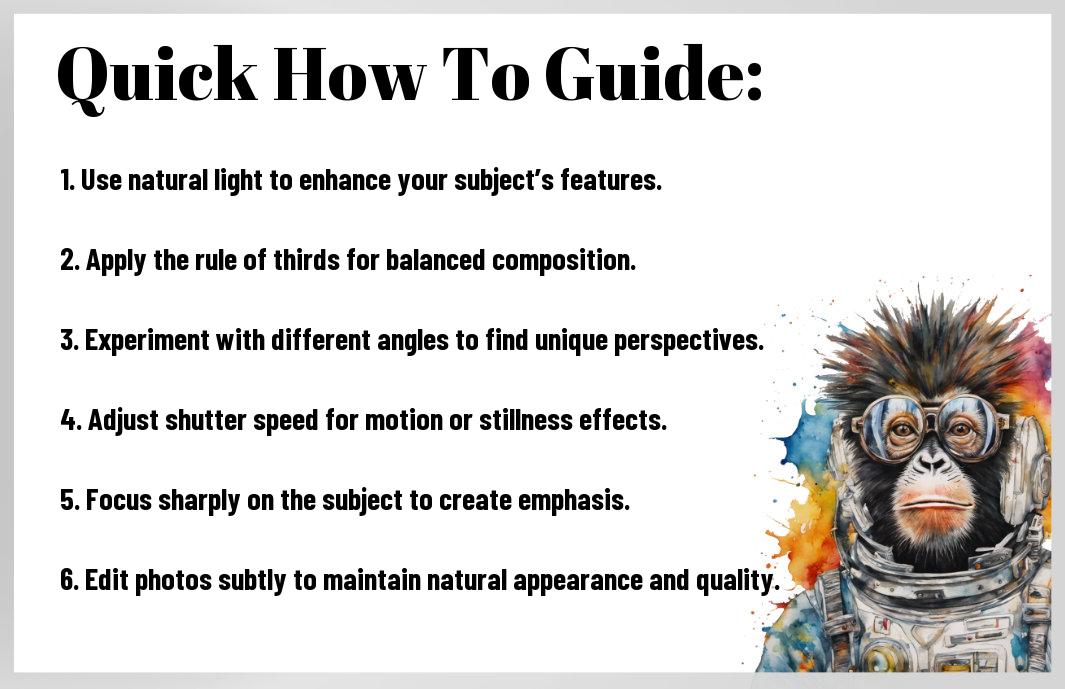
This classic compositional technique divides your image into thirds, both horizontally and vertically, creating a grid of nine equal parts. By placing your subject along these lines or at their intersections, you introduce a sense of balance and interest. For example, positioning a horizon line along the bottom third can enhance the drama of a sunset, while situating a person off-center invites the viewer to explore the surrounding environment.
Leading Lines: Guiding the Viewer’s Eye
Leading lines are a powerful compositional tool that directs your viewer’s eye toward the main subject of your photograph. They can be anything from roads and rivers to fences or architectural lines. Using these natural pathways creates a sense of depth and perspective, encouraging the viewer to engage with the scene more intimately. For instance, a winding road can draw the viewer into a picturesque landscape, while converging lines in urban settings can lead the eye toward a stunning architectural detail.
Experimenting with leading lines can significantly impact your images. For best results, look for opportunities to incorporate them in various environments. An empty path in a forest, a bridge stretching over a river, or even a row of trees can create inviting pathways. Additionally, consider the angle from which you’re shooting; a low perspective can enhance the impact of leading lines as they stretch into the distance, imbuing your shots with a sense of dynamism and motion. With practice, you’ll soon harness the power of lines in your compositions, guiding your viewers’ gaze just where you want it.
Mastering Exposure: Control the Light
Balancing exposure is at the heart of photography. Understanding how to control light not only enhances your images but also deepens your artistic expression. By mastering the exposure triangle—ISO, shutter speed, and aperture—you gain the power to create specific moods and effects in your photographs, whether you’re brightening landscapes or capturing subtle details in dimly lit environments.
Shutter Speed and Motion: Finding the Right Balance
Shutter speed determines how long the camera’s sensor is exposed to light, directly influencing the portrayal of motion in your images. Fast shutter speeds freeze action, perfect for capturing dynamic sports scenes or wildlife in motion, while slower speeds can create stunning blur effects that convey movement, such as flowing water or dancing figures. Finding the right balance between speed and light can transform your approach to photography.
Aperture and Depth of Field: Focusing on Your Subject
Aperture settings dictate the size of the lens opening, which affects depth of field in your shot. A wide aperture (low f-number) creates a shallow depth of field, isolating your subject against a blurred background, enhancing portrait photography or emphasizing details in still life. Conversely, a narrow aperture (high f-number) keeps more of the scene in focus, ideal for landscapes or group shots where detail matters throughout the image.
Aperture plays a significant role in storytelling through your photography. When you choose a wide aperture, like f/1.8 or f/2.8, your subject stands out sharply while the surrounding environment fades into a beautiful bokeh, drawing attention precisely where you want it. On the other hand, setting your aperture to f/11 or f/16 allows intricate details of a scenic vista to shine through, making it vital to adjust this setting based on your photographic intent. An understanding of how aperture affects the scene not only elevates the aesthetic appeal of your images but also communicates the narrative you wish to portray.
Harnessing Natural Light: Timing is Everything
Optimizing natural light can dramatically elevate your photography. The key is understanding the ideal moments of the day to shoot. Elements such as the angle of the sun and the quality of light directly influence how your images capture mood and detail. The strategic use of natural light not only enhances colors but also adds depth and dimension to your subjects, allowing you to create captivating images that resonate with viewers.
The Golden Hour: Captivating Colors and Shadows
The golden hour, occurring shortly after sunrise and before sunset, is a photographer’s paradise. The golden hue adds warmth and richness to your photographs, enhancing landscapes and portraits alike. Shadows become elongated, creating dramatic contrasts that emphasize textures and forms, giving your images an ethereal quality that’s hard to replicate during stark noon light.
Overcast Days: Utilizing Soft Light for Portraits
Overcast weather brings a unique advantage for portrait photography—soft, diffused light that eliminates harsh shadows. This gentle illumination creates flattering skin tones, making it ideal for emotional and intimate portraits. The lack of direct sunlight also means you can shoot at almost any time of day without worrying about unappealing glare or washed-out colors.
On overcast days, the clouds act as a natural reflector, softening the light and providing an even exposure across your subject. This is particularly effective for close-up shots, where detail and texture are crucial. When photographing portraits, position your subject facing the light for the best results, ensuring they are illuminated evenly. Additionally, using a simple reflector can help bounce some of that soft light back onto your subject’s face, enhancing their features without the need for artificial lighting. The result is a beautifully crafted image that feels warm, engaging, and authentic—perfect for capturing genuine moments. Establishing a connection with your subject becomes easier as the subdued light allows their personality to shine through naturally.
The Power of Perspective: Unique Angles and Approaches
Utilizing unique perspectives can completely transform your images, allowing you to tell a more compelling story or evoke specific emotions. Experimenting with different angles invites a fresh narrative, whether you’re capturing everyday scenes or grand landscapes. By shifting your shooting position, you can highlight interesting compositional elements and create visual intrigue that engages the viewer. The world looks different from every vantage point, so unlock your creativity and embrace the power of perspective.
High vs. Low Angles: Dramatic Effects in Composition
High and low angles create dramatic effects that can significantly alter the perception of your subjects. Shooting from above can lend a sense of vulnerability or overview, making subjects appear smaller in the frame. Conversely, a low angle can empower subjects, offering them grandeur and dominance that captivates the viewer’s attention. By simply changing your height, you can evoke different emotions and narratives in your images.
Framing and Layering: Adding Depth to Your Images
Incorporating framing and layering techniques enhances imagery by inviting depth and intrigue. Framing involves using natural elements like branches or doorways to create borders around your subject, drawing attention while adding context. Layering involves placing multiple elements in the foreground, middle ground, and background, resulting in a more complex visual narrative. These techniques allow you to lead the viewer’s eye throughout the composition, making your images not just beautiful, but also purposeful.
Effective framing incorporates elements within your environment to craft a unique visual border, while layering adds richness through multiple planes. For instance, capturing a portrait framed by an archway creates a sense of context that draws the viewer in, establishing a story behind the subject. Layering, on the other hand, gives your images a three-dimensional feel—think about including flowers in the foreground of a landscape shot, which not only accentuates the scene but also invites viewers to explore the photograph further. By utilizing these techniques, you enhance the narrative depth and aesthetic appeal of your work, engaging your audience more effectively.
Editing Essentials: Enhancing Your Visual Story
Editing is where your creative vision truly comes to life, allowing you to enhance your images and communicate your visual story more effectively. Utilizing various software and editing tools can transform a good photograph into a spectacular one, emphasizing details, creating mood, and ultimately engaging your audience. Whether you’re tweaking exposure, adding filters, or perfecting composition, editing shapes the final impression of your work and elevates your photography to new heights.
Color Correction and Grading: Setting the Mood
Adjusting colors can dramatically affect the mood of your images. By applying color correction and grading techniques, you can evoke specific emotions, highlight particular subjects, and create a cohesive look throughout your portfolio. Tools like Adobe Lightroom and Photoshop allow you to adjust temperature, vibrance, and tint, giving your photos a signature style that aligns with your artistic vision.
Cropping and Resizing: Fine-Tuning for Impact
Strategic cropping and resizing can elevate your composition significantly, guiding the viewer’s eye and enhancing the focal point. By removing distractions or adjusting the aspect ratio, you can create a more engaging narrative within your image, ensuring that your subject stands out. Cropping isn’t just about cutting out elements; it involves an understanding of balance and proportion.
Fine-tuning your images through cropping and resizing entails a thoughtful approach to composition. You might utilize the rule of thirds to place your focal point more dynamically, or choose to eliminate extraneous details that detract from the main subject. Tools in editing software allow for precise adjustments, enabling you to experiment with different layouts. Consider the context and platform where your image will be viewed; for instance, Instagram favors square crops while websites might benefit from landscape orientations. The right crop can make your image not just more aesthetically pleasing, but also more powerful in conveying the message behind your visual story.
Building Your Photo Library: Organizing for Success
Creating a well-organized photo library not only saves you time but enhances your productivity as a photographer. Start by categorizing your images into relevant folders, such as by year, event, or subject matter. This structured approach allows for easy retrieval when you need specific shots for projects or competitions. Consider using a consistent naming convention for your files to further streamline the organization process, ensuring that you can quickly pinpoint any image in your collection.
Tagging and Metadata: Making Your Images Easily Accessible
Incorporating tagging and metadata into your workflow significantly boosts your images’ accessibility. Use keywords that describe the content, location, and context of your photos to allow for quick searches later on. Additionally, including information such as the date taken and camera settings can add valuable context, making your library a comprehensive resource for future projects or reference.
Backing Up Your Work: Ensuring Longevity and Security
Backing up your work is fundamental for safeguarding your photography against loss or corruption. Utilize a combination of external hard drives and cloud storage solutions to create redundant copies of your images, reducing the risk of losing your work due to hardware failure or accidents. Regularly scheduled backups can help you stay organized and protected over time.
For maximum protection, consider a 3-2-1 backup strategy: keep three copies of your files, on two different storage devices, with one copy stored off-site or in the cloud. This approach not only safeguards against local system failures but also adds an extra layer of security in case of theft or natural disasters. Implement these practices regularly to ensure your images remain safe and accessible for years to come.
Final Words
As a reminder, elevating your photography skills involves both understanding technical aspects and harnessing your creative instincts. Utilize the tips provided—from mastering composition to experimenting with lighting—to enhance your images. Don’t hesitate to practice regularly; the more you shoot, the more your unique style will emerge. Keep exploring new techniques and approaches, and you’ll capture breathtaking photographs that truly resonate with your audience.
Fine Art Photography Prints
Own a museum-quality archival print by Edin Chavez
Hahnemühle archival paper · From $95
BROWSE PRINTS LIMITED EDITIONS