Over time, photography has become more accessible to everyone, even if you’re just starting out with limited financial resources. You don’t need expensive equipment or lavish studios to capture stunning images; with a few practical tips and some creativity, your beginner photography journey can flourish on a budget. In this article, you’ll discover invaluable techniques and tricks that will enhance your skills and help you make the most of your equipment, ensuring you can create beautiful photos without breaking the bank.
Budget-Friendly Gear: What You Really Need
Investing in photography gear doesn’t have to deplete your finances. Focus on acquiring imperative items that enhance your photography without excessive spending. Start with a reliable entry-level DSLR or mirrorless camera, which you can often find for under $500. Pair it with a versatile lens—like a 50mm f/1.8—which offers excellent image quality at a wallet-friendly price. You can elevate your skills without overwhelming your budget by prioritizing functionality over brand name.
The Essential Camera Choices Without Breaking the Bank
Choosing between a DSLR and mirrorless camera can be daunting on a budget. However, options like the Canon EOS Rebel series or the Nikon Z50 provide both affordability and adaptability, allowing you to learn and grow as a photographer without compromising on quality. Consider also secondhand models, which can slash costs significantly while still delivering impressive results.
Must-Have Accessories That Boost Your Photography
Accessories can dramatically enhance your photography experience and results. A sturdy tripod offers stabilization imperative for long exposures or low-light photography. A quality camera bag not only protects your gear but also keeps everything organized. Additionally, investing in a circular polarizer filter can improve color saturation and reduce glare, making your images pop.
Beyond the basics, consider a few other accessories that can transform your approach to photography. A remote shutter release can help you capture crisp images without the camera shake that can occur when you press the shutter button manually. Reflectors can assist in managing natural light, and a lens cleaning kit ensures your optics remain dust-free. These tools don’t just improve image quality; they elevate your entire photographic workflow, making it easier to manage various shooting conditions.
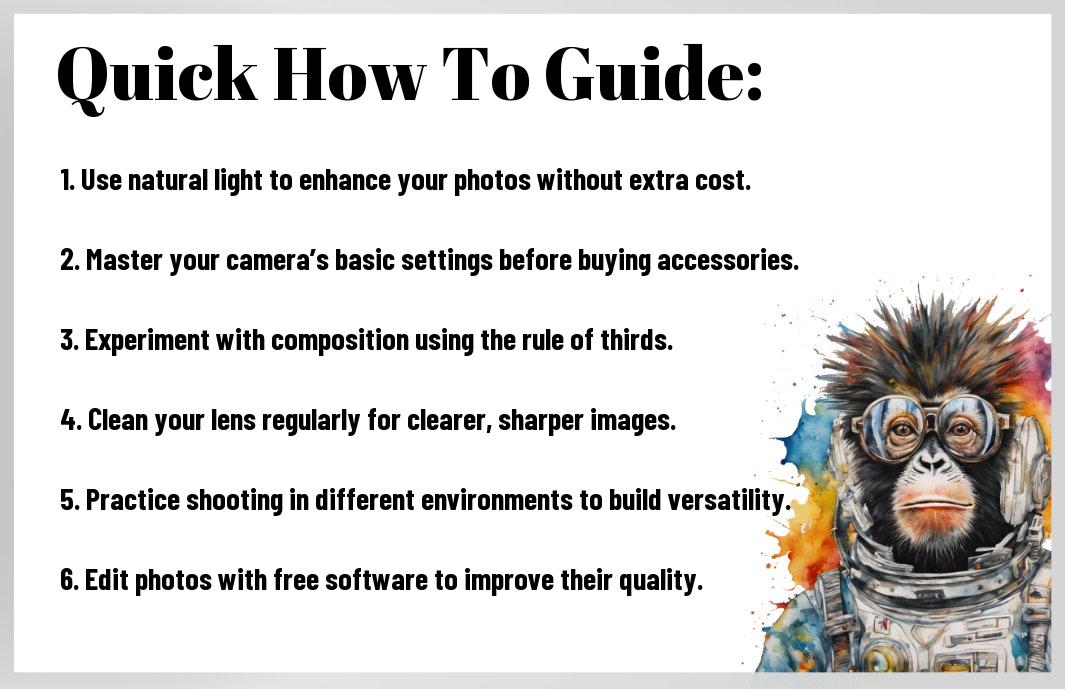
Mastering the Fundamentals: Composition on a Dime
Composition is at the heart of impactful photography, and mastering it doesn’t have to cost a fortune. You can quickly elevate your images by recognizing and applying key principles to guide your framing choices. Focus on elements like the rule of thirds, leading lines, and balance while using locations in your everyday life. A park, street corner, or your backyard can become a photography playground where you creatively explore these techniques without a financial investment.
The Rule of Thirds and Beyond
Utilizing the rule of thirds helps break your frame into nine equal sections by drawing two vertical and two horizontal lines, providing a guide for placing your subject. Positioning key elements along these lines or their intersections draws viewers’ eyes naturally into your photograph. This simple yet effective technique encourages you to explore opportunities beyond the center of your frame, stimulating a more dynamic composition and engaging storytelling in your images.
Creative Angles and Perspectives You Can Explore
Experimenting with various angles and perspectives can tremendously enhance your photography, introducing freshness and a unique touch to your work. Try crouching down low to showcase the ground’s textures or positioning yourself at a higher elevation for sweeping landscapes. Shooting from unconventional viewpoints—like from behind objects, through openings, or even at diagonal angles—instantly transforms ordinary scenes into extraordinary snapshots. These small shifts can provide greater depth and context to your storytelling, encouraging viewers to see the world through your lens.
Playing with angles allows you to capture moments from fresh perspectives that tell more compelling stories. For example, capturing street performers from their eye level may convey their energy and engagement with audiences. Alternatively, a bird’s-eye view of an urban landscape can highlight patterns and structures often overlooked. By incorporating these varied perspectives into your photography toolkit, you not only enhance composition but also develop a more distinctive style that reflects your personal vision. This creativity requires no expensive gear—just a willingness to explore and experiment.
Harnessing Natural Light: Your Free Best Friend
Natural light is your best asset as a beginner photographer, providing beautiful illumination without any cost. By understanding the positioning of light sources, such as the sun, you can enhance your photos dramatically. Experiment with shooting during different times of day and take advantage of the abundant outdoor opportunities to capture stunning images using sunlight, whether it’s streaming through a window or bathing the entire landscape.
The Golden Hour: Timing Your Shots Perfectly
The golden hour, occurring shortly after sunrise and before sunset, is a magical time for photography. The warm, soft light during this period creates gorgeous, flattering images that are perfect for portraits, landscapes, or any subject. Planning your shoots around this time can result in stunning photos with a natural glow, setting your work apart from the average snap.
Utilizing Shadows and Reflections for Dramatic Effect
Shadows and reflections can elevate your photography by adding depth and dimension. Incorporating these elements can create striking compositions and convey emotions that flatter your subject. By being mindful of your surroundings, and how light interacts with various surfaces, you’ll uncover exciting opportunities to play with contrast and reflections, which make your images pop.
The interplay of shadows and reflections can tell a story and contribute depth. For instance, shooting near water sources allows you to capture dynamic reflections that can double the visual interest of your image. Experiment with shooting at different angles to see how shadows stretch and bend, adding layers to your photographs. Look for interesting surfaces like glass, polished floors, or even puddles after rain to capture vibrant reflections that enhance your compositions. एक प्रबुद्ध संपादन से आप पूरी तरह से बदल सकते हैं कि आपकी तस्वीरें कैसे देखी जाती हैं और इस तत्व को अपने कैलिब्रेशन में शामिल करके अप्रत्याशित सुंदरता उत्पन्न कर सकते हैं।
Exploring Free Editing Tools: Polishing Your Photos
Free editing tools can take your photography to the next level without putting a dent in your wallet. Software like GIMP, Pixlr, and Canva offer robust features that allow you to fine-tune your images with ease. You can enhance colors, adjust contrast, and apply filters to create a polished final product. Beyond basic edits, these tools enable you to bring your creative vision to life, helping you present your photography in the best possible light.
User-Friendly Software for Beginners
GIMP stands out as a top choice for beginners due to its rich features and intuitive interface. It mirrors many paid programs, allowing you to perform advanced edits without a steep learning curve. Alternatively, Pixlr offers browser-based editing, ideal for those seeking convenience. If you’re after quick and simple designs, Canva is perfect, as it provides ready-made templates tailored for social media posts or photo collages while also allowing some customization.
Basic Techniques to Enhance Your Images
Simple editing techniques can significantly elevate the quality of your photos. Adjusting brightness and contrast is one of the first steps; a brighter image often feels more inviting, while increased contrast can make your subjects pop. Cropping can also help eliminate distractions and focus attention, while slight color corrections can ensure that hues are vivid and accurate. Try adding sharpening effects to make details more distinct, which is especially useful for landscapes and portraiture.
Utilizing these basic techniques will enhance your images in an impactful way. For instance, brightening a dimly lit photo can transform it from bland to eye-catching, drawing viewers in. Cropping can change the photo’s composition, allowing you to remove unwanted elements while highlighting the main subject. Simple contrast adjustments can create depth and interest, while sharpening helps clarify details that might otherwise be lost. With practice, mastering these skills will provide you with the tools necessary to create professional-looking images that stand out.
Finding Inspiration: Cultivating Your Creative Eye
Inspiration often stems from your environment; take time to explore local parks, streets, and markets to capture everyday moments. Look for unique textures, colors, and the interplay of light and shadow that can transform a mundane scene into a compelling image. Keeping an open mind and being observant can lead to unexpected discoveries and spark your creative ideas. Allow yourself to play with different angles and perspectives, and you’ll soon see the world as your canvas, rich with potential for stunning photography.
How to Seek Out Interesting Subjects on a Budget
Your surroundings hold a wealth of subjects waiting for your lens. Check out community events, local festivals, or even everyday life in your neighborhood. Street photography can uncover human emotions and interactions, while wildlife can be observed in parks or even your backyard. With a little creativity, everyday objects can become fascinating focal points, so keep your camera close and your eyes wide open.
Joining Communities and Challenges Without Cost
Engaging with photography communities online offers continuous inspiration and growth at no cost. Platforms like Instagram, Facebook groups, and photography forums are filled with enthusiasts sharing tips and showcasing their work. Participating in photo challenges, where you tackle specific themes or subjects within a timeframe, can push your creativity further. This interaction not only builds your portfolio but also opens channels for valuable feedback.
Joining communities and participating in free challenges cultivates a sense of belonging and motivation. Many online groups host regular themes or assignments that encourage you to step outside your comfort zone. For example, the #PhotoAWeek challenge invites you to capture a specific theme each week, allowing you to explore various photography styles. You’ll find supportive feedback from fellow members, and their diverse tastes can spark fresh ideas, helping you grow as an artist without the burden of additional expenses.
Conclusion
Ultimately, you can elevate your photography skills without breaking the bank by implementing these invaluable tips tailored for beginners. By exploring affordable equipment options, practicing composition techniques, experimenting with natural lighting, and utilizing online resources, you can develop your craft effectively. Focus on honing your unique style and tell compelling stories through your images, making the most of what you have. Embrace the journey of learning and creativity, and watch your photographs transform into captivating works of art.
Fine Art Photography Prints
Own a museum-quality archival print by Edin Chavez
Hahnemühle archival paper · From $95
BROWSE PRINTS LIMITED EDITIONS