Over the years, photography has evolved into an accessible art form for everyone, and you can quickly enhance your skills with a few simple tricks. Whether you’re using a smartphone or a dedicated camera, this guide will introduce you to exciting techniques that will help you capture dynamic images and fresh perspectives. You’ll learn how to think outside the box, experiment with angles, and tap into your creativity to elevate your photography. Get ready to explore the world through your lens like never before!
Understanding the Basics of Photography
As you commence on your photography journey, understanding the basics is paramount. Familiarize yourself with core concepts such as exposure, composition, and lighting to elevate your skills. Each element plays a vital role in how your images will ultimately appear, and solidifying your knowledge in these areas can lead to more compelling photographs. Start exploring, and before long, you’ll feel confident in capturing the moments that matter most.
How-To Choose the Right Camera
Some aspiring photographers may feel overwhelmed by the myriad of camera options available. Start by assessing your needs: consider how you plan to use the camera and your budget. Whether it’s a smartphone, point-and-shoot, or a DSLR, choose a camera that feels comfortable in your hands and offers the features that will help you grow as a photographer.
Tips for Mastering Camera Settings
Assuming you have your camera ready, mastering its settings will significantly impact your photography results. Explore the following key settings to enhance your images:
- Shutter Speed: Controls motion blur.
- Aperture: Affects depth of field and light entry.
- ISO: Regulates the camera’s sensitivity to light.
Knowing how to balance these settings will help you achieve your desired aesthetic and improve your overall photographic technique.
Photography offers endless possibilities, and understanding your camera settings opens up new creative avenues. Here are some additional points to focus on:
- Exposure Triangle: Understand the relationship between shutter speed, aperture, and ISO.
- Focus Modes: Utilize different focus methods for various scenarios.
- White Balance: Adjust settings to ensure accurate colors in different lighting conditions.
Knowing these aspects not only boosts your performance but empowers you to express your unique vision through your images.

Exploring Composition Techniques
If you want to enhance your photography skills, understanding composition techniques is necessary. These foundational elements of art allow you to create more impactful and visually appealing photographs. By experimenting with different composition techniques, you’ll begin to see the world through a new lens, literally and metaphorically. Whether you’re capturing landscapes or portraits, adopting these methods will help elevate your photography and provide fresh perspectives that engage your viewers.
How-To Use the Rule of Thirds
Little adjustments to your framing can significantly improve your photos. The Rule of Thirds is a simple technique where you divide your frame into nine equal parts with two horizontal and two vertical lines. Placing your subject along these lines or at their intersections can create a more balanced and dynamic image. Start by enabling grid lines on your camera or smartphone to guide you in your composition.
Tips for Leading Lines and Framing
You can dramatically enhance your photography by utilizing leading lines and natural framing elements. Leading lines draw your viewer’s eye towards a focal point, creating depth and perspective in your images. Additionally, framing can be achieved by including elements in your scene, such as trees or doorways, that create a visual border around your subject. Here are some tips to incorporate these techniques:
- Seek out pathways, roads, or rivers as leading lines.
- Utilize natural elements like branches or windows for effective framing.
- Experiment with different angles to enhance leading lines.
- Pay attention to the background, ensuring it complements your frame.
Perceiving the potential of your surroundings is key to mastering these techniques. The more you practice, the better you’ll become at identifying leading lines and framing opportunities in everyday life.
Rule of thumb: always approach your scenes with an open mind and a willingness to explore various compositional elements. Identifying leading lines and framing opportunities can transform an ordinary shot into an extraordinary one. Try these approaches the next time you’re out photographing:
- Look for pathways or roads that guide the eye through the image.
- Use natural elements to create borders and frames around your subject.
- Experiment with different points of view to capture unique perspectives.
- Combine multiple leading lines to create layers in your composition.
Perceiving these elements in your environment can lead to captivating photographs that resonate with your audience.

Lighting and Its Impact on Photography
Many aspects of photography hinge on how you use light. The way your subject is illuminated can completely transform an image, highlight emotions, and create depth. You should consider both natural and artificial light sources, as each brings unique qualities to your photographs. Understanding how to manipulate and embrace light can significantly elevate your photography skills and help to tell a more compelling story through your lens.
How-To Work with Natural Light
HowTo effectively utilize natural light starts with scouting locations during different times of the day. Early mornings and late afternoons provide soft, warm light, perfect for stunning portraits and landscapes. Experiment with backlighting, shooting into the sun, and using shadows to add depth to your images. Don’t hesitate to adjust your angle or position to capture the best light.
Tips for Using Artificial Light Effectively
Some useful tips for using artificial light effectively can enhance your images significantly. Familiarize yourself with your light sources, whether they’re studio flashes, LED panels, or basic household lamps. Key strategies include:
- Use diffusers to soften light and reduce harsh shadows.
- Adjust the intensity and location of the light to achieve desired effects.
- Experiment with color gels to create mood and atmosphere.
After mastering these techniques, you’ll find that your creative options for storytelling expand immensely.
Natural light offers a magical quality that can dramatically influence your work. Explore different times of the day and varying weather conditions to discover how they affect your images. Consider these elements:
- Observe how light changes color and intensity throughout the day.
- Find shaded areas to reduce glare and create even lighting.
- Take advantage of reflections and refractions for interesting effects.
After experimenting with natural light, you’ll start to see the world through a more artistic lens.
Experimenting with Perspectives
After you’ve mastered the basics of handling your camera, it’s time to elevate your photography by experimenting with perspectives. Changing how you view your subject can add depth and interest to your images. Whether you’re shooting landscapes, portraits, or still life, shifting your point of view can create striking compositions and provoke curiosity in your audience.
How-To Shift Your Angles for Unique Shots
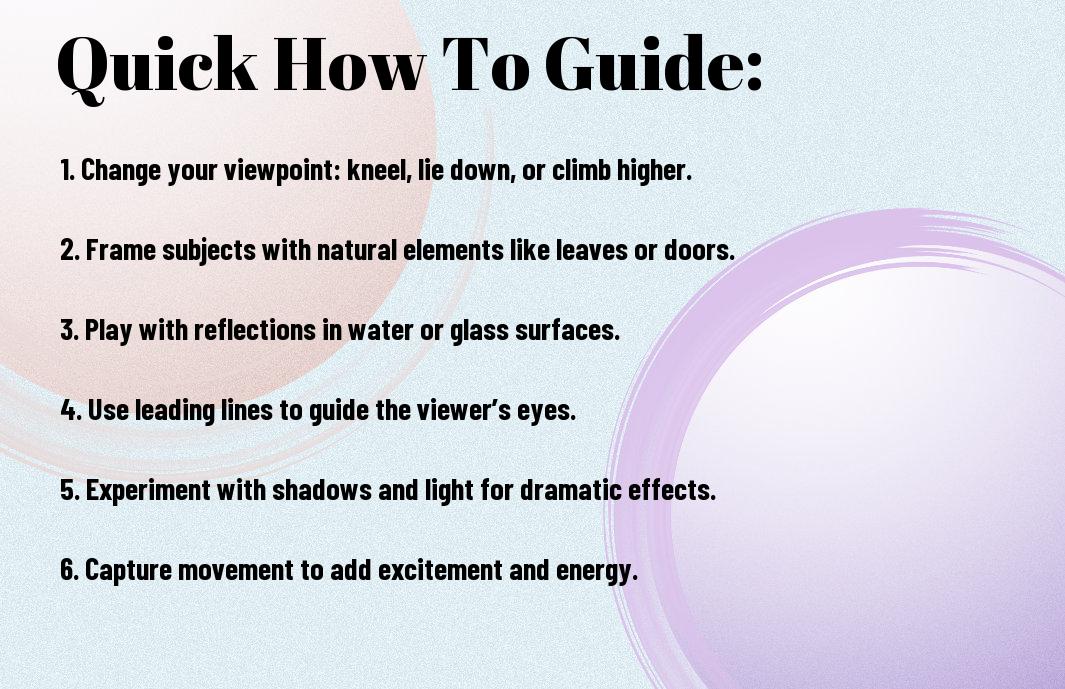
Little adjustments in your shooting angle can dramatically transform your images. Instead of shooting from eye level, try kneeling, lying down, or climbing up to a higher vantage point. This simple shift can uncover stunning and unexpected elements in your frame, breathing fresh life into familiar scenes.
Tips for Incorporating Different Viewpoints
With your photography, enhance the visual storytelling by varying your points of view. Use these strategies to inspire unique compositions:
- Capture low-angle shots to emphasize your subject.
- Employ bird’s-eye views for a broader context.
- Experiment with close-ups to reveal intricate details.
The more you practice, the more your creative perspective will flourish.
For instance, you might choose to photograph a bustling street by standing on a bench to capture the flow of movement or take a closer shot of a flower from a lower angle to highlight its beauty. Incorporating viewpoints like these can add layers to your work, making them visually captivating:
- Try facing your subject against a dramatic backdrop.
- Experiment with framing your subject using natural elements.
- Vary the distance to control how the background interacts with the subject.
The exploration of diverse viewpoints amplifies the narrative of your photographs.

Post-Processing Techniques
Now that you’ve captured stunning images, post-processing can elevate your photography to the next level. Learning to edit gives you the power to enhance colors, correct exposure, and achieve the mood you envision. Dive into the world of editing to refine your photos and make them truly stand out.
How-To Edit Photos for Enhanced Appeal
With the right tools and techniques, you can transform your images from good to great. Start by adjusting the brightness and contrast, enhancing highlights and shadows to add depth. Next, fine-tune colors using saturation and vibrance settings, and finally, consider cropping to create a more compelling composition. Each adjustment helps bring your artistic vision to life.
Tips for Using Editing Software
Techniques for effective editing vary based on the software you choose. Familiarize yourself with your editing software’s features and tools to maximize its potential. Consider these tips to streamline your process:
- Don’t over-edit; maintain a natural look.
- Use layers for non-destructive editing.
- Utilize presets to save time on repetitive adjustments.
- Experiment with different styles to find your unique voice.
Thou art now equipped to enhance your images with skill and creativity.
Edit your photos with purpose, focusing on key aspects that resonate with your style. Here are some vital practices to keep in mind:
- Analyze your initial image before making edits.
- Develop a consistent workflow to improve efficiency.
- Back up originals to safeguard your work.
- Seek feedback from fellow photographers to grow your skills.
Thou can turn ordinary captures into extraordinary visuals with refined editing techniques.
Practicing and Developing Your Style
All photographers, especially beginners, need to embrace practice for growth and development. It’s all about experimentation and exploration. By continuously shooting and varying your techniques, you’ll discover what resonates with you. Allow yourself to make mistakes and learn from them, as this process shapes your unique photography style. Seeking feedback from others can also enhance your skills, turning your passion into a distinctive form of art.
How-To Set Realistic Photography Goals
Goals are the foundation for your photography journey. Start by identifying specific skills or techniques you’d like to improve. Set measurable milestones, such as shooting a certain number of photos or experimenting with a new style each month. Make sure your goals are attainable yet challenging to encourage growth. As you achieve these milestones, you’ll be motivated to keep progressing.
Tips for Building a Personal Portfolio
Little steps can lead to a great personal portfolio that showcases your creativity. Focus on selecting your best work that reflects your style and interests. Consider including diverse subjects to demonstrate versatility. Here are some tips to help you build an impactful portfolio:
- Choose a theme that speaks to you.
- Keep it concise; quality over quantity matters.
- Update regularly to reflect your growth.
Any portfolio establishes your identity as a photographer, so ensure it resonates with your vision.
Practicing this skill will not only boost your confidence but will also help you curate a collection that truly represents your artistry. Experiment with different formats, styles, and themes while opting for something that distills your vision. As you cultivate your collection, commonly consider including:
- Images that tell a story.
- High-quality renderings that showcase your technical abilities.
- A mix of personal projects and client work.
Any variation in your portfolio will keep your audience engaged and highlight your evolving artistry.
Final Words
Considering all points discussed, exploring new perspectives in beginner photography opens up a world of creativity and inspiration. You can enhance your skills by experimenting with various techniques, angles, and subjects, allowing your unique style to shine. Engaging with your surroundings and incorporating playful tricks can lead to stunning results, capturing moments in ways you never thought possible. Embrace the journey, have fun with your photography, and let your imagination guide your lens to discover a fresh outlook on the world around you.
Fine Art Photography Prints
Own a museum-quality archival print by Edin Chavez
Hahnemühle archival paper · From $95
BROWSE PRINTS LIMITED EDITIONS