Most travelers dream of capturing stunning photos that transport viewers right to the heart of their adventures. In this guide, you’ll discover necessary techniques that can elevate your travel photography without overwhelming you. From selecting the perfect composition to utilizing natural light effectively, these quick tips will help you enhance your skills and take breathtaking shots. Whether you’re a beginner or looking to refine your technique, you’ll find straightforward advice that makes mastering travel photography an enjoyable part of your journey.
Preparing for Seamless Capture
Fulfilling your travel photography dreams starts long before you snap the first photo. Preparation is key to ensuring that you can easily capture the essence of your travels. This involves not just having the right equipment but also knowing how to utilize it effectively in diverse environments. By being organized and anticipating various shooting scenarios, you’ll find yourself ready and able to capture those breathtaking moments effortlessly.
Selecting the Right Gear: Essentials for Every Traveler
Your success in travel photography largely hinges on the gear you take with you. Opt for a lightweight camera that boasts flexibility, such as a mirrorless system or a compact DSLR, paired with a versatile lens for various situations. A sturdy tripod is imperative for low-light conditions, while a good-quality backpack will protect your gear as you navigate different terrains. Don’t overlook accessories like extra batteries and an array of memory cards; they can save your adventures from becoming photo-less memories.
Mastering Your Camera Settings on the Go
Familiarity with camera settings can dramatically enhance your photography while traveling, allowing you to adapt to changing environments quickly. Set your camera to aperture priority mode to control depth of field, or switch to shutter priority when capturing fast-moving subjects. Make use of the ISO settings; increasing ISO can help in dimly lit conditions without compromising shutter speed. Regularly practicing adjustments while on the go will empower you to seize the moment with precision.
Knowing how to adjust your camera settings quickly can be the difference between capturing a fleeting moment and missing out entirely. A clear understanding of exposure triangle – ISO, shutter speed, and aperture – empowers you to consistently adapt to varying light conditions. For instance, cloudy days may demand a higher ISO for sharper images, while vibrant sunsets may require a lower ISO and wider aperture to create that stunning bokeh effect. Familiarize yourself with your camera’s interface before your trip to make swift adjustments intuitive during your adventures, enabling you to focus more on enjoying the experience rather than fumbling with settings.
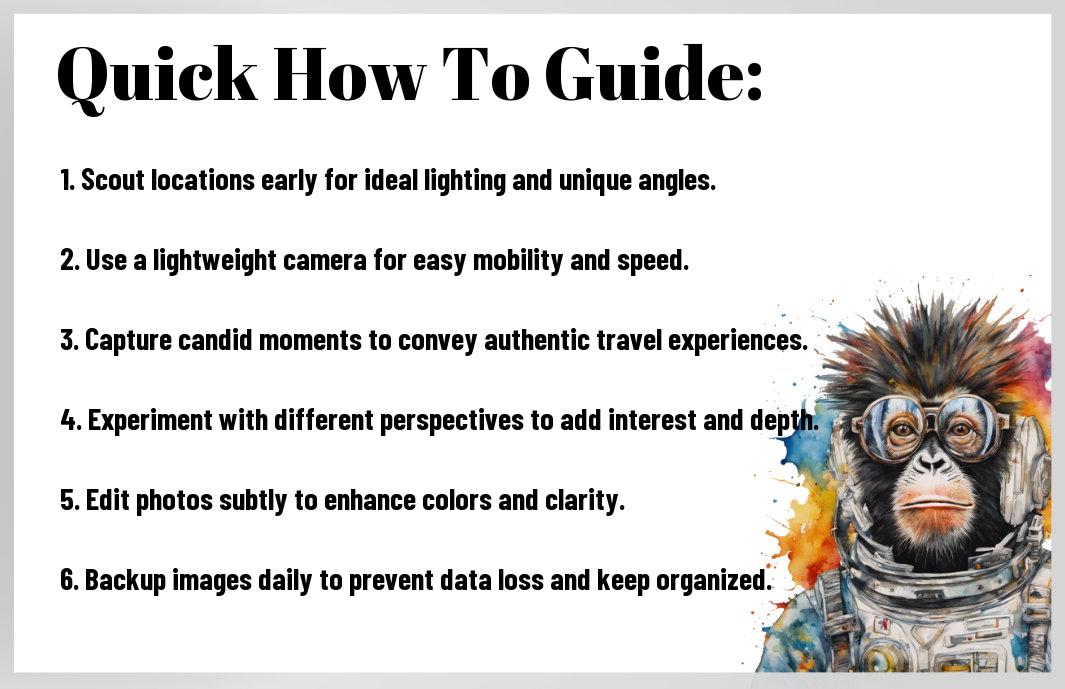
Crafting Compelling Compositions
Your travel photography will elevate significantly as you learn to master the art of composition. Compelling compositions draw viewers in, creating visual stories that resonate. Whether it’s a sunset over a distant mountain or bustling city streets, understanding how to arrange elements within your frame is vital. Focus on balance, symmetry, and leading lines to guide the viewer’s eye. Experiment with varied perspectives, and don’t shy away from breaking conventional rules to capture those moments that feel undeniably yours.
The Golden Rules of Composition: Framing Your Shots
Framing your shots with intention can transform an ordinary photo into a captivating image. Start by applying the Rule of Thirds; divide your frame into a grid of nine equal parts and position points of interest along these lines or at their intersections. Use natural elements, such as trees or doorways, to create a frame within your composition. This not only enhances depth but also adds context to your subject, making your photographs more engaging and dynamic.
Utilizing Natural Light: Timing and Positioning
The beauty of natural light lies in its ability to transform a scene at different times of day. Early mornings and late afternoons, often referred to as the “golden hours,” provide a soft, warm glow that enhances colors and textures. Positioning your subject to take advantage of the light’s direction can create dramatic contrasts and depth, giving your photos a professional touch. Be mindful of shadows, as they can either add intrigue or detract from the focal point.
Incorporating natural light into your shots requires a bit of planning. Scout your location ahead of time to identify the best angles for light capture, and consider the time of day that will highlight your subject. For landscapes, shooting just after sunrise or before sunset can yield rich colors and long shadows, while portraits benefit from diffused light in shaded areas. Adjusting your shooting position relative to the sun’s angle can also help mitigate harsh shadows and flare, ultimately enhancing the overall quality of your images.
Capturing the Essence of Your Destination
Striking photographs convey the unique spirit of a location, enabling viewers to feel its vibrancy and charm. To truly capture the essence of your destination, focus on the cultural nuances, landscapes, and interactions that define its identity. Seek out iconic landmarks alongside everyday scenes that illustrate local life. Utilize natural light during the golden hours—early mornings or late afternoons—to enhance the warmth and depth of your images, presenting a vivid narrative that invites others to experience the destination through your lens.
Finding Unique Angles: Top Tips for Unforgettable Shots
Exploring unconventional perspectives transforms ordinary photographs into captivating stories. Look for high or low vantage points to create depth, or shoot through objects like foliage or doorways for added context. Move around your subject to discover new compositions; try symmetry or framing to emphasize focal points. Experiment with unexpected angles, and play with reflections or shadows to generate a sense of intrigue. Always be on the lookout for the extraordinary within the mundane.
- Get low to create a dynamic foreground.
- Climb to an elevated position for stunning panoramas.
- Use architectural features to frame your subject.
- Create depth with leading lines in your composition.
- Assume that a unique angle can open new storytelling opportunities.
Engaging with Locals: Storytelling Through Portraits
Capturing portraits of locals can evoke deep connections to your destination. Approach individuals with respect, genuinely expressing interest in their lives, and ask for permission before snapping a photo. A relaxed and authentic atmosphere often yields the best results, allowing subjects to reveal their personalities. Documenting people in their natural settings—whether they’re working, laughing, or simply going about their day—can create a vivid narrative that communicates your experience of the culture and community.
Engagement is key when photographing locals; initiate conversations that foster trust and openness. Sharing a smile or compliment can go a long way in breaking the ice. Personal stories provide context and enrich your images, leading to deeper visual storytelling. Capture candid moments rather than posed shots, allowing your subjects’ true character to shine through. This approach not only results in stunning portraits but also builds meaningful connections that enhance your travel experience.
Post-Travel Refinement: Perfecting Your Portfolio
At this stage, you’ll want to refine your travel photography portfolio to accurately showcase the experiences you captured. Select images that resonate with your journey, emphasizing diversity in location, subject matter, and emotions evoked. Your goal lies in telling a cohesive story, allowing viewers to journey through your lens. Ensure that your portfolio not only demonstrates technical skill but also your unique perspective on the world, making it a vibrant tapestry of memories and moments.
The Art of Editing: Essential Software and Techniques
Editing your travel photos is where your creative vision truly comes to life. Software like Lightroom and Photoshop allows you to enhance colors, adjust exposure, and refine compositions. Explore features such as color grading, cropping, and applying filters to create a signature style that reflects your personal touch. Developing a consistent editing routine can significantly improve your images, turning good shots into captivating visuals ready for presentation.
Curating Your Best Work: Building a Travel Photography Collection
Building a curated collection emphasizes quality over quantity. Aim to select a limited number of images that best represent your journey, each holding significance and inviting storytelling. Consider creating themes or series based on destinations, experiences, or unique perspectives to enhance engagement. The final selection should not only reflect your skills as a photographer but also create emotional connections with your audience, allowing them to experience the wonders you encountered. A well-curated collection becomes a powerful narrative that brings your travels to life.
As you work on curating your collection, assess each photo with a discerning eye. Look for images that evoke strong emotions or tell a compelling story. Aim for variety, showcasing different elements of your travels, such as landscapes, local culture, and candid portraits. Consider how each photograph relates to the others and how they contribute to a larger narrative. Your collection can be displayed in an online portfolio or a printed album, making it versatile and accessible for sharing with friends, family, or even potential clients.
Mindset for Innovation: Seeing Like a Pro
The way you approach photography can significantly impact your results. Cultivating a pro’s mindset involves actively seeking unique perspectives and allowing your creativity to flourish. Challenge yourself to think outside of traditional composition rules. Detail-picking, observing light quality, and framing aren’t just technical elements; they’re avenues to storytelling. Start seeing the world through a lens, where every element within your frame has potential to contribute to your narrative. This shift in perception opens new doors for innovative photography, pushing your skills beyond mere snapshots.
Embracing Spontaneity: Seizing Unplanned Moments
Spontaneity injects life into your photography; some of the most striking images come from unplanned encounters. Instead of sticking rigidly to your itinerary, be open to detours. Explore vibrant street corners, listen to local music, or interact with the people around you. Each of these moments can yield unexpected opportunities, leading to captivating visuals that tell a more nuanced story of your travels.
Reflecting on Your Growth: Learning from Every Trip
Analyzing each journey allows you to pinpoint strengths and areas for improvement. After every trip, take time to evaluate your work. Consider what techniques worked well, what didn’t, and why certain moments resonated with you. This practice not only refines your technical skills but fosters a deeper connection between you and your subject matter, ultimately leading to more impactful photography in the future.
Through this introspection, identify patterns in your style, preferences in subject matter, and gaps in your technique. Perhaps your portraits shone but landscapes felt static. Maybe the candid moments sparked joy, whereas posed shots fell flat. Keeping a travel journal or digital archive to document these insights will track your growth over time. You’ll notice progress, develop your artistic voice, and realize how travel experiences shape your vision, thus enriching your artistic journey and enhancing your future photography endeavors.
Conclusion
On the whole, mastering effortless travel photography requires a combination of preparation, technique, and creativity. By equipping yourself with the right gear, understanding your camera settings, and embracing natural light, you can elevate your travel photos significantly. Additionally, exploring different perspectives and narratives will add depth to your images. With these quick techniques at your disposal, you can capture your adventures in a way that resonates with both you and those who view your work, making your travel experiences truly unforgettable.
Fine Art Photography Prints
Own a museum-quality archival print by Edin Chavez
Hahnemühle archival paper · From $95
BROWSE PRINTS LIMITED EDITIONS