Photography is an art that thrives on composition, especially when you’re capturing the vibrant essence of your travels. To elevate your travel photography, you need to master various strategies that entice the viewer and communicate a story through your images. In this guide, you’ll learn dynamic techniques that will enhance your ability to frame subjects, utilize light, and create depth, ensuring that your photos reflect the beauty of the places you visit. Get ready to discover how to bring your travel photography to life with powerful composition techniques.
Capturing the Right Moment
Effective travel photography hinges on your ability to seize the perfect moment amidst the chaos of exploration. It’s not just about pressing the shutter; it’s about anticipating action, emotions, and interactions that tell a story. Keep your camera ready, study your surroundings, and be prepared to snap images that evoke genuine feelings. Engage with your environment and the people within it, allowing your instincts to guide you to those fleeting moments that define your travel experience.
The Art of Anticipation
Mastering anticipation transforms you from a mere observer to an active participant in your surroundings. This skill involves predicting potential moments before they unfold, whether it’s a child capturing a butterfly or locals engaging in a traditional dance. By spending time in a location, you’ll develop an intuitive understanding of the rhythm of life around you, giving you a head start on those memorable shots.
The Impact of Timing and Light
Timing and lighting are fundamental to elevating your travel photos. The golden hour—just after sunrise or before sunset—offers the softest light and creates stunning shadows, enhancing your compositions. Your understanding of local weather patterns and light conditions can also influence your shot. For example, a sudden downpour can create atmospheric images when captured just before or during rain showers.
Utilizing natural light effectively can make or break a photograph. During the golden hour, the world transforms into a palette of warm tones, ideal for portraits and landscapes alike. Conversely, midday sun can lead to harsh contrasts and unflattering shadows, but a quick adjustment, such as seeking shade or employing a reflective surface, can salvage the moment. By strategically planning your shoots around light conditions, you harness the ability to create dynamic, visually striking imagery that captivates the viewer.
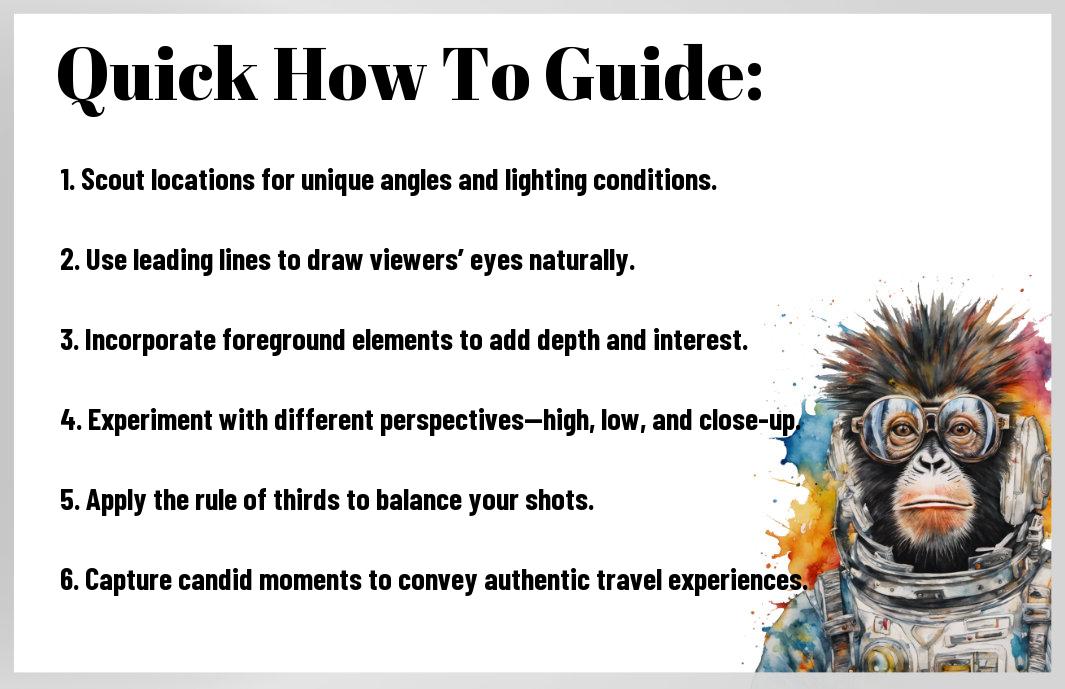
Mastering Composition Techniques
Composition is where your creativity shines through in travel photography. Mastering various techniques elevates your work from ordinary snapshots to compelling visual stories. By applying tried-and-true methods, you can frame your subjects more artfully, enhancing their visual impact and emotional resonance.
Rule of Thirds: A Timeless Classic
The rule of thirds divides your frame into a 3×3 grid, creating reference points for positioning your subjects. By placing your focal point at one of these intersections or along the lines, you achieve a more balanced and engaging image. This classic technique encourages viewers’ eyes to move around the frame, allowing them to appreciate all aspects of your composition rather than fixating on a single point.
Leading Lines and Framing for Depth
Utilizing leading lines and natural framing can significantly enhance the depth and interest of your travel photos. Lines in your scene—whether they are roads, rivers, or architectural elements—draw the viewer’s eye toward your subject, creating a sense of movement and leading them through the landscape. Framing can be achieved with overhanging branches, doorways, or windows, adding layers that invite exploration and allow your audience to feel immersed in the environment.
By incorporating elements like winding paths or converging buildings, you guide the viewer’s gaze seamlessly through the image. For instance, a road leading toward a majestic mountain in the distance not only highlights the grandeur of the scenery but also encourages viewers to envision their journey. Experimenting with multiple angles and perspectives while keeping an eye out for these lines transforms ordinary shots into captivating stories, effectively drawing viewers into the narrative of your travels.
Exploring Unique Perspectives
Shifting your viewpoint can yield strikingly different results in your travel photography. By seeking out unique perspectives, you can capture the essence of a destination in a way that showcases its character and invites viewers in. Utilizing the environment around you, whether it’s shooting through a local market or up a mountain, can lead to compelling, story-rich images that stand out from traditional travel shots.
The Power of Angles: Low and High Shots
Experimenting with angles can transform the ordinary into the extraordinary. Low shots can create an impressive sense of scale, making subjects appear grand while placing foreground elements that draw the eye. Conversely, high shots elevate the viewer’s perception, offering sweeping landscapes or bustling city scenes that unveil the interconnectedness of different elements within the frame.
Breaking the Mold: Creative Compositions
Venture beyond conventional framing to discover fresh compositions that tell your story. By using techniques like framing within a frame or incorporating reflections, your images take on a distinctive flair. Think about juxtaposition—the contrasts of light and shadow or modern versus rustic elements can create an engaging dialogue within your photographs, encouraging viewers to explore deeper layers of meaning.
Incorporating creative compositions enhances your narrative and draws the audience in. Techniques like using leading lines or experimenting with symmetry can turn a simple shot into a compelling masterpiece. Take, for instance, photographing a bustling street scene balanced against an ancient architectural backdrop—this visually communicates the charm of a city caught between past and present. Layering texture or utilizing patterns in everyday life, such as colorful market stalls or intricate mosaics, can also enrich your visual storytelling, evoking emotion and making your images memorable.
Leveraging Environmental Context
In travel photography, capturing the essence of a location means utilizing its environmental context to tell a story. Observe how the natural landscape complements your subject; mountains, rivers, or urban skylines can significantly enhance a composition. Utilize angles that include the environment, creating a dance between your subject and the surroundings. For instance, if photographing a bustling market, position yourself so that you also capture the stalls and surrounding architecture, which adds depth and context to your images.
Incorporating Local Culture and Landmarks
Showcasing local culture and landmarks invites viewers to explore the vibrant story behind your images. Integrate elements like traditional clothing, native cuisine, or historical sites to enrich your travel narrative. For example, capturing a street performer in front of an iconic landmark not only highlights the individuals but also ties the cultural essence of the location to your photos, creating a more compelling visual story.
The Narrative Behind the Scene
The narrative behind the scene transforms ordinary photographs into evocative storytelling pieces. What was happening around you at that moment? Engage your audience by weaving in the emotions and experiences associated with the photograph. For instance, a deep sunset over a serene beach can communicate tranquility, while the hustle of a local festival might express joy and unity. By capturing not just what you see, but also what you feel, your images can resonate on a deeper level, inviting viewers into the heart of the scene.
Adapting to Changing Conditions
Travel environments are rarely static, and adapting your photography to these changing conditions is paramount for capturing stunning images. Being flexible in your approach allows you to seize unexpected opportunities that arise from evolving scenery, light, or even crowds. By staying aware of your surroundings and adjusting your settings and composition on the fly, you ensure that your travel photos remain dynamic and engaging, regardless of any surprises that come your way.
Embracing Unpredictable Weather
Weather can dramatically alter the mood and composition of your photos, offering both challenges and creative opportunities. Rain can create unique reflections and enhance colors, while a cloudy sky might add drama to a landscape. Embracing these unpredictable elements allows you to capture images that speak to the raw beauty of a location, showcasing its character during various weather conditions.
Techniques for Night and Low-Light Photography
Night and low-light photography requires a different skill set and technique. Utilizing a tripod stabilizes your camera during long exposures, allowing you to capture intricate details and vibrant colors while minimizing motion blur. Adjusting your ISO helps manage the sensitivity of your sensor, while using a slower shutter speed can result in stunning images filled with rich tones and moods that daytime photography can’t replicate.
For effective night and low-light photography, experimenting with the aperture also plays a vital role, as a wider aperture lets more light into the camera, enabling quicker shutter speeds. Consider using manual mode for more control over your camera settings, and don’t hesitate to rely on assisted features like long exposure mode or noise reduction settings. Take time to understand the unique characteristics of your camera in low-light situations, as some cameras perform better than others. Lastly, scout locations before sunset, so you can identify compositions that will look striking once the lights dim. With practice, you’ll be able to capture breathtaking night scenes that tell a story all their own.
Conclusion
Hence, mastering dynamic how-to strategies for effective travel photography composition elevates your artistry and storytelling. By utilizing techniques such as the rule of thirds, leading lines, and framing, you can create captivating images that resonate with your audience. Experimenting with light and perspectives will further enhance your compositions. Each journey offers a unique canvas; by applying these strategies thoughtfully, you empower yourself to capture the essence of each destination, transforming ordinary scenes into compelling visual narratives.
Fine Art Photography Prints
Own a museum-quality archival print by Edin Chavez
Hahnemühle archival paper · From $95
BROWSE PRINTS LIMITED EDITIONS