Just as every successful brand needs a strong identity, the visual representation of your company is key to making a lasting impression. In this ultimate guide to corporate photography, you’ll discover how to capture stunning images that reflect your brand’s values and mission. You’ll learn practical tips on choosing the right style, working with professionals, and utilizing imagery to connect with your audience. By the end, you’ll be equipped with the knowledge needed to elevate your brand’s image and stand out in today’s competitive market.

Types of Corporate Photography
To enhance your brand’s image, exploring different types of corporate photography is imperative. Each style caters to specific needs and goals. Here are a few common types:
| Headshots | Event Photography |
| Product Photography | Branding Photography |
| Corporate Team Photography | Office Environment Photography |
| Documentary-Style Photography | Social Media Photography |
| Commercial Photography | Creative Arts Photography |
Knowing the types available can help you effectively communicate your brand message.
Headshots
You need professional headshots to convey trust and approachability. High-quality images help in building a strong personal connection with clients and prospects. They serve as your brand’s first impression, making it vital for you to choose a photographer who understands your industry and vision.
Event Photography
For your corporate events, capturing the atmosphere and key moments is paramount. Event photography showcases your company’s culture and achievements, highlighting networking opportunities and guest interactions.
Photography at your events not only preserves wonderful memories, but it can also be used in marketing materials, social media, and press releases to reflect the energy and engagement of your brand.
Product Photography
Clearly, you want your products to stand out in a highly competitive market. High-quality product photography helps showcase your offerings in the best light, attracting potential buyers while conveying professionalism and attention to detail.
With the right product photography, you can emphasize unique features, textures, and benefits, making your products irresistible to consumers and boosting sales significantly.
Branding Photography
For a cohesive visual identity, effective branding photography can help you tell your brand story. It captures the essence of your company, including your values, mission, and offerings, creating a relatable image for your audience.
A well-planned branding photography strategy integrates your corporate narrative with compelling visuals, helping you foster a deeper connection with your target market while differentiating yourself from competitors.

Tips for Successful Corporate Photography
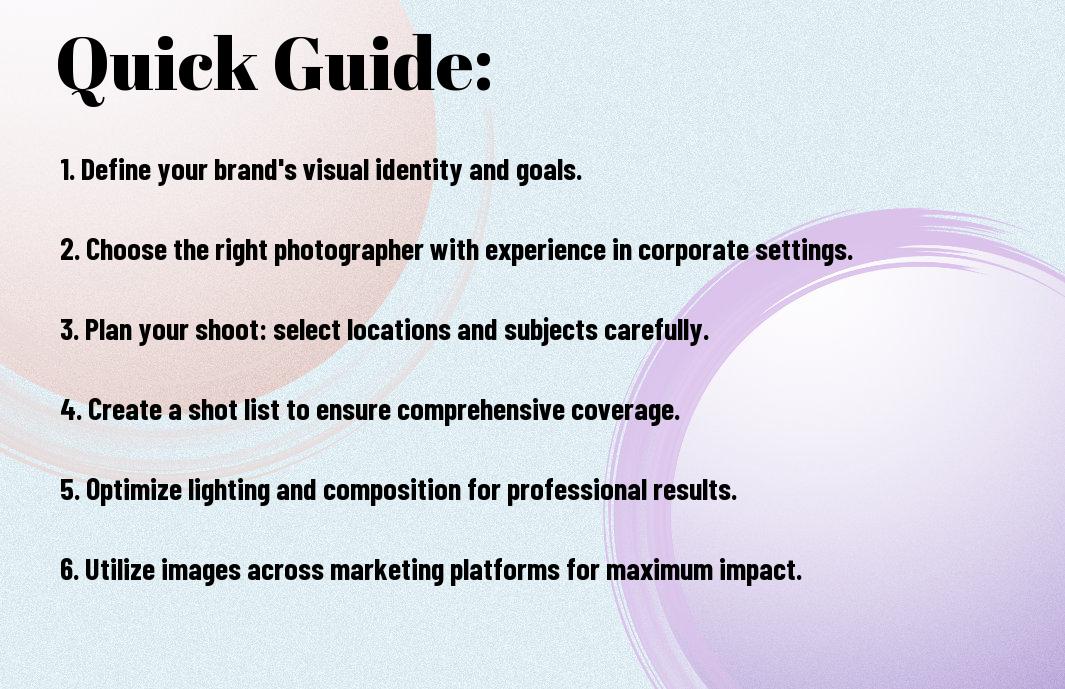
One of the keys to successful corporate photography lies in proper planning and execution. Consider the following tips to enhance your photos:
- Assess the purpose of the shoot
- Communicate with your subjects
- Choose appropriate attire
- Be mindful of background distractions
- Incorporate company branding
Knowing these tips will not only elevate your outcome but ultimately strengthen your brand’s visual identity.
Preparing Your Subject
To achieve the best results, carefully prepare your subject for the shoot. This includes discussing the goals and desired tone of the photographs, as well as ensuring your subject feels comfortable and confident. You may also want to provide guidance on wardrobe choices that align with your brand’s image, reinforcing the professional atmosphere.
Choosing the Right Location
Some locations naturally lend themselves to compelling corporate photos. Consider setting up your shoot in areas that reflect your brand’s values, message, and overall aesthetic. Think about spaces that are well-lit and free from disruptions, as this can significantly impact the quality of your images.
For instance, if your company emphasizes sustainability, an outdoor setting featuring natural elements can reinforce that message. Alternatively, if you operate in a creative industry, selecting an artistic venue would resonate well with your audience. Ultimately, the location should echo your brand’s story and complement the personality of your company.
Lighting Techniques
With understanding the right lighting techniques, you can significantly enhance the quality of your corporate photos. Natural light can add warmth, while artificial light can create a controlled environment for consistent results.
Understanding the balance between different light sources is vital to achieving the desired effect. Soft, diffused light flatters subjects and reduces harsh shadows, while directional lighting can add depth and dimension to your photos. Experimenting with various setups will help you discover which techniques best showcase your brand’s personality.

Step-by-Step Guide to Planning a Corporate Photo Shoot
Many organizations underestimate the importance of a well-planned corporate photo shoot. To ensure that your photos align with your brand’s goals and aesthetic, follow these necessary steps:
| Step | Description |
| 1. Defining Your Objectives | Identify what you want to achieve with your corporate photos. |
| 2. Testing Equipment | Ensure all equipment is functional and suitable for your shoot. |
| 3. Conducting Pre-Shoot Meetings | Align vision and expectations with your team and the photographer. |
Defining Your Objectives
An effective corporate photo shoot begins with clear objectives. What message do you want your images to convey? Are you aiming to enhance your company’s professionalism, showcase your team’s culture, or attract new clients? By defining your objectives, you can tailor your shoot to support your brand’s mission and engage your target audience effectively.
Testing Equipment
An necessary part of planning is ensuring that your photography equipment is in top condition. Check the cameras, lenses, lighting gear, and any additional tech you’ll be using. This step not only helps you avoid technical failures during the shoot but also reassures you and your team of the quality of the end product.
To achieve the best results, set aside time before the shoot to test all your equipment in similar lighting conditions. Make sure that all devices are functioning properly, and don’t forget spare batteries and memory cards. A quick dry run can identify potential issues, allowing you to troubleshoot ahead of time and ensure a seamless photo shoot experience.
Conducting Pre-Shoot Meetings
With your objectives and equipment in place, it’s vital to conduct pre-shoot meetings with your team and photographer. Open communication ensures everyone is on the same page regarding the shoot’s goals, timeline, and setup.
Pre-shoot meetings are a valuable opportunity to discuss creative direction, specific shots you want to capture, and any logistical considerations. By involving your team early in the planning process, you can garner their input and enthusiasm, which can greatly enhance the collaborative spirit during the shoot.
Key Factors to Consider When Selecting a Photographer
Once again, choosing the right photographer is crucial for capturing your brand’s essence. Here are some key factors to keep in mind:
- Experience and Portfolio
- Style and Approach
- Budget and Packages
Perceiving these elements can significantly impact the quality of your corporate photography.
Experience and Portfolio
One of the first aspects to evaluate is the photographer’s experience and their portfolio. A robust portfolio will showcase their ability to capture various styles, subjects, and environments, providing you with insight into their capabilities. Review their past work to ensure it aligns with your brand’s vision and style.
Style and Approach
While selecting a photographer, consider their unique style and approach to corporate photography. Each professional has a distinct method of capturing images, whether it’s candid, posed, or a mix of both. Understand how their aesthetic aligns with your brand’s personality and the message you want to convey.
Approach each photographer’s style with an open mind; analyzing how they connect with subjects and utilize lighting, composition, and color can help you determine if they will effectively represent your brand. This alignment will enhance the authenticity of your corporate images, ensuring they resonate with your audience.
Budget and Packages
Style is also intertwined with your budget and the packages offered by the photographer. Assess your needs and evaluate the pricing structures of different professionals to ensure you find a suitable match without stretching your budget too thin.
Photographer packages often include various services, which can affect the overall investment. Be sure to look for flexibility within these packages, as you may be able to customize them to suit your specific requirements. This way, you can maximize the value you receive while keeping your branding efforts on track.
Pros and Cons of Corporate Photography
For businesses considering corporate photography, it’s imperative to weigh the benefits against potential downsides. Below is a table summarizing the key pros and cons to help you make an informed decision.
| Pros | Cons |
|---|---|
| Enhances brand image | Can be costly |
| Professional representation | Time-consuming process |
| Versatile content usage | Requires careful planning |
| Builds customer trust | Quality varies by photographer |
| Improves engagement | May disrupt regular business operations |
Advantages of High-Quality Images
For any company, high-quality images are an investment that pays off by capturing your audience’s attention. They convey professionalism and help establish credibility, making it easier for potential clients to connect with your brand. With visually appealing content, you can increase engagement across various platforms, ultimately supporting your marketing efforts and driving business growth.
Potential Drawbacks and Challenges
For those who plan to embrace corporate photography, it’s also important to recognize the potential drawbacks. While the advantages often outweigh the challenges, being aware of them can help you prepare effectively.
It’s imperative to understand that incorporating corporate photography may lead to additional expenses, particularly if you choose to hire a professional photographer. This investment can also demand considerable time and effort to coordinate shoots, from planning sessions to managing schedules. Additionally, the quality of images depends heavily on the photographer’s expertise, meaning that not all outcomes will meet your expectations. Finally, these photoshoots can interfere with daily business operations, potentially causing disruptions. Balancing these challenges with the benefits is key to making the most of your corporate photography efforts.
Final Words
Considering all points, utilizing corporate photography effectively can significantly elevate your brand’s image and appeal to your target audience. By investing in high-quality visuals that reflect your company’s values and professionalism, you can enhance your marketing materials and online presence. It’s vital to collaborate with experienced photographers who understand the nuances of your industry and can bring your vision to life. Embrace the power of corporate photography to create a lasting impression and foster strong connections with your audience, ultimately driving your brand’s success.
Fine Art Photography Prints
Own a museum-quality archival print by Edin Chavez
Hahnemühle archival paper · From $95
BROWSE PRINTS LIMITED EDITIONS