Most seasoned photographers possess a remarkable ability to seize fleeting moments that often go unnoticed by the rest of us. By mastering the interplay of light, composition, and timing, they transform ordinary scenes into extraordinary visual narratives. You’ll discover how their keen observation and technical skills allow them to capture the essence of transient beauty, ensuring that each photograph tells a unique story. In this post, you will learn the techniques and philosophies that drive expert photographers to encapsulate emotions, moods, and experiences in an everlasting frame.

Understanding Ephemeral Beauty
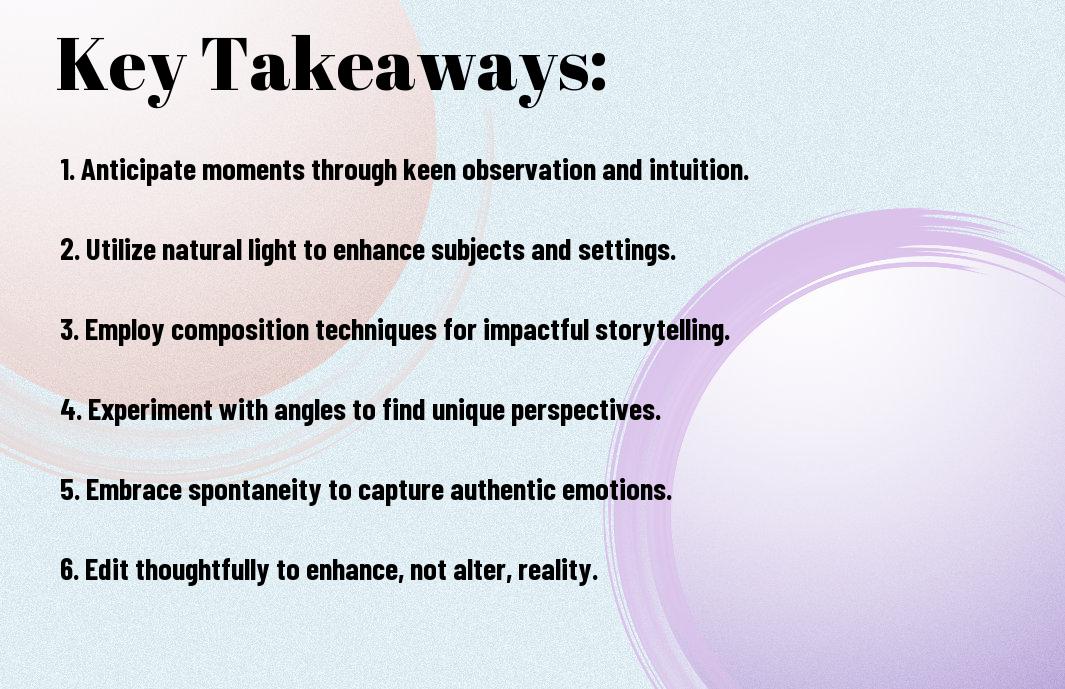
Your ability to grasp ephemeral beauty lies in recognizing the fleeting moments that often go unnoticed. These are instances defined by their transience, encapsulating emotions, light, and dynamics that are here one moment and gone the next. Seasoned photographers have honed the skill to identify and seize these moments, allowing them to create images that resonate deeply with viewers.
Definition of Ephemeral Moments
To understand ephemeral moments, consider them as transient experiences that evoke deep emotions or impressions, often lasting only a brief moment. These can range from the delicate dance of light across a landscape to a spontaneous expression of joy. Capturing these instances involves a keen awareness of the world around you, and recognizing the beauty in their fleeting nature.
Importance of Timing and Observation
Understanding the significance of timing and observation is important in photography. It’s not just about having the right equipment; it’s about being alert to the perfect moment when light, emotion, and composition align to create a powerful image.
Plus, developing your timing skills requires practice and patience. You will learn to anticipate moments where beauty can materialize unexpectedly. By keenly observing your surroundings, you’ll train your eye to spot these opportunities, allowing you to immerse yourself in the scene and be ready to capture that unique blend of elements that makes an ephemeral moment truly memorable.

Techniques for Capturing Fleeting Moments
Now, seasoned photographers employ various techniques to seize the essence of fleeting moments. Understanding the unique characteristics of each scene allows you to anticipate the perfect instant. With a keen eye for detail and practiced reflexes, you can capture emotions, movements, and interactions, turning ephemeral experiences into lasting memories.
Camera Settings and Gear
About capturing fleeting moments effectively, your choice of camera settings and gear plays a vital role. Quick shutter speeds are vital for freezing motion, while wide apertures can help to isolate your subject against a beautifully blurred background. Utilizing gear such as fast-focusing lenses can further enhance your ability to capture spontaneous moments with precision.
Composition and Framing Strategies
Settings such as angles, symmetry, and focal points can significantly influence how your photos resonate. You should consider the rule of thirds, leading lines, and framing to draw attention to key elements in the scene. Each decision contributes to not only the aesthetics of the shot but also the emotion behind the moment you’re trying to capture.
With thoughtful composition and framing strategies, you create a narrative within your images. By positioning your subject effectively in the frame and using negative space, you emphasize the fleeting moment you want to immortalize. Experimenting with varied angles and perspectives enhances your storytelling, allowing you to evoke deeper emotional responses from viewers.
The Role of Light in Photography
Not only does light illuminate your subjects, but it also shapes emotions and creates atmosphere in your photographs. Understanding how to manipulate and work with light can define your photographic style and determine the impact of each image. As you learn to observe and harness different types of light, you’ll unlock new dimensions in your art that evoke feelings and tell stories.
Natural Light Versus Artificial Light
On the surface, natural light offers a soft, organic quality that can bring life to your photographs, while artificial light provides control and versatility. Each type presents its unique challenges and opportunities. By experimenting with both, you’ll learn to find the right balance for your creative vision, enhancing the overall impact of your images.
Golden Hour and Its Significance
To truly harness the power of light in your photography, you should pay special attention to the magical time known as the golden hour, which occurs shortly after sunrise and before sunset.
Light during the golden hour is characterized by a soft, warm glow that adds an enchanting quality to your photos. Shadows are elongated, creating interesting compositions and depth, while colors are enriched, resulting in stunning tonal contrasts. Capturing moments during this time allows you to elevate your photographs, making them more compelling and evocative. Planning your shoots around the golden hour can lead to breathtaking results that resonate deeply with viewers.
Developing an Intuitive Eye
After years of honing your skills, developing an intuitive eye becomes second nature to seasoned photographers. This instinctive ability allows you to recognize and capture fleeting moments that might easily go unnoticed. By observing your surroundings more deeply, you cultivate a sense of awareness that transforms ordinary scenes into captivating images. Your unique perspective emerges as you learn to anticipate changes in light, emotion, and activity, all leading to powerful visual storytelling.
Anticipation and Predictive Skills
Around every corner, opportunities for stunning photography await, but they often last only a moment. Seasoned photographers develop strong anticipation and predictive skills, allowing you to foresee unfolding events and position yourself perfectly. By keenly observing your environment, you can discern patterns of movement, light shifts, and emotional cues, which helps you capture those ephemeral instances before they vanish.
Practicing Mindfulness in Photography
About finding beauty in the present moment, practicing mindfulness in photography enhances your overall experience. By immersing yourself in your surroundings and paying close attention to details, you can connect more deeply with your subjects. This heightened state of awareness enables you to capture authenticity, resulting in meaningful images that resonate with your audience.
Practicing mindfulness in photography is not just about noticing what is in front of you; it’s about being fully engaged in the process. When you slow down and interact with your environment consciously, your ability to see potential compositions increases significantly. You notice the interplay of light and shadow, the emotions on people’s faces, and the subtleties of your surroundings, allowing you to capture more authentic and compelling moments that truly convey the beauty of life.
Post-Processing for Enhancement
Unlike the raw capture, post-processing allows you to refine and elevate your images, capturing the essence of fleeting moments. Through techniques such as contrast adjustment, color correction, and sharpening, you can enhance the emotional storytelling aspect of your photographs. This process is vital for transforming an already stunning image into a breathtaking work of art that resonates with viewers.
Editing Techniques for Emphasis
Any effective editing technique can help highlight the emotions and narratives within your images. Utilizing tools like vignetting can draw focus to the subject, while selective color adjustments can evoke desired moods. Mastering these techniques enables you to emphasize pivotal elements, making your photographs impactful and memorable.
Maintaining Authenticity in Edits
Enhancement should not come at the expense of reality; your goal is to preserve the authentic essence of the moment. Subtle edits can improve visual appeal without distorting what was originally captured. This balance ensures that your audience connects with your work while appreciating the truth behind your vision.
Understanding the importance of authenticity in your edits will ultimately enhance the emotional connection viewers have with your work. Avoid over-processing, as this can lead to imagery that feels unrealistic or detached from the original experience. By focusing on clarity and maintaining the integrity of the scene, you can create captivating images that resonate deeply while still reflecting reality.

Stories Behind the Lens
For seasoned photographers, each shot is a narrative waiting to unfold. They approach their craft not merely as a technical pursuit but as an emotional exploration. By engaging deeply with their subjects, they unlock layers of meaning and context, transforming fleeting moments into timeless stories that resonate with viewers long after the shutter clicks.
Personal Experiences of Photographers
Personal stories shape a photographer’s journey and influence their style. Through distinct experiences, you can find inspiration for your own work. Whether capturing a child’s laughter or a fleeting sunset, these moments leave an indelible mark that informs your perspective and artistic decisions.
Learning from the Masters
Experiences shared by renowned photographers offer valuable insights into the art of capturing ephemeral moments. By studying their techniques and styles, you can refine your own approach and learn to see the world through a different lens.
To truly grasp the essence of photography, observing the work of the masters allows you to absorb their unique perspectives and techniques. This can inspire you to adopt new methods or adapt existing ones, enhancing your ability to capture the transient beauty around you. Engaging with their stories and approaches not only broadens your understanding but also fuels your creative spirit, helping you develop a distinctive voice in your own photography.
Summing up
The key to capturing ephemeral beauty as a seasoned photographer lies in your ability to observe, anticipate, and adapt. By honing your skills in composition and lighting, and remaining attuned to your surroundings, you create a narrative that resonates with the fleeting moments you encounter. Utilizing both technical proficiency and emotional intelligence enables you to immortalize experiences that may otherwise fade away. Embrace practice, patience, and a deep understanding of your subjects, and you will find that the very essence of a moment can be preserved through your lens.
Fine Art Photography Prints
Own a museum-quality archival print by Edin Chavez
Hahnemühle archival paper · From $95
BROWSE PRINTS LIMITED EDITIONS