Just step outside and immerse yourself in the vibrant world of street photography. You have the power to transform ordinary moments into captivating images that tell a story. In this post, we’ll share unique how-to photography tips that will enhance your skills and help you capture the essence of urban life. Whether you’re a beginner or looking to refine your technique, these insights will inspire your creativity and elevate your street shots to new heights.
Capturing the Essence of Urban Life
Your surroundings pulse with life, and each street corner tells a different story waiting for your lens to uncover. Through your camera, showcase not just the vibrancy of cityscapes, but also the subtle interactions that weave together the fabric of urban life. Seek out moments of spontaneity: a child leaping over a puddle, a couple sharing a laugh, or an artist transforming blank walls into a kaleidoscope of colors. Each scene holds potential, so connect with the rhythm of the city as you press the shutter and encapsulate its heart.
Leveraging Natural Light for Dramatic Effects
The interplay of natural light throughout the day can elevate your urban shots to new heights. Golden hour, just after sunrise or before sunset, bathes scenes in a soft, warm glow that enhances color contrast and adds depth. Explore how early morning rays filter through buildings or how shadowy twilight transforms everyday street scenes into dramatic silhouettes. Understanding and utilizing these fleeting moments can create striking photographs that resonate with the viewer’s emotions.
Embracing Shadows and Contrast to Tell Stories
Utilizing shadows and contrast can tell compelling stories within your street photography. Deep shadows can add intrigue and drama, creating a dichotomy between light and dark that captures the viewer’s attention. Look for moments when light casts elongated shadows, or where contrasting colors collide, revealing hidden narratives. The absence of light can sometimes be as powerful as its presence, leading the viewer to ponder the story unfolding before them.
Focus on framing your shots in ways that highlight these contrasts. For instance, an image of a lone figure walking along a sun-drenched wall, with their shadow partially obscured, can provoke curiosity about their journey. Incorporate elements of the environment that define the personality of the urban landscape; a bustling street adorned with vibrant murals can juxtapose with the shadowed alleyways nearby. By mastering this technique, you craft narratives that invite onlookers to dive deeper into the essence of the street life captured through your lens.
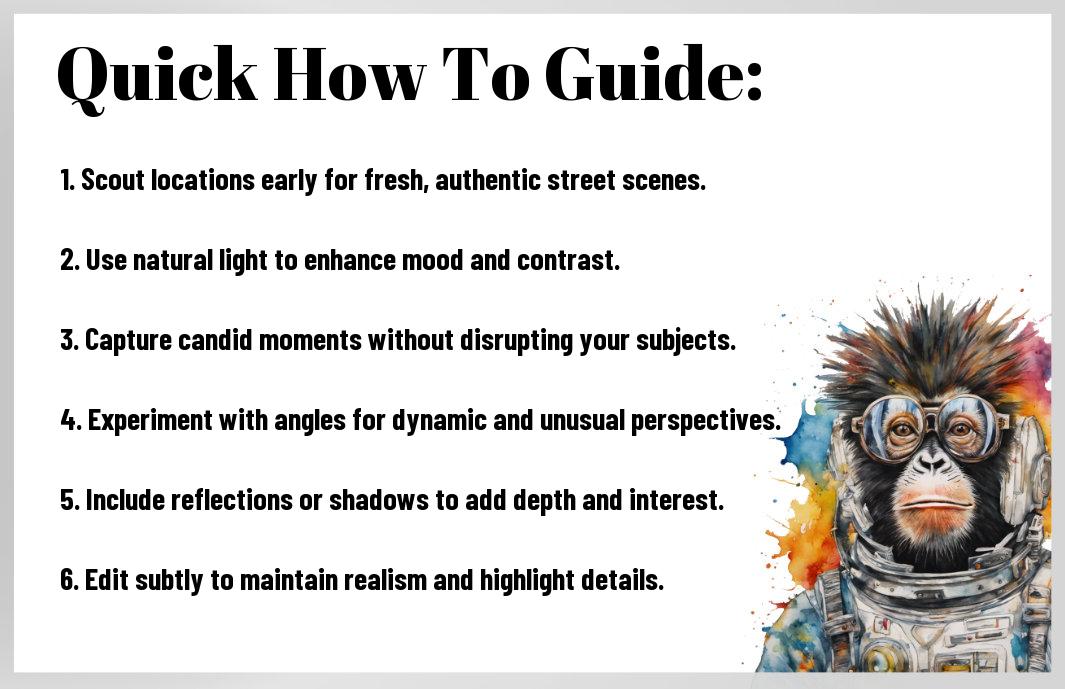
The Art of Composition in Crowded Spaces
Capturing stunning street shots often involves navigating through bustling crowds while still maintaining a strong sense of composition. Mastering the art of composition in these environments allows you to create impactful images that convey the energy of the scene. By applying various techniques and being mindful of your surroundings, you can make the most of dynamic situations, turning ordinary moments into captivating visual stories that resonate with viewers.
Rule of Thirds: A Timeless Technique
Dividing your frame into a grid of nine equal sections enhances your ability to balance elements in your composition. By positioning subjects along these lines or at their intersections, you create a more dynamic photograph that draws the viewer’s eye. This technique works exceptionally well in crowded spaces, allowing you to highlight specific details amid the chaos, ensuring that your main subject stands out while simultaneously acknowledging the surrounding environment.
Leading Lines: Guiding the Viewer’s Eye
Utilizing leading lines in your street photography directs the viewer’s attention toward your focal point. These lines can come from various sources, such as roads, sidewalks, or even the arrangement of people walking in a specific direction. In bustling city scenes, these lines create a natural flow, inviting the viewer to explore the image more thoroughly and enhancing the overall storytelling element of your shot.
Incorporating leading lines can transform a simplistic street photo into a powerful narrative. For instance, if you spot a series of pedestrians crossing a street, position yourself to align their paths with the leading lines of nearby buildings or road edges. This not only enhances depth but also emphasizes movement, creating an immersive experience for the viewer. By strategically placing these elements within your frame, you develop an engaging composition that invites onlookers to journey through your images, making them feel as if they’re part of the scene.
Finding Unique Perspectives in Familiar Locations
Exploring the streets you know means uncovering hidden gems and unique angles that transform the ordinary into the extraordinary. By shifting your viewpoint, you can reveal dimensions that most overlook. Look for interesting patterns in architecture, play with the juxtaposition of old and new elements, or aim to capture the essence of your surroundings through local stories. Every street corner has a tale to tell; it’s your job to discover and visualize it through your lens.
Experimenting with Angles and Height Variations
Switching up your angle can turn a mundane scene into a captivating shot. Try crouching down low to the ground or finding a higher vantage point for a fresh perspective. Dynamic angles can emphasize depth, leading lines, and other elements that make your photograph more engaging. Don’t be afraid to tilt your camera slightly or shoot from an unexpected height—these changes can breathe new life into your compositions.
Utilizing Reflections to Add Depth
Reflections are powerful visual tools that can layer your images with added complexity. Use puddles, windows, and mirrors to create intriguing frames for your photos. When incorporating reflections, strive for symmetry or contrast to amplify the storytelling aspect of your shot. This technique not only enhances depth but also encourages viewers to engage with both the reflection and the subject, prompting them to explore the narrative you’re presenting.
Incorporating reflections into your street photography acts as a bridge between layers of reality. For example, a bustling street scene reflected in a shop window not only captures the vibrancy of the moment but also hints at the stories unfolding inside those glass confines. Utilizing moments where the environment interacts with your subject enhances composition; think about how a reflection can provide context, add emotional depth, or create an intriguing juxtaposition against the backdrop of everyday life. In a busy urban setting, these subtle interactions transform simple snapshots into thought-provoking narratives.
Engaging Subjects: Techniques for Genuine Interaction
Creating genuine interactions with your subjects elevates your street photography. Engage them with a smile or a nod before snapping away—the more comfortable they feel, the more authentic your photographs will be. Open-ended questions like, “What’s your story?” often invite heartwarming responses that can manifest in splendid candid shots. Try to be an invisible observer, allowing their essence to shine, yet always stay adaptable to shift the mood with humor or empathy when needed.
Candid Shots vs. Posed Portraits: Pros and Cons
The debate between candid and posed portraits centers on capturing authenticity versus controlled environments. Each method has its strengths and drawbacks, which can significantly impact your portfolio.
Pros and Cons
| Pros | Cons |
|---|---|
| Candid shots capture spontaneity and real emotions. | Less control over lighting and composition. |
| Often leads to a stronger connection with the viewer. | Subjects may not be aware the photo is being taken. |
| Document everyday life and genuine interactions. | Can be challenging in busy or chaotic settings. |
| Posed portraits provide a deliberate atmosphere. | May feel stiff or unnatural if over-directed. |
| Allows for control over posing and background. | Requires more time to set up or direct subjects. |
| Can highlight details, like clothing or props. | Subjects may feel self-conscious, impacting authenticity. |
Building Rapport with Subjects for Better Results
Establishing rapport with your subjects significantly enhances the quality of your photographs. Approach individuals with genuine curiosity, offering compliments about something unique to them; this breaks the ice and invites openness. Share a bit about your project to create a sense of shared purpose. By actively listening and responding to their stories, you foster an environment where they feel valued and understood, resulting in more authentic expressions and moments that transform your images into captivating storytelling pieces.
Post-Processing Techniques That Enhance Street Photography
Post-processing is where your street photography can truly shine. By employing techniques that elevate your images, you’ll create a more compelling narrative that resonates with your audience. From color corrections to subtle enhancements, these adjustments can turn a good photo into an unforgettable moment. Experiment with various software options, like Lightroom or Photoshop, to discover the best methods that align with your vision. Finding your editing style could be as transformative as the capture itself.
Color Grading for a Cohesive Mood
Color grading not only adjusts the overall hue of your image but also sets the tone for storytelling. By choosing a specific color palette, you can evoke emotions that enhance the viewer’s experience. Soft, warm tones might bring nostalgia, while cooler hues can impart a sense of calm or urban grit. Pay attention to the colors in your shots and adjust saturation or contrast to create a unified feel across a series of images, making them more impactful when viewed together.
Cropping and Framing: The Final Touches
Cropping and framing refine your composition by emphasizing the elements that matter most. These adjustments draw the viewer’s eye to the subject, eliminating distractions from the edges. Use the rule of thirds to position points of interest effectively, creating a more engaging visual flow. This final editing step can transform an otherwise mundane shot into a captivating masterpiece, guiding the viewer through your artistic vision.
To master cropping and framing, assess your focal points and the surrounding negative space within your images. Avoid simply centering your subject; explore the effects of cutting out unnecessary details to streamline the narrative and enhance impact. For instance, leaving some area intentionally blank can create a feeling of isolation, while tighter cropping intensifies the drama. You may even want to try different aspect ratios, such as square or panoramic, to discover how they can change the story your photograph tells.
Final Words
To wrap up, incorporating these unique how-to photography tips will elevate your street shots to new heights. By being mindful of your surroundings, engaging with your subjects, and experimenting with different techniques, you can create captivating images that tell compelling stories. Embrace the spontaneity of street photography, and allow your creativity to shine through each shot you take. With practice and confidence, your unique perspective will resonate through your work, making your street photography truly stand out.
Fine Art Photography Prints
Own a museum-quality archival print by Edin Chavez
Hahnemühle archival paper · From $95
BROWSE PRINTS LIMITED EDITIONS