Many aspiring photographers often struggle to translate their creative vision into stunning images. This comprehensive guide will equip you with the necessary tools, techniques, and tips you need to elevate your photography skills to a professional level. You’ll learn how to select the right equipment, understand the fundamentals of composition and lighting, and discover editing basics that enhance your photos. Whether you’re using a smartphone or a DSLR, your journey to capturing breathtaking images begins here.
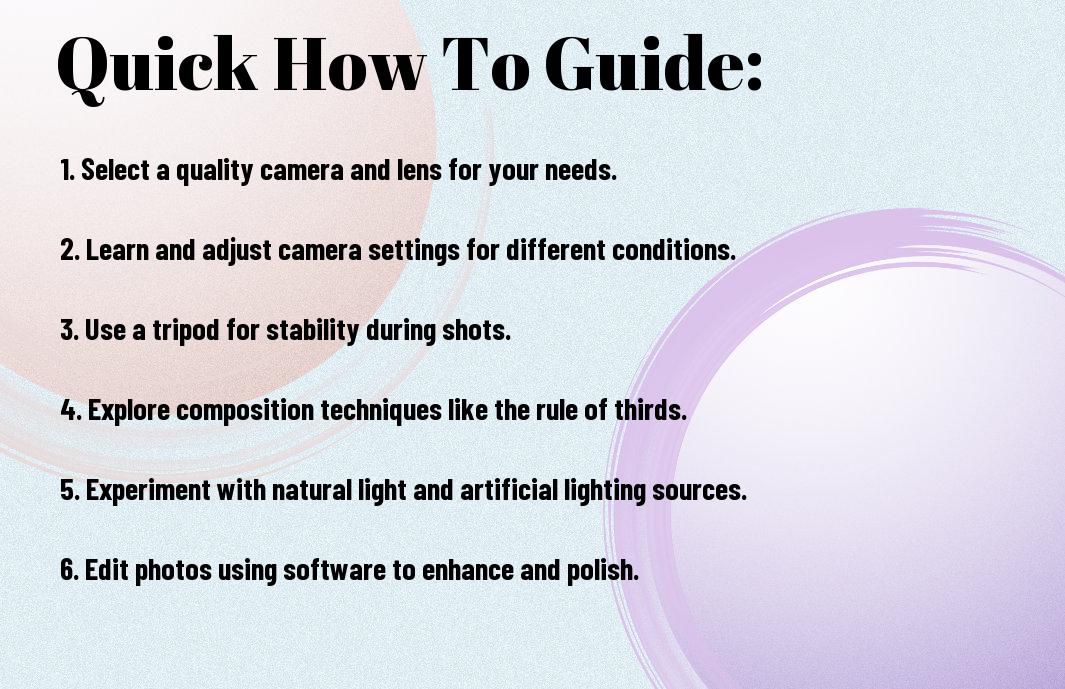

Understanding Photography Basics
To begin on your photography journey, it’s important to grasp the foundational concepts that govern this art form. Familiarize yourself with fundamental aspects like exposure, composition, and lighting. These principles will not only enhance your technical skills but also empower you to express your creative vision through the camera. Understanding these basics sets the stage for capturing stunning images and helps you develop a well-rounded approach to photography.
How to Choose the Right Camera
Photography begins with selecting a camera that suits your needs and style. Consider factors such as your budget, intended use, and preferred features. Whether you opt for a DSLR, mirrorless, or compact camera, ask yourself what you want to achieve with your photography. A well-informed choice can enhance your experience and help unlock your potential as a photographer.
Tips for Selecting Lenses
One of the most significant factors in achieving professional-quality photos is selecting the right lens. Your choice will influence the depth of field, framing, and overall look of your images. Here are some tips to guide you:
- Consider your shooting style – wide-angle for landscapes and macro for close-ups.
- Evaluate lens aperture – larger openings (like f/2.8) allow more light and create a pleasing background blur.
- Think about compatibility – ensure the lens fits your camera model seamlessly.
Assume that investing in versatile lenses will enhance your creative options and elevate your photography skills.
Camera lenses play a significant role in determining the final outcome of your photographs. Different lenses are designed for specific purposes and scenarios, influencing everything from perspective to focus. Here are a few guidelines to consider when selecting lenses:
- Research the focal lengths you need for your projects, such as standard zooms or prime lenses.
- Look into image stabilization if you plan to shoot in low-light conditions or without a tripod.
- Keep an eye on reviews and user experiences to avoid potential pitfalls.
Assume that understanding lens characteristics will allow you to make informed decisions and improve the quality of your images significantly.

Mastering Composition Techniques
Even with the best equipment, capturing stunning images requires a fundamental understanding of composition techniques. By mastering these principles, you can transform ordinary scenes into visually captivating photographs. Learn to arrange subjects within your frame to create balance, guide the viewer’s eye, and highlight the essence of your shots for a more polished outcome.
How to Frame Your Shots
Now, framing your shots effectively involves careful consideration of various elements within the scene. Utilize natural frames like doorways, windows, or branches to draw attention to your main subject. This technique not only adds depth to your images but also engages viewers by inviting them into the photograph.
Factors to Consider in Lighting
For optimal lighting, consider the time of day, direction of light, and the type of light source. Effective lighting can make or break a photograph, so pay attention to these aspects:
- Golden hour can provide warm, soft lighting.
- Harsh midday sun creates strong shadows and contrast.
- Look for diffused light on overcast days for evenly lit images.
Assume that varying light conditions require you to adapt your shooting techniques for the best results.
To utilize lighting effectively, observe how it interacts with your subject and environment. Make adjustments by experimenting with angles and distances. Always be prepared to alter your camera settings to match the lighting conditions:
- Adjust ISO settings for low light.
- Use reflectors to bounce light onto your subject.
- Consider the color temperature to avoid unwanted color casts.
Assume that mastering lighting will significantly enhance the quality of your photographs.

Exploring Camera Settings
All photographers must familiarize themselves with their camera settings to achieve professional-looking photographs. Mastering the necessarys—such as exposure, ISO, and white balance—will empower you to take full control of your images, allowing for greater creativity and innovation in your shooting style. Understanding these elements can elevate your photography from average to stunning.
How to Adjust Exposure and ISO
To achieve the desired exposure, begin by adjusting your camera’s ISO, aperture, and shutter speed. ISO controls the camera’s sensitivity to light, so a higher number is suitable for low-light situations, while a lower number works best in brighter environments. Pair your ISO settings with the right aperture and shutter speed to ensure balanced exposure and maintain image quality.
Tips on White Balance and Focus
An accurate white balance ensures that your colors remain true to life. Here’s how to adjust it effectively:
- Use preset options based on your lighting conditions.
- Consider shooting in RAW format for more flexibility in editing.
- For focus, use manual focus when precision is required.
Perceiving the right balance of color tones will create a natural feel in your images, enhancing your overall composition.
Plus, enhancing your focus techniques can be transformative for your work. Consider these additional tips:
- Utilize focus points to engage your subject effectively.
- Experiment with depth of field to create stunning background blur.
- Practice continuously in various lighting conditions and settings.
Perceiving how these elements work together will greatly impact the quality of your photographs, steering you toward a more polished final product.
Developing Your Editing Skills
For aspiring photographers, mastering editing skills can elevate your images from standard to spectacular. Understanding post-processing techniques and tools will help you create a distinct style and enhance your visual storytelling. Embrace the learning curve and practice regularly, as the journey towards perfecting your editing will significantly improve your overall photography skills.
How to Use Editing Software
One way to begin using editing software is by exploring user-friendly applications designed for beginners. Familiarize yourself with features like cropping, adjusting exposure, and applying filters. Online tutorials can guide you through various techniques, helping you gain confidence in enhancing your imagery. Don’t hesitate to experiment with different settings to develop your own signature editing style.
Factors Influencing Post-Processing
One key aspect of post-processing to consider is how different factors can impact your editing decisions. Various elements like lighting conditions, image quality, and the subject matter can dictate the level of editing required. Here are some influencing factors:
- Lighting: Proper exposure and contrast adjustment are often necessary.
- Color: Hue and saturation can drastically alter the mood of your photo.
- Image Quality: Higher resolution images allow for more flexibility in editing.
Thou must evaluate these aspects to tailor your editing approach effectively.
To refine your post-processing skills further, it’s necessary to probe deeper into how these factors interplay with your individual style. Each photograph may demand unique adjustments based on context. Consider the following:
- Subject matter: Lifestyle photos may require softening, while landscape images might need sharper clarity.
- Personal style: Your vision should guide the editing process to create a consistent look.
- Software capabilities: Understanding what tools you have can help you make informed decisions.
Thou should embrace the exploration of these factors to enhance your photographic outcomes.
Building a Portfolio
Now that you’ve started taking photographs, it’s time to build a portfolio that showcases your best work. A well-constructed portfolio is vital for attracting potential clients, improving your skills, and showcasing your unique style. Focus on selecting images that not only resonate with you but also reflect your capacity to capture various subjects and moods. Keep your portfolio updated as you grow and develop as a photographer.
How to Curate Your Best Work
There’s an art to curating your portfolio. Begin by selecting a maximum of 20 images that showcase your versatility and technical skills. Consider the stories your photos tell and how they reflect your personal vision. It’s vital to include a balance of different styles and subjects, ensuring that each piece complements the others while telling your unique story.
Tips for Showcasing Your Photography
There’s a significant difference between simply displaying your work and creating an impactful showcase. To effectively present your photography, consider these tips:
- Choose a simple, clean layout that doesn’t distract from your images.
- Organize your photos by theme or category for ease of navigation.
- Include descriptions or titles to add context to your work.
- Make sure your images are high-resolution and well-edited.
Recognizing the importance of presentation, you should also consider using various platforms to broaden your audience. A well-rounded strategy includes using social media, photography websites, and printed portfolios. Additionally, actively participate in photography communities and exhibitions to connect with others in your field.
Best practices for your photography showcase can significantly enhance your presentation. Focus on these elements for maximum effect:
- Invest in a quality website or portfolio platform that reflects your brand.
- Regularly update your portfolio with new work to keep it fresh.
- Seek feedback from peers and mentors to refine your selections.
Recognizing the value of diverse showcasing methods equips you with the tools to reach a wider audience and elevate your photography career.
Networking in the Photography Community
Once again, establishing connections within the photography community can significantly enhance your skills and opportunities. Engaging with fellow photographers fosters an exchange of ideas, techniques, and inspiration, creating a collaborative environment that can push your creative boundaries. Whether attending workshops, joining local photography clubs, or connecting online through social media platforms, forming relationships with peers can lead to valuable partnerships and mentorships.
How to Connect with Other Photographers
You can build a network by attending photography meetups, workshops, or exhibitions in your area. Online platforms such as photography forums and social media groups also present excellent opportunities to engage with like-minded individuals. Actively participating in discussions, sharing your work, and providing constructive feedback are effective ways to connect and establish your presence within the community.
Tips for Collaborating on Projects
You should approach collaboration with an open mind and willingness to share ideas. Here are some tips for successful partnerships:
- Communicate openly about your vision and expectations.
- Establish clear roles and responsibilities within the project.
- Be receptive to feedback and suggestions from your collaborator.
- Schedule regular check-ins to stay on track and address any challenges.
Recognizing the strengths of your collaborators can lead to inventive outcomes and a rewarding creative experience. Working together not only allows you to learn from one another but can also result in unique projects that reflect a blend of your artistic styles.
A collaborative mindset is vital for creating successful partnerships in photography. Here are a few additional pointers to consider:
- Choose collaborators whose skills complement yours.
- Share resources, like equipment or studio space, to maximize potential.
- Keep an open dialogue throughout the project to nurture creativity.
Recognizing the importance of teamwork can enhance your photography journey and open doors to new opportunities.
Conclusion
The Thorough How-to Guide For Professional-Looking Photography – A Beginner’s Toolkit equips you with vital knowledge and practical tips to elevate your photography skills. By applying the techniques outlined in this guide, you can confidently navigate your photography journey, creating stunning images that reflect your unique perspective. Embrace the tools and concepts shared, and watch as your passion for photography transforms into professional-quality results, enhancing both your personal portfolio and your creative expression.
Fine Art Photography Prints
Own a museum-quality archival print by Edin Chavez
Hahnemühle archival paper · From $95
BROWSE PRINTS LIMITED EDITIONS