Skills in photography composition can elevate your images from ordinary to extraordinary. Understanding how to frame your subjects effectively, utilize negative space, and employ symmetry are just a few techniques that can transform your shots. In this blog post, you will discover seven practical tricks designed to enhance your photography skills, allowing you to create compelling and visually stunning images that capture your audience’s attention. Get ready to take your photography to the next level!

Understanding the Rule of Thirds
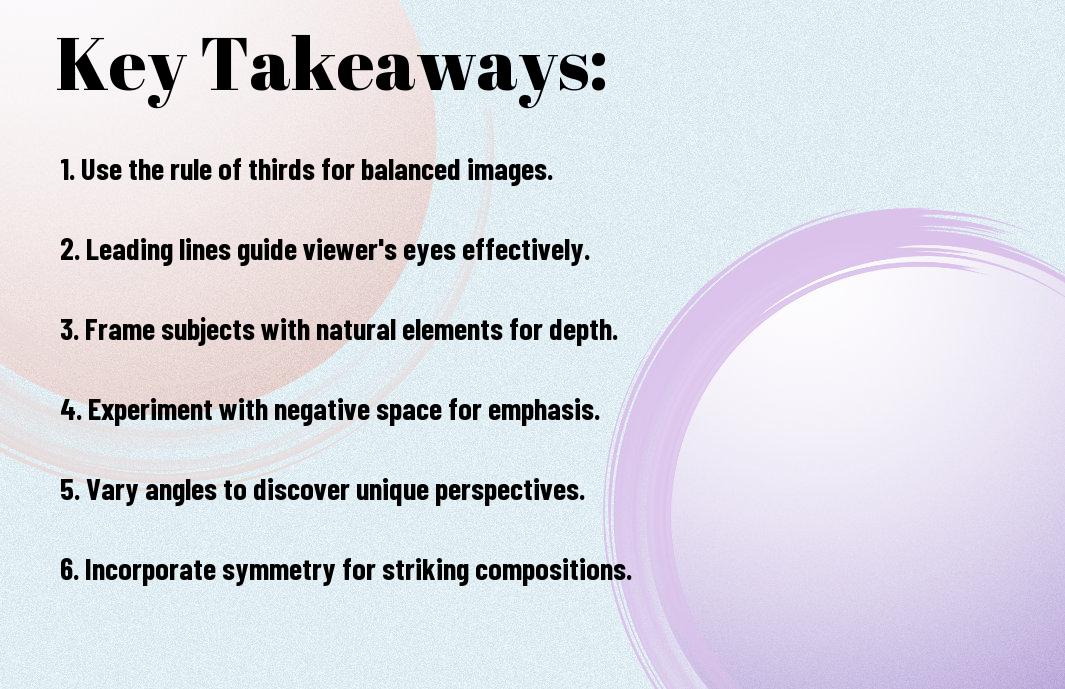
A fundamental principle in photography, the Rule of Thirds helps you create balanced and engaging images. By dividing your frame into a 3×3 grid, you can strategically position key elements along the lines and intersections, guiding the viewer’s eye across your composition. This technique enhances the storytelling aspect of your photographs and can turn a simple image into a striking visual experience.
The Basics of the Rule
Between the lines of this grid, you’ll find optimal points to place your subject, leading to a more dynamic and interesting photograph. Whether it’s a landscape, portrait, or street scene, positioning your focal point off-center encourages movement and draws attention to your subject. As you practice, you’ll start to see how this simple guideline transforms your work.
Creative Variations
Among the ways to experiment with the Rule of Thirds, don’t hesitate to tweak the grid or even break the rule entirely. Sometimes, placing your subject at the very edge can create tension and intrigue. Other compositions might benefit from a symmetrical approach, allowing you to play with balance and harmony while challenging the traditional placement of subjects.
Even when deviating from the Rule of Thirds, the key is to remain mindful of your composition’s overall impact. Explore diagonal lines, leading lines, or other symmetrical and asymmetrical arrangements to see how they affect your storytelling. Embrace your creativity and take risks – photography is art, and sometimes the most powerful images arise from unconventional methods. Your unique perspective will lead to captivating compositions that resonate with your audience.
Leading Lines in Photography
The use of leading lines in photography is an effective way to guide the viewer’s eye through your image, creating depth and interest. These lines can be natural, such as rivers or paths, or man-made, like roads and bridges. By incorporating leading lines into your composition, you can establish a sense of direction, drawing attention to your subject and enhancing the overall storytelling of your photograph.
Identifying Leading Lines
Around you, leading lines can be found in various forms, from the edges of buildings and fences to the curves of winding roads or paths. Look for these elements as you scout your location, and think about how they can lead the viewer’s gaze towards your main subject or create a sense of harmony within the scene. By consciously identifying these lines, you can enhance the visual impact of your photography.
Enhancing Composition with Lines
The strategic use of lines can significantly elevate your composition, creating a more engaging visual narrative. Incorporate diagonal, horizontal, or vertical lines to add dynamism to your frames, pushing the viewer’s eye naturally through your image. Experiment with various perspectives and angles to emphasize these lines, enhancing the depth and balance of your composition.
Due to the way leading lines draw the viewer into the photograph, they play an necessary role in enhancing your composition. By utilizing contrasting lines or textures, you can create tension or a focal point that captivates your audience. Additionally, placing your subject at an intersection of leading lines can boost its prominence, making your image not only visually appealing but also more effective in conveying your story. Harnessing the power of lines allows you to craft compelling compositions that resonate with viewers.
The Power of Framing
Keep in mind that framing is an vital technique in photography that can dramatically enhance your images. It involves using elements within your scene to draw attention to your subject and create a sense of depth. By mastering the art of framing, you can add context and interest to your photographs, leading the viewer’s eye exactly where you want it to go.
Natural Frames
Between branches, archways, or elements of architecture, you can find natural frames that enhance your subject. These elements not only help to focus the viewer’s attention but also provide a layer of context that can enrich the storytelling aspect of your images. Look for opportunities in your environment that can serve as a frame to elevate your photography.
Using Elements to Create Frames
Across various scenes, you can utilize elements like doorways, windows, or overhanging foliage to craft effective frames around your subject. The deliberate placement of these elements will help you inject visual tension and guide the viewer’s gaze towards the focal point of your photograph.
Hence, incorporating elements to create frames allows you to establish a strong visual connection between your subject and the surrounding environment, enhancing the overall composition. By positioning these framing elements strategically, you can control the interaction between the viewer and the subject, ultimately leading to more engaging photographs. Experiment with different frames to discover what complements your style and enhances the storytelling in your images.

Depth and Layering Techniques
Once again, employing depth and layering techniques can significantly enhance the visual impact of your photographs. By thoughtfully arranging elements in your frame, you can create a sense of three-dimensionality that draws the viewer in and adds intrigue to your images. Utilizing the interplay between foreground, subject, and background will help transform an ordinary shot into a captivating composition.
Creating Depth with Foreground and Background
Around your main subject, consider incorporating elements in the foreground and background to create a layered effect. This technique not only adds depth to your composition but also helps to guide the viewer’s eye through the photograph. Look for interesting textures or colors in the foreground, and keep the background uncluttered yet relevant to the scene to enhance the overall impact.
Layering Elements for Interest
Background elements can enhance the storytelling aspect of your photographs, providing context and intrigue. They can help set the mood or contrast with the main subject, adding layers of meaning to your images. Look for elements that complement or contrast with your subject, ensuring they are not too distracting, but rather enhance the visual narrative.
Also, consider varying the distance and angles of various elements in your frame to create a dynamic, engaging composition. By layering objects such as trees, buildings, or even people, you encourage viewers to explore your photograph actively. Maintain a balance so that no single layer overpowers the others, crafting a harmonious blend that keeps curiosity alive. This thoughtful layering can be the difference between a flat image and one that resonates deeply with your audience.
The Impact of Lighting
Unlike other elements in photography, lighting holds the power to transform your images entirely. It can evoke emotions, create depth, and highlight important details, ultimately shaping the story you want to convey through your photographs. Mastering lighting techniques will help you elevate your skills and enhance the quality of your work.
Natural vs. Artificial Light
To achieve the desired mood and effect in your photography, you need to understand the differences between natural and artificial light. Natural light, coming from the sun, provides a soft, flattering quality, while artificial light sources can be manipulated to create various contrasts and effects. Choosing the right type of lighting for your scene plays an imperative role in the overall success of your photograph.
Time of Day Considerations
By being mindful of the time of day, you can maximize the impact of lighting in your images. Golden hour, just after sunrise or before sunset, offers a warm, soft light that adds depth and richness to your photographs. In contrast, the harsh midday sun can create stark shadows and high contrast, often requiring you to adapt your approach for better results.
Artificial lighting can complement your photography during less-than-ideal times, such as bright midday conditions or at night. Utilize reflectors, softboxes, or your flash to create a more balanced light that mimics the gentle tones of natural light. With practice, you’ll learn to harness both natural and artificial lighting techniques to enhance your compositions and ultimately achieve a more polished look in your images.

Experimenting with Perspectives
Your photography can drastically improve by experimenting with different perspectives. Rather than always shooting from eye level, varying your viewpoint can create dynamic images that captivate your audience. This kind of experimentation opens doors to creativity and helps you discover unique aspects of your subject that might be overlooked from a traditional angle.
Low and High Angles
By shooting from low angles, you can make subjects appear more powerful and imposing, while high angles can create a sense of vulnerability or context. These contrasting views can dramatically change the narrative of your images, leading to more engaging compositions that resonate with viewers.
Unconventional Viewpoints
Before you confine your photography to standard angles, challenge yourself to explore unconventional viewpoints. Look for opportunities to shoot from unusual positions—be it from behind objects, through gaps, or even upside down. These creative angles can add storytelling elements that engage your audience on a deeper level.
Also, experimenting with unconventional viewpoints can greatly enhance the emotional impact of your photographs. By shifting your perspective, you invite viewers to see your subject in a new light, allowing them to connect with the image on a personal level. Whether it’s framing your subject in a tight corner or capturing the bustling street life from a crouched position, these angles will encourage your audience to explore your images more thoroughly and appreciate the artistry behind the shot.
Final Words
Considering all points discussed in “Mastering Composition – 7 Tricks To Enhance Your Photography Skills,” you now have a toolkit to elevate your photography. By applying these techniques, you can transform ordinary images into captivating visuals that tell a story. Each trick serves as a stepping stone to refine your composition skills, allowing you to express your unique perspective through your lens. Embrace experimentation and practice, and you will see significant improvements in your photographic journey.
Fine Art Photography Prints
Own a museum-quality archival print by Edin Chavez
Hahnemühle archival paper · From $95
BROWSE PRINTS LIMITED EDITIONS