There’s a world of creativity waiting to be captured through your lens, and exploring different perspectives can take your photography to new heights. By trying out various techniques, you can unveil unique angles and compositions that breathe life into your images. In this listicle, you’ll discover 10 photography techniques that will help you achieve fresh shots, allowing you to express your vision in innovative ways. Get ready to transform your approach and elevate your skills as you initiate on this visual journey!
Angle Exploration
Before you capture your next shot, consider how your angle can transform the narrative of your photograph. Experimenting with varied angles can reveal new perspectives and elevate your visual storytelling. By shifting your viewpoint, you allow your audience to see a scene in a different light, which can lead to more dynamic and compelling images. So, grab your camera and start exploring the world from different angles to create fresh and inspiring shots.
Low-angle captures
Low-angle captures can significantly alter how you perceive a subject. By positioning your camera close to the ground and tilting upwards, you give your subjects an imposing presence. This technique is especially effective for capturing towering buildings, trees, or even subjects like people and animals, as it emphasizes their stature and importance in the frame.
High-angle perspectives
Now, high-angle perspectives provide an alternative view that can create a sense of distance and context. Positioning your camera above a subject, looking down, can established a unique narrative. You can reveal relationships within a scene or highlight patterns that may go unnoticed at eye level.
The high-angle perspective allows you to showcase elements that create depth in your composition. It can be particularly useful in crowded or busy settings, where you want to convey the hustle and bustle of the environment. By capturing multiple elements at once, you enhance the visual interest of your image while guiding the viewer’s eye across the composition. Embrace this technique to bring your photographs to life, delivering an engaging experience for those who view your work.
Change Your Focal Length
Even a slight adjustment in focal length can completely transform your composition. Experimenting with different lenses and zoom levels allows you to emphasize specific subjects or create expansive landscapes. By changing your focal length, you gain the ability to manipulate perspective and depth, making your images more dynamic and engaging. This technique can breathe new life into familiar scenes, encouraging creativity in your photography.
Zooming in
Little adjustments in your zoom can help you focus on details that might otherwise go unnoticed. By getting closer to your subject, you can highlight textures, patterns, and nuances that add depth and interest to your photographs. This approach not only tells a more compelling story but also invites viewers to explore the intricacies of your subject.
Wide-angle shots
There’s a unique charm in wide-angle photography that can capture vast landscapes or intimate settings in a single frame. This technique provides a broader perspective, allowing you to showcase more of your environment, which means you can create a sense of space and context that draws viewers in. Instead of isolating your subject, wide-angle shots invite the viewer to explore the surroundings, enriching their overall experience.
A wide-angle lens helps you emphasize the scale of your subjects and environments, making it perfect for capturing expansive vistas, urban scenes, or tight interiors where you want to convey a sense of space. Keep in mind that this lens can also introduce distortion at the edges, so be mindful of how you frame your subject. Mastering wide-angle shots can open up exciting new possibilities for your photography, encouraging you to think artistically about composition and storytelling.
Utilize Leading Lines
Keep your photography dynamic by incorporating leading lines to draw viewers into your images. These natural or created lines guide the eye, establishing depth and directing focus to the main subject. Whether it’s a pathway, fence, or horizon, leading lines can enhance your composition and add visual intrigue to your shots.
Paths and roads
Some of the most effective leading lines can be found in everyday paths and roads. These man-made structures can lead the viewer’s gaze directly to your subject, creating a stronger connection and adding an element of adventure to your photography. They offer a sense of journey and exploration, making your images more engaging.
Natural formations
Lines in nature can serve as powerful leading lines that can transform your photos. These natural formations, such as rivers, mountain ridges, or tree rows, can seamlessly guide the viewer’s eye, adding both depth and context to your scene. Incorporating these elements can create a sense of harmony within your image while highlighting the beauty of the environment.
This approach not only increases visual interest but also evokes emotion by mimicking the paths that nature takes. When photographing landscapes, look for flowing water, winding paths, or the lines created by the contours of hills and valleys. Such elements can become the backbone of your composition, leading the viewer on a visual journey through your photograph.

Frame Within a Frame
Unlike conventional photography approaches that focus solely on the subject, utilizing the ‘frame within a frame’ technique can significantly enhance your compositions. This method emphasizes your main subject by surrounding it with other elements, guiding the viewer’s eye and adding depth to your images. This artistic choice can create a more immersive experience, allowing you to tell a richer story with just one shot.
Doorways and Windows
While exploring your surroundings, doorways and windows can become fantastic natural frames. They offer a structured way to highlight your subject while adding context to the image. By positioning your camera, you can guide the viewer’s perspective through the frame, giving them insight into both the foreground and background of your composition.
Trees and Branches
Little do many photographers realize that trees and branches can serve as striking frames for your subjects. By using the natural lines created by branches, you can beautifully encase your subject, providing a sense of enclosure and focus. This technique can add layers to your composition and foster a connection between the subject and the surrounding environment.
To make the most of trees and branches as frames, seek out interesting angles and perspectives. Climbing higher or lowering your position can help you create varying layers and textures. Look for interesting patterns formed by the foliage or try to isolate your subject by maneuvering branches for a tighter frame. By experimenting with this technique, you can capture stunning imagery that feels both engaging and dynamic.

Embrace Negative Space
Once again, plunging into negative space can radically change the impact of your photos. By incorporating ample empty space around your subject, you create a sense of balance and simplicity that draws the viewer’s eye directly to what matters most. Negative space enhances your composition, allowing the subject to stand out and evoke a stronger emotional response, enriching your storytelling through imagery.
Minimalist Backgrounds
Any photograph can benefit from a minimalist background that allows your subject to shine. By eliminating distractions and surrounding your subject with subtle textures or solid colors, you create a harmonious and clean composition. This technique not only focuses attention but also conveys depth and elegance, transforming an ordinary scene into an extraordinary shot.
Isolated Subjects
You will find that isolating subjects can breathe new life into your photography. By removing surrounding elements or using negative space strategically, you emphasize the subject and enhance its significance within the frame.
The beauty of isolated subjects lies in their ability to tell a story or convey emotion without the clutter of extra details. When you focus solely on one element, it allows for a deeper connection with your viewer. Utilize wide apertures to create a shallow depth of field, blurring the background, or frame your subject against a vast expanse of negative space. This strengthens your composition, making the image more striking and impactful.
Play with Shadows
For photographers, shadows are an important element that can dramatically enhance your compositions. By experimenting with light sources, you can create unique shapes and textures that add depth to your images. Shadows can transform ordinary scenes into extraordinary visual experiences, encouraging you to look beyond typical subjects. By embracing the play of light and shadow, you can discover new layers and perspectives in your photography.
Strong contrasts
An effective way to leverage shadows is to play with strong contrasts between light and dark. This technique creates dramatic visuals, drawing attention to specific areas of your composition. Using bold lighting, you can highlight your subject while allowing shadows to envelop other elements, ultimately adding intrigue and tension to your photographs.
Soft silhouettes
With soft silhouettes, you can achieve a gentle and ethereal quality in your images. By photographing your subjects against a diffused light source, the edges become blurred, creating a dreamy effect. This technique is especially powerful during sunrise or sunset when light is warm and subtle, offering an enchanting backdrop that emphasizes the outlines without revealing too much detail.
For instance, you might capture a couple holding hands at sunset. The fading light would gently illuminate their figures while casting their silhouettes against a vibrant sky, creating a tender scene filled with emotion. This technique works beautifully for various subjects, including landscapes, portraits, and urban scenes, encouraging you to experiment with different settings and times of day to refine your skills.
Capture Motion Blur
After mastering static shots, it’s time to explore the captivating world of motion blur. This technique adds a dynamic quality to your images, giving them a sense of energy and life. To achieve this effect, you can intentionally move your camera during the exposure, allowing you to capture the feeling of speed and movement. By using motion blur creatively, you can turn ordinary scenes into extraordinary visual stories that invite viewers to pause and engage.
Panning Techniques
Now, let’s focus on panning techniques, where you follow a moving subject while taking a shot. This involves tracking the subject’s motion with your camera, keeping it in the same position in your frame. The result is a sharp, focused subject against a beautiful streak of blurred background, conveying a sense of motion and direction.
Long Exposure
Panning can yield stunning effects, but don’t overlook long exposure for capturing motion blur. This technique uses slower shutter speeds to blend movement over time, turning bustling environments or flowing water into silky, ethereal visuals. You can create this effect by using a tripod to stabilize your camera and allowing light to hit the sensor for an extended period. It’s ideal for night photography or capturing the intricacies of fast-moving subjects, such as traffic or waves.
Motion plays a pivotal role in long exposure photography, as it transforms your scenes into artful interpretations of time and energy. Try experimenting with various shutter speeds to see how different durations affect the final image. You can even use neutral density filters to reduce light entering the lens, allowing for longer exposures even in bright conditions. Embrace the beauty of blur; it invites viewers to feel the rhythm of the moment captured through your lens.
Experiment with Reflections
Now, delving into reflections can offer a stunning twist to your photography. Whether capturing the world mirrored in a puddle or the intricate facets of glass, these techniques help create visually compelling compositions. By experimenting with various reflective surfaces, you can not only enhance depth in your shots but also add a layer of intrigue that invites viewers to look closer.
Water surfaces
On calm water surfaces, you can unlock a world of photographic possibilities. The subtle ripples and stillness create beautiful mirror-like reflections that turn everyday scenes into surreal vistas. Use these moments to experiment with symmetry and color, enhancing the mood of your composition while drawing attention to natural elements or urban landscapes.
Glass objects
To elevate your photography, utilize glass objects as reflective elements. Their transparency adds complexity, allowing you to create layers in your images, control light, and distort backgrounds creatively. Experiment with various glass types, from crystal to frosted finishes, to discover how they interact with light and shape your subject’s portrayal.
A clear glass object, such as a vase or a window, can act as an artistic frame or a means to overlay images. By positioning your subject strategically behind or within the glass, you invite unique optical effects. Additionally, backlighting your glass piece can reveal its inherent beauty while enhancing the overall atmosphere of your shot. Each glass element offers distinct possibilities, encouraging you to explore innovative angles and compositions that challenge your usual photographic approach.
Use Different Lighting
Many photographers underestimate the impact of lighting on their shots. By experimenting with various light conditions, you can transform the mood and tone of your images. Whether you’re shooting during the golden hour or in harsh sunlight, understanding how to manipulate light effectively will enhance your photography skills and produce fresh, eye-catching images.
Golden hour
Now, the golden hour, which occurs shortly after sunrise and just before sunset, offers a warm, soft light that is perfect for capturing stunning photographs. This magical time creates a pleasing glow that enhances colors, adds depth, and reduces harsh shadows, making your subjects appear more flattering. Utilize this natural light to elevate your photography and create breathtaking compositions.
Harsh sunlight
Hour of bright sunlight can often be seen as a challenge for photographers, but with the right techniques, you can turn it into an opportunity for creative shots. Instead of avoiding it, use the strong contrast to your advantage by searching for interesting angles, shadows, or reflections that can add drama to your images. Incorporate diffusers or utilize shaded areas to soften the light and achieve more balanced exposures. Playing with harsh sunlight can lead to striking outcomes that stand out in your portfolio.
Harsh sunlight is actually a great way to explore high-contrast photography. The shadows created during this time can add depth and texture to your images. Look for unique patterns on surfaces or dramatic silhouettes against a bright background. You can also play with backlighting to highlight details in your subject, creating a captivating glow. This challenging lighting condition encourages you to think outside the box and can result in compelling, dynamic shots that showcase your skill as a photographer.
Incorporate Textures
Once again, textures can add depth and interest to your photographs by introducing tactile qualities that engage viewers. Whether it’s the roughness of a tree bark or the smoothness of a water surface, incorporating varied textures can transform your shot from ordinary to extraordinary. By capturing these elements, you invite your audience to feel the scene, making your images resonate more profoundly.
Close-up Details
Some of the most striking textures are found in the details, making close-up shots an excellent technique to highlight them. By zooming in on your subject, you can unveil intricate patterns and textures that might go unnoticed in wider frames. This approach draws viewers in and encourages them to explore the finer nuances of your photography.
Rough Surfaces
If you want to create a dynamic image, rough surfaces can be an excellent choice. The contrast between a jagged texture and smooth elements in your shot can create visual interest and inspire curiosity. By focusing on these surfaces, you add a layer of realism that invites your audience to engage with the image on a deeper level.
A variety of rough surfaces, such as aged wood, weathered stone, or even rough fabrics, can evoke emotions and tell stories in your photographs. When you capture these textures, aim to play with light and shadow to enhance their rugged features. The interplay of light helps to accentuate the details, making the surface’s unique qualities pop. Incorporating these textures into your compositions not only delights the viewer’s eyes but also adds character to your work, turning mundane subjects into captivating visual narratives.
Try Black and White
Your photography can gain a new dimension by experimenting with black and white images. Stripping away color emphasizes shapes, shadows, and textures, allowing you to focus on the fundamental aspects of your subject. This technique can effectively deliver fresh perspectives and often lends a timeless feel to your photos, transforming even the most ordinary scenes into striking visuals.
Monochrome Contrasts
Contrasts in monochrome photography highlight differences between light and dark, creating a powerful visual impact. By playing with various shades of gray, you can draw attention to specific elements within your composition, directing the viewer’s gaze and adding a dramatic flair to your shots. This technique encourages you to think critically about the roles that tonality and shadow play in your images.
Emotional Depth
Contrasts in black and white imagery often evoke stronger emotions than their colored counterparts. The absence of color can enhance the mood, helping you convey feelings of nostalgia, solitude, or intensity. By focusing on light and shadow interactions, your visuals can tell a deeper story, resonating with viewers on a more profound level.
Depth is achieved when you harness contrasts effectively to portray complex emotions. Black and white photography encourages you to explore themes that might be overshadowed by color distractions. By manipulating light, you can create a sense of drama or tranquility, depending on your intention. The resulting imagery often invites viewers to engage with the overarching narrative more intimately, allowing for a richer photographic experience.
Abstract Photography
Your approach to abstract photography can open up a world of creativity, allowing you to capture images that emphasize forms, colors, and textures rather than specific subjects. This technique encourages you to express your artistic vision through distortion and interpretation, revealing the beauty of the ordinary in extraordinary ways. By focusing on abstraction, you can challenge conventional perspectives and provoke thought and emotion in your audience.
Shapes and Forms
You can create engaging abstract photographs by concentrating on the shapes and forms around you. Explore the interplay of light and shadow, and look for geometric patterns or organic curves that draw your eye. By isolating these elements, you can transform everyday objects into compelling works of art that showcase their aesthetic qualities.
Color Blends
An interesting aspect of abstract photography is the use of color blends to evoke emotion and create visual impact. By experimenting with complementary or contrasting colors, you can generate striking imagery that captivates the viewer’s attention. Layering colors through in-camera techniques or post-processing can enhance the overall atmosphere of your shots.
This technique allows you to explore the symbiotic relationship between colors, leading to stunning compositions that go beyond recognizable forms. Delving into gradients and combinations will enable you to convey mood and tone effectively, pushing the boundaries of traditional photography. By evaluating how colors interact, you can achieve captivating blends that transform your abstract shots into visual poems of color and light.

Storytelling Through Portraits
All great portraits tell a story, offering a glimpse into the subject’s life, emotions, and personality. By capturing the essence of your subject through thoughtful composition and lighting, you can convey a narrative that resonates with viewers. Whether it’s a loved one or a stranger, your portraits can reveal hidden depths and connections that draw people in, making them feel part of the experience. To enhance your storytelling, focus on the details that define your subject’s character, allowing your images to spark curiosity and evoke emotion.
Candid Moments
While posed shots have their place, candid moments can breathe life into your portraits. They capture authentic interactions and spontaneous expressions that showcase genuine emotions. By being patient and observant, you can document fleeting instances that often tell the most compelling stories. Keep your camera ready and embrace the unpredictable nature of everyday life to find those powerful shots that reveal the true character of your subjects.
Emotion-Filled Expressions
Portraits are most impactful when they capture emotion-filled expressions, allowing your viewer to connect deeply with your subjects. Through a combination of lighting, angle, and timing, you can emphasize the feelings conveyed in a person’s gaze or smile. Engaging with your subject before taking the photo can also elicit raw emotions, creating dynamic portraits that resonate on a personal level. The stories behind these expressions often leave a lasting impression, inviting your audience to explore the complexities of human experience.
Storytelling through emotion-filled expressions requires you to focus on the nuances that make each moment unique. Look for subtle cues in your subjects’ faces, such as a fleeting smile or a furrowed brow, that convey feelings of joy, sadness, or contemplation. Guiding your subjects to evoke certain emotions, while remaining attentive to those unplanned moments, can yield portraits that are both visually striking and rich in narrative. By honing in on these expressions, you enhance your ability to narrate their stories and create compelling imagery that resonates with your audience.
Incorporate Environmental Context
Unlike purely focusing on your subject, incorporating environmental context enriches your photographs by adding layers of meaning and story. By showcasing the surroundings, you provide viewers with a sense of place, enhancing the overall narrative of your image. This technique invites viewers into your world, allowing them to connect with the scene on a deeper level.
Surrounding Elements
With each photograph, consider the surrounding elements that can complement or contrast your main subject. These can include natural features like trees and mountains, urban structures like buildings and roads, or even crowds of people. By including these elements intentionally, you can create a more dynamic composition that captures the essence of the environment.
Location Significance
The significance of a location often imbues your images with richer context and resonance. When you think about the emotional or historical relevance of a setting, your photographs can convey narratives that speak to those aspects. You can elevate a simple shot by considering what the location represents to you and potential viewers.
Any aspect of a location can carry meaning, from its historical ties to personal memories associated with the place. By delving deeper into these layers, you can create photographs that not only depict a scene but also evoke feelings or spark curiosity. For example, if you’re photographing an old abandoned building, sharing its history alongside your shot can turn a beautiful image into a powerful statement. Always ask yourself how the setting aligns with your vision, as this will guide your photographic storytelling.
Use Filters Creatively
To enhance your photography, experiment with filters in imaginative ways. Whether you’re using physical filters on your lens or digital effects in post-processing, they can dramatically change the mood and narrative of your images. Filters can help you achieve vibrant colors, unique textures, or vintage vibes, adding an engaging layer to your photographs. Don’t shy away from trying unconventional combinations to bring a new perspective to your work.
Color Adjustments
If you want to breathe life into your images, consider making strategic color adjustments. By tweaking saturation, contrast, and brightness, you can create a distinctive palette that resonates with your artistic vision. This method allows you to emphasize certain elements in your photos, guiding viewers’ attention exactly where you want it.
Effects Explorations
Now that you have the basics down, it’s time to investigate effects explorations. Utilizing overlays, vignettes, or selective focus can elevate your shots and add a touch of creativity. These techniques help in establishing a strong focal point, while also engaging with viewers in a dynamic way.
Adjustments can be made with various tools and applications, allowing you to play with light, shadow, and depth. Experimenting with different effects, such as grain or blur, can evoke emotions and set the tone for the narrative you want your photograph to tell. Whether you’re aiming for a dreamy aesthetic or a gritty, high-contrast image, the way you manipulate these effects can make all the difference in transforming your photography.
Experiment with Composition
All great photography begins with strong composition. By experimenting with different framing techniques, you can transform ordinary shots into captivating works of art. Play around with angles, leading lines, and negative space to create visual interest, and don’t hesitate to take risks. Shifting your perspective slightly or using unconventional layouts can result in unique images that stand out from the crowd.
Rule of Thirds
Any photographer can benefit from the rule of thirds. This technique involves dividing your frame into a three-by-three grid, allowing you to position your subject along these lines or at their intersections. By doing so, you create a more balanced and engaging composition. Practicing this method helps you become more mindful of frame symmetry and encourages dynamic storytelling through your images.
Symmetrical Balance
One effective technique to create harmony in your photography is utilizing symmetrical balance. This concept involves creating an equal distribution of visual weight across the frame, allowing both halves to complement each other. You can achieve this by positioning your subject in the center or creating mirrored elements on either side of the composition. It draws the viewer’s eye effectively, eliciting a sense of calm and stability.
It’s crucial to consider the overall scene when applying symmetrical balance. Whether you’re capturing architecture, landscapes, or portraits, look for symmetry in shapes, lines, and patterns. This technique not only heightens aesthetic appeal but also adds a sense of coherence to your work. Don’t hesitate to explore different angles to achieve that perfect symmetry, as sometimes the most striking images arise from revisiting familiar subjects with a fresh outlook.
Capture Unique Perspectives
Now is the perfect time to elevate your photography game by capturing unique perspectives. This technique challenges you to look beyond conventional angles and embrace creativity. By altering your viewpoint, you can uncover new narratives and evoke emotional responses in your audience. Whether shooting from above, below, or at unconventional angles, embracing unique perspectives can profoundly transform your imagery and keep your work fresh.
Uncommon Viewpoints
You’ll want to experiment with uncommon viewpoints to add depth and intrigue to your photos. Consider getting low to the ground or climbing to a higher vantage point. These different angles can completely change the context of your subject and invite viewers to see the world through your eyes.
Unusual Subjects
Viewpoints matter, but the subjects you choose can also drastically impact your photography’s freshness. Exploring unusual subjects encourages you to break away from traditional themes and explore into the lesser-known. This may involve capturing the intricacies of everyday objects or focusing on nature’s hidden beauty.
Plus, embracing unusual subjects invites you to think outside the box. Look for the overlooked details around you, like the texture of tree bark, the patterns of everyday items, or candid moments in unexpected environments. These choices often lead to compelling stories, making your work stand out as you portray the unique beauty surrounding you.
Incorporate People
Not every great photograph needs to eliminate people from the frame. Incorporating figures into your shots can add depth, context, and storytelling elements. By doing so, your images can convey emotions and connections that resonate with viewers, making them feel more engaged with your work.
Candid interactions
Incorporate moments of genuine human connection by capturing candid interactions. These unposed snapshots can reveal raw emotions and authentic experiences that staged photos often lack. Focus your lens on the subtle exchanges between individuals, allowing their unguarded expressions to tell a powerful story without any frills.
Everyday life
To enhance your photography, seek out opportunities to document everyday life. Capturing people in their natural surroundings exposes their unique stories and sparks connection with your audience. From bustling markets to quiet street corners, portraying individuals amid daily routines can lead to compelling images that reveal the beauty found in ordinary moments.
With everyday life as your focus, you can explore various settings—public parks, cafes, or local events—that showcase the rhythm of human existence. Seek candid moments, such as a child laughing or friends sharing a meal, to evoke emotions and narratives inherent in daily interactions. This approach not only enriches your portfolio but also helps you develop a deeper appreciation for life’s subtleties.
Post-Processing Techniques
For photographers, post-processing techniques can elevate your images to new heights. Utilizing software like Adobe Lightroom and Photoshop, you can make adjustments that enhance the overall feel and quality of your photographs. From color corrections to intricate details, mastering these tools is vital for achieving your artistic vision. Explore these post-processing techniques to give your shots that fresh and polished look.
Color Grading
To create a distinctive mood in your photos, color grading is vital. By adjusting the tones, saturation, and contrast, you can evoke specific emotions and set the atmosphere of the image. It’s a great way to add a cinematic touch or to unify a series of images through a consistent color palette.
Cropping Adjustments
Assuming you want to refine the composition of your image, cropping adjustments can significantly improve the visual impact. By changing the framing, you can eliminate distractions or emphasize your subject, guiding the viewer’s eye to the most important elements in the scene.
With cropping adjustments, you can experiment with different aspect ratios or orientations, choosing between landscape and portrait styles that enhance your image’s storytelling. Consider the rule of thirds or leading lines, as they can transform the way your viewer interacts with the photo. Don’t hesitate to try various crops; sometimes, a small adjustment can make a significant difference in conveying your message effectively.
Mind the Background
Not considering the background can undermine an otherwise stunning shot. When capturing images, your subject should always be the focal point, and a busy or cluttered background can take attention away from it. To enhance your composition, analyze the scenery behind your subject before clicking the shutter. Eliminate any elements that might distract the viewer’s eye from the main focus of your photograph.
Avoid distractions
While photographing, it’s important to pay close attention to any elements in your frame that may distract from your subject. Objects that are too close or bright can divert viewers’ attention, leading to a less impactful image. Strive for simplicity by decluttering your background and ensuring there are no competing elements that could detract from your main focus.
Complementary elements
On the other hand, a well-chosen background can significantly elevate your shot by adding context or depth. Selecting complementary elements that harmonize with your subject enhances visual storytelling and can create a more cohesive composition. Consider colors, shapes, and textures that support rather than overshadow your main focus, allowing your photograph to resonate more powerfully with viewers.
Plus, integrating complementary elements involves more than just matching colors; it’s about creating relationships within your frame. Utilizing leading lines, contrasting patterns, or subtle layers of texture can amplify the narrative of your image. Keep an eye out for backgrounds that add context—like an urban setting for a portrait or a natural landscape for a macro shot. This thoughtful approach not only enriches your photographs but also helps establish a mood or theme, giving your images more depth and meaning.
Final Words
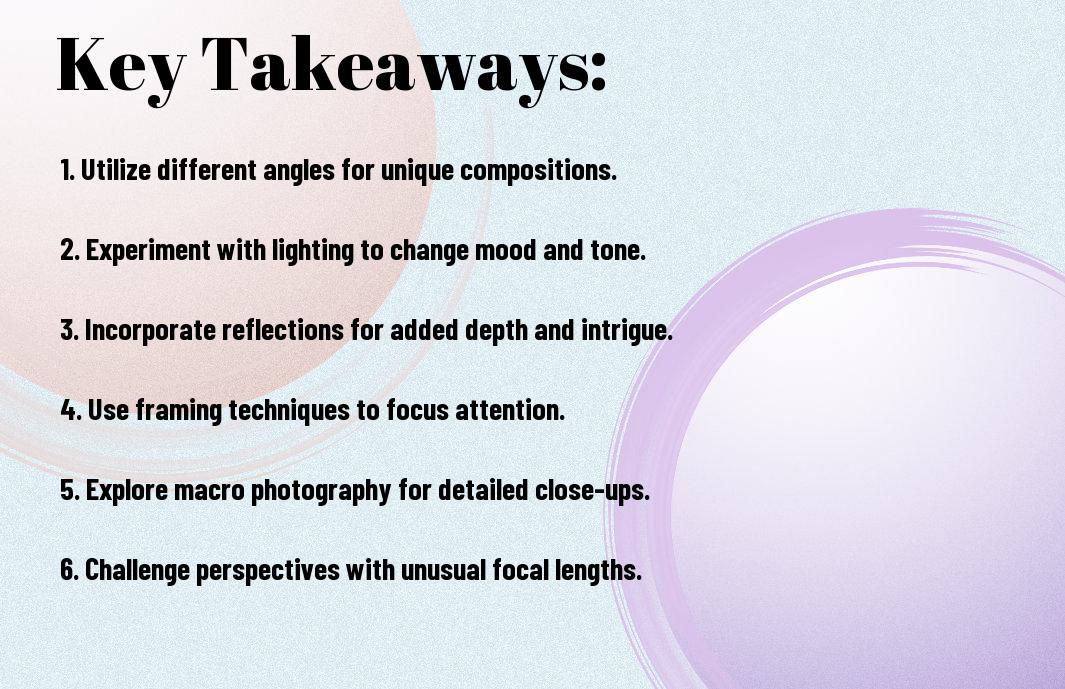
To wrap up, exploring different perspectives through various photography techniques can significantly enhance your skills and creativity. By experimenting with angles, lighting, and composition, you can discover fresh ways to capture your subjects, making your work stand out. Embrace these techniques and allow your unique vision to shine through in your photography. With practice and an open mind, you’ll consistently produce striking images that reflect your personal style.
Fine Art Photography Prints
Own a museum-quality archival print by Edin Chavez
Hahnemühle archival paper · From $95
BROWSE PRINTS LIMITED EDITIONS